March 5, 2026
Blog for inspiration
Explore our blog for inspiration, updates, and expert tips. We share stories that matter and spark curiosity.
The way websites deliver information has shifted dramatically over the past decade. Static pages that required manual updates by a developer for every small change are rapidly becoming a relic of the past. Today, businesses and creators expect their websites to reflect real-time content, grow seamlessly alongside their brand, and be manageable by non-technical team members without any friction. Webflow CMS (Content Management System) has emerged as one of the most powerful answers to this demand, offering a visual, no-code approach to building dynamic, data-driven websites that do not sacrifice design quality or developer-level control. Whether you are a solo creator, a growing startup, or an enterprise brand, understanding how to harness the full potential of Webflow CMS can fundamentally change how you build and maintain your digital presence.
Dynamic content is not just a technical feature. It is a strategic advantage. When your website can automatically populate pages, update listings, display personalized information, and scale content without repetitive manual effort, you free your team to focus on strategy, creativity, and growth rather than tedious content management. This is where Webflow CMS excels. It bridges the gap between powerful content architecture and intuitive design tools, making it possible to create sophisticated, data-driven experiences through an entirely visual interface. In this guide, we will walk through everything you need to know about building dynamic content with Webflow CMS, from setting up collections and creating templates to filtering content, building relationships between data types, and preparing your site for publication.
Understanding the Core Concept of Webflow CMS

Before jumping into the technical steps, it is important to understand what Webflow CMS actually is and how it differs from traditional content management systems like WordPress or Drupal. Webflow CMS is a structured content layer built directly into the Webflow Designer. It allows you to define custom content types called Collections, which act as databases that hold structured, repeatable content. Think of Collections as spreadsheets where each row is a piece of content and each column is a field that defines the properties of that content. Once you define a Collection, Webflow generates individual pages for each item automatically, based on a design template you create once and apply universally.
This approach is fundamentally different from page-by-page website building. Instead of creating a separate page for every blog post, product, team member, or case study, you create one template that dynamically pulls data from your Collection. This means adding a new blog post is as simple as filling in a form, and your website instantly generates a fully designed, consistent page without any additional design or development work. The power of this model becomes especially apparent at scale. Imagine managing a catalog of 500 products or a blog with 300 articles. With Webflow CMS, all of that content is structured, searchable, filterable, and automatically presented through your design templates.
Setting Up Your First Collection in Webflow
The starting point for any dynamic content experience in Webflow is creating a Collection. To begin, open your project in the Webflow Designer and navigate to the CMS panel, which is accessible from the left sidebar. Click on the option to create a new Collection and give it a descriptive name that reflects the type of content it will hold. Common Collection names include Blog Posts, Team Members, Projects, Products, Testimonials, Services, and Events. The name you choose should clearly describe the data structure you are building.
After naming your Collection, you will define its fields. Webflow offers a rich library of field types to accommodate virtually any kind of content. Plain text fields are suitable for titles, names, and short descriptions. Rich text fields support formatted long-form content with headings, bold text, images, links, and embedded media. Image fields hold visual assets and can be configured with alt text and dimensions. Number fields work for pricing, ratings, quantities, and similar numerical data. Date fields allow you to capture publication dates, event schedules, deadlines, and more. Option fields let you define a fixed list of choices, like a category selector or status indicator. Reference fields are one of the most powerful features, allowing you to link items in one Collection to items in another, creating relational data structures that mirror how real-world information connects.
Once your fields are defined, you can begin adding content items. Each item in a Collection represents one piece of content, such as one blog post or one team member profile. You fill in the field values for each item through a clean, form-based editor that requires no technical knowledge. Webflow also provides a CSV import option, which is invaluable when migrating existing content from another platform or populating a large Collection quickly.
Building Collection List and Template Pages
With your Collection populated with content, the next step is designing the pages that will display that content. Webflow CMS introduces two page types specifically for dynamic content: Collection List pages and Collection Template pages. Understanding the difference between these two is essential for building a well-structured dynamic site.
A Collection List page is a page that displays multiple items from your Collection, typically in a grid or list format. This is the kind of page you would use for a blog index, a portfolio overview, a product catalog, or a team directory. On this page, you add a Collection List component from the Add panel. Once placed, you bind it to your chosen Collection, and Webflow automatically populates it with your Collection items. You then design a single repeating item inside the Collection List, and Webflow mirrors that design across all items in your Collection. You can connect any element inside the list item to a field in your Collection by clicking on the element, opening its settings, and selecting the appropriate field to bind. For example, you might bind an image element to your featured image field, a heading to your title field, a paragraph to your excerpt field, and a link to your post's URL.
A Collection Template page is automatically generated when you create a Collection. It represents the individual page for each item in your Collection. This is where you design the full, detailed view of a single piece of content, such as an entire blog post, a complete product detail page, or a full team member biography. On the Collection Template page, every element you add can be bound to a field from that Collection. This means every blog post in your Collection will be displayed using the same visual structure, with the dynamic data filling in the content specific to each post. Once you design the template, you never need to touch it again unless you want to change the visual design. Adding new content items automatically creates new pages following the same template.
Connecting Dynamic Data to Design Elements
One of the most visually satisfying aspects of working in Webflow CMS is the way it allows you to bind real data to design elements without writing a single line of code. This is done through the Get Text From or Get Image From panels that appear when you select an element inside a Collection List or Collection Template page. Webflow calls this process connecting elements to fields.
To connect a text element, you select the element in the canvas, open its settings panel, and click the field binding icon. A dropdown appears showing all the text-compatible fields from your Collection, and you simply select the one you want. Webflow immediately replaces the placeholder text with the field name, indicating the connection is live. When viewing the actual item pages, that placeholder is replaced with the real content from your database. The same process applies to images, video links, background images, visibility toggles, color swatches, and even class names, giving you a remarkable degree of dynamic control over the visual presentation of your content.
You can also bind data to styling properties, which opens up creative possibilities. For example, if your Collection has a color field for each category, you can bind that color field to the background color of a tag element, so each category automatically displays with its associated color. This kind of data-driven design is what separates Webflow CMS from simpler page builders. Your design adapts to your content rather than requiring manual design updates every time the content changes.
Filtering, Sorting, and Limiting Collection Lists
Displaying all items in a Collection on a single page is sometimes exactly what you need, but often you will want to show a curated subset of your content. Webflow CMS provides powerful filtering and sorting controls built directly into the Collection List settings. These controls allow you to define which items appear in a given list, in what order, and in what quantity, all without writing any code.
Sorting allows you to control the sequence in which items appear. You can sort by any date field, alphabetically by any text field, numerically by any number field, or by the order items were created or updated. For example, a blog Collection might be sorted by publication date in descending order so that the most recent posts appear first. A product catalog might be sorted alphabetically by name, or by price from lowest to highest.
Filtering allows you to restrict which items appear based on field conditions. You can filter to show only items where a toggle field is set to true, where a reference field matches a specific item, where a text field contains a specific value, or where a date field falls within a defined range. This becomes especially powerful when you want to show contextually relevant content. On a blog post template page, for example, you can include a Collection List of related posts filtered to show only items in the same category as the current post, creating an automatic related content section that updates dynamically based on what the reader is viewing. Working with a skilled webflow development agency can help you design these filtering strategies in ways that maximize engagement and content discoverability.
The item limit control lets you cap how many items appear in a list. A homepage section featuring your three most recent blog posts uses this feature. You set the limit to three, sort by date descending, and the section always shows the latest three posts regardless of how many total posts you have in your Collection. This kind of automated content curation dramatically reduces the maintenance burden on your team.
Creating Multi-Reference Relationships Between Collections
Real-world content rarely exists in isolation. A blog post might be written by a specific author, belong to one or more categories, and relate to a specific product. A project case study might involve multiple team members, showcase several services, and belong to an industry vertical. Webflow CMS supports relational content through Reference fields and Multi-Reference fields, which allow items in one Collection to link to one or many items in another Collection.
A Reference field creates a one-to-one or many-to-one relationship. For example, each blog post might reference one author from an Authors Collection. When you add a Reference field to your blog Collection and link it to the Authors Collection, each blog post item gets a dropdown where you select the associated author. On the blog post template page, you can then pull in data from the referenced author, such as their name, photo, and bio, to display a dynamic author card. This eliminates the need to manually copy author information into each post.
A Multi-Reference field creates a one-to-many or many-to-many relationship. For example, a project might be tagged with multiple service types from a Services Collection. By adding a Multi-Reference field linking your Projects Collection to your Services Collection, each project item can be associated with multiple services. You can then display those associated services on the project template page using a nested Collection List, creating a rich, interconnected content experience. These relational structures are at the heart of sophisticated CMS architectures, and mastering them allows you to build content experiences that rival enterprise-level platforms.
Using Conditional Visibility for Personalized Experiences
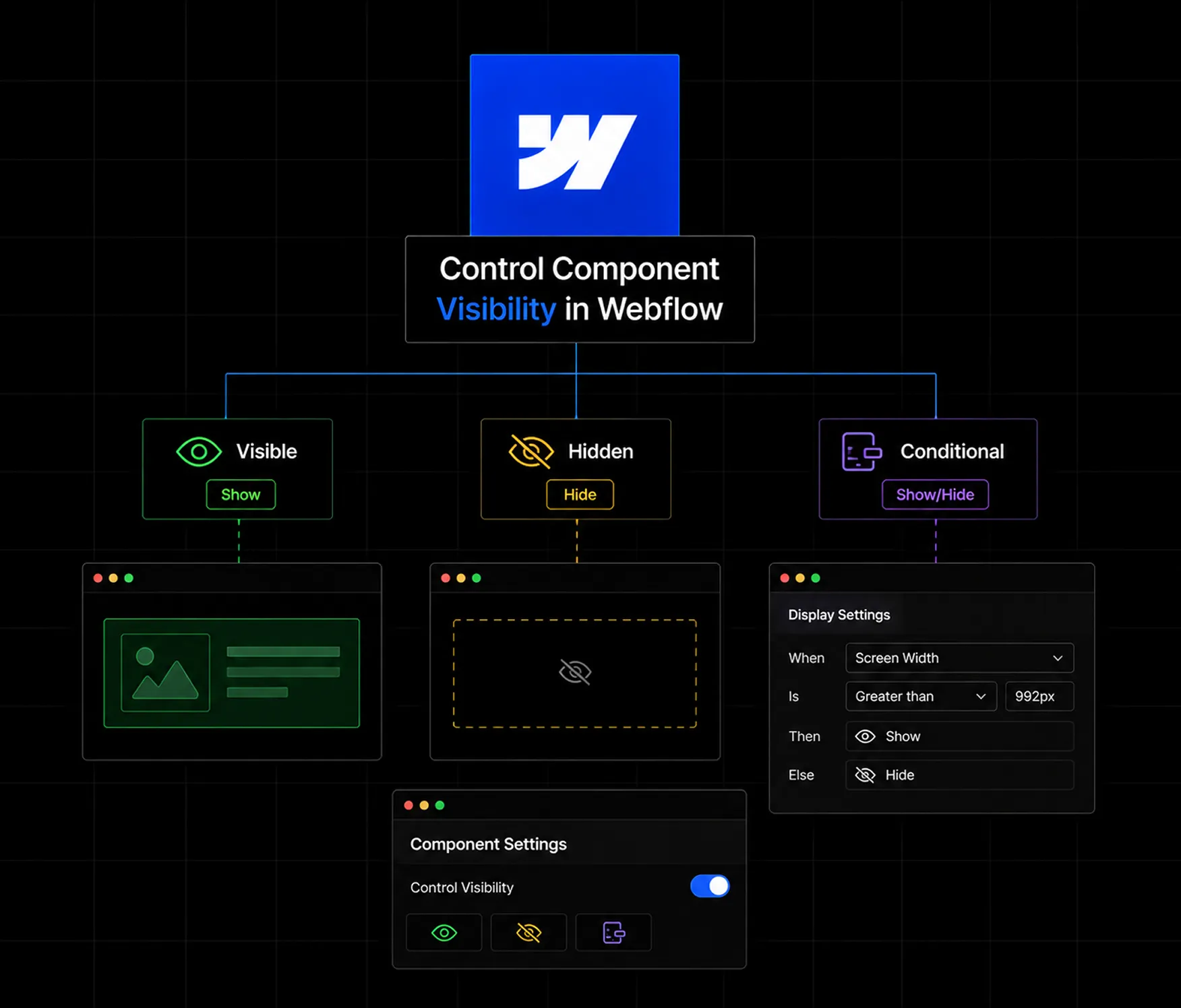
Conditional visibility is a feature in Webflow that allows you to show or hide elements on a page based on the values of CMS fields. This gives you the ability to create content that adapts its presentation depending on the data it contains, without needing JavaScript or custom code. Conditional visibility rules are applied to individual elements through the Visibility panel in the element settings.
For example, if your blog Collection has a toggle field called Featured, you can add a Featured badge element to your Collection List item and set it to only be visible when the Featured field is true. Items that are not featured will display without the badge, while featured items automatically show it. Similarly, if your product Collection has a Sold Out toggle field, you can show a sold out overlay element only when that field is true, automatically indicating unavailability without any manual design updates.
You can stack multiple conditional visibility rules to handle complex scenarios. An element might be set to appear only when a certain category is selected, a specific date has passed, or a text field is not empty. This kind of dynamic content presentation makes your website feel intelligent and responsive to its own data, which significantly improves the user experience while reducing the editorial workload required to maintain it.
Designing for SEO with Webflow CMS Dynamic Fields
One of the significant advantages of Webflow CMS is its deep integration with SEO settings at the Collection level. Each Collection Template page includes SEO fields that can be dynamically populated from your Collection data. This means every item in your Collection can have a unique, SEO-optimized title tag, meta description, Open Graph image, and URL slug, all generated automatically based on the fields you define.
In the Collection settings, you can configure the URL structure for your Collection items. For example, blog posts might follow a pattern like /blog/[post-slug], while team members might follow /team/[member-name]. Webflow auto-generates the slug from the item name by default, converting it to a URL-friendly format, but you can override it manually for any individual item. The ability to fine-tune SEO metadata at the Collection level, including setting dynamic title formulas like [Post Title] | [Site Name], ensures that every piece of dynamic content is optimized for search engines without requiring manual SEO configuration for each individual page.
Rich text fields in Webflow also render as proper HTML on the published site, preserving heading hierarchy, internal links, image alt text, and semantic markup that search engines use to understand content structure. Combined with Webflow's clean code output and fast hosting infrastructure, this makes Webflow CMS a strong platform choice for content-heavy sites where organic search traffic is a priority. Professional webflow development services recognize these SEO capabilities as a major factor when recommending Webflow to content-driven clients.
Publishing, Updating, and Managing CMS Content
Once your Collections are structured and your templates are designed, the day-to-day workflow of managing CMS content in Webflow is straightforward and requires no technical knowledge. Content editors can add new items, update existing ones, and manage the publishing status of any item directly from the Webflow Editor, which is a simplified interface that overlays the live site. Editors can click on any CMS element on the page and edit its content inline, making it feel intuitive and visual rather than abstract and form-heavy.
Each Collection item has a published and draft status. Items in draft status are not publicly visible on the site but can be previewed by logged-in collaborators. This workflow supports content review processes, allowing writers to prepare content in draft, have it reviewed, and then publish it when it is ready. Items can also be scheduled for future publication by setting a publish date, which is useful for editorial calendars and timed announcements.
Webflow also provides a robust collaboration system. Multiple team members can be granted Editor access, allowing them to manage content without access to the design environment. This separation of concerns, where designers control the visual system and editors control the content, is a hallmark of professional content management workflows. It ensures that the visual integrity of your site is protected while giving content teams the autonomy they need to move quickly.
Extending Webflow CMS with Integrations and Logic
Webflow CMS does not operate in isolation. It integrates with a growing ecosystem of tools and platforms that extend its capabilities significantly. Through Zapier, Make, or native integrations, you can connect Webflow CMS to CRMs, email marketing platforms, analytics tools, form processors, and project management systems. New items added to a Collection can automatically trigger actions in other tools, such as sending a notification email, creating a task in Asana, or posting to a Slack channel.
Webflow Logic, the platform's built-in automation builder, allows you to create workflows triggered by form submissions and other site interactions. These workflows can create or update CMS items, send emails, and connect to external APIs, bringing a level of automation to your site that would traditionally require custom backend development. For example, a job application form might automatically create a new item in a Job Applications Collection, complete with all the submitted data, while simultaneously notifying the hiring team via email.
For developers who want to go even further, the Webflow CMS API provides programmatic access to your Collections and items. You can read, create, update, and delete CMS items through REST API endpoints, enabling custom integrations, headless content architectures, and sophisticated data pipelines. This is particularly valuable for brands running complex digital operations where Webflow serves as the front-end presentation layer while specialized backend systems handle data processing and storage. This level of extensibility is one of the core reasons businesses choose to work with a professional webflow development agency when building complex, scalable digital experiences.
Conclusion
Webflow CMS represents a genuinely transformative approach to dynamic content on the web. By combining a structured, relational database with a fully visual design environment, it removes the traditional barriers between content architecture and design execution. You no longer need to choose between a powerful CMS that requires developer intervention and a beautiful design tool that lacks content management sophistication. Webflow gives you both in a single platform. The features covered in this guide, from Collection setup and template design to filtering, relational data, conditional visibility, SEO configuration, and publishing workflows, represent a comprehensive toolkit that supports everything from simple blogs to complex, enterprise-scale content platforms.
What makes Webflow CMS especially compelling is the way it scales with your ambitions. You can start simple, with a single Collection and a straightforward template, and incrementally add sophistication as your content needs grow. The platform rewards investment in learning its systems by unlocking increasingly powerful capabilities. Whether you are managing a personal portfolio, running a content marketing operation, or overseeing a multi-brand digital ecosystem, the skills you develop working with Webflow CMS will serve you consistently. The future of web content is dynamic, personalized, and scalable, and Webflow CMS is built precisely to deliver that future in an accessible, design-forward way that puts creative teams in full control of their digital presence.
.webp)
March 5, 2026
How to Build a SaaS Website Using Webflow
Building a SaaS website is one of the most consequential decisions a software company can make. Your website is not just a digital brochure; it is the first touchpoint where potential customers form impressions, evaluate your product, and decide whether to start a free trial or walk away. The challenge for many SaaS founders and marketing teams is choosing the right platform to build on. Webflow has emerged as one of the most powerful and flexible no-code platforms for creating professional, high-converting SaaS websites without writing a single line of traditional code. It combines the visual freedom of a designer tool with the structural integrity of a developer-grade CMS, making it the go-to choice for growth-focused SaaS teams around the world.
Whether you are launching a brand-new SaaS product or redesigning an existing site to improve conversions, this guide walks you through every stage of the process. From initial planning and structuring your information architecture to designing key landing page sections, setting up a CMS blog, integrating third-party tools, and preparing your site for launch, you will find detailed, actionable advice throughout this post. This is not a surface-level overview. It is a deep dive into building a SaaS website on Webflow that actually drives signups, communicates value clearly, and scales alongside your business.
Understanding Why Webflow Is Ideal for SaaS Websites

Before jumping into the how, it is worth understanding the why. Webflow sits in a unique position in the web building ecosystem. Unlike WordPress, which requires constant plugin management and developer involvement for anything beyond the basics, Webflow gives designers and marketers full control over layout, animation, interactions, and content management without ever touching code. Unlike Squarespace or Wix, Webflow generates clean, semantic HTML and CSS that meets modern SEO and performance standards.
For SaaS companies specifically, Webflow offers several critical advantages. First, it provides a visual CMS that allows marketing teams to update landing pages, blog posts, pricing sections, and customer case studies independently, without going through an engineering bottleneck. Second, Webflow supports complex animations and scroll-based interactions natively, which are essential for communicating abstract software features in an engaging way. Third, it produces fast-loading pages out of the box, which directly impacts conversion rates and search engine rankings.
Many growing SaaS companies have turned to a professional webflow development agency to handle the initial build because the platform, while accessible, has a learning curve when it comes to advanced interactions, responsive design, and CMS architecture. Working with specialists can compress timelines significantly and ensure the foundation of the site is scalable and maintainable long-term.
Step 1: Planning Your SaaS Website Structure
Every successful Webflow build starts with a clear plan. For a SaaS website, this means mapping out the pages you need, defining the user journeys you want to create, and identifying the core conversion actions you want visitors to take. Most SaaS websites share a common set of pages: a homepage, a features or product page, a pricing page, a blog or resources section, customer testimonials or case studies, an about page, and a contact or demo booking page.
Start by creating a simple sitemap. This does not need to be complex. A spreadsheet or a simple diagram showing how pages connect to each other is enough at this stage. The goal is to understand the full scope of the project before you open Webflow. Think about your buyer journey. A visitor landing on your homepage for the first time needs to immediately understand what your product does, who it is for, and why they should care. From there, they might explore features in more depth, check your pricing, and read a few case studies before deciding to sign up or book a demo.
You should also plan your CMS collections at this stage. Webflow CMS allows you to create structured content types such as blog posts, case studies, feature pages, changelog entries, and team member profiles. Define what fields each collection needs before you start building. For example, a blog post collection might include a title, author, publish date, featured image, category, and body content. Thinking this through early prevents costly restructuring later.
Step 2: Setting Up Your Webflow Project Correctly
Once your plan is in place, open Webflow and create a new blank project. Resist the temptation to start from a template unless you are deeply familiar with how the template is structured. Templates can seem like a shortcut but often contain bloated code and structural decisions that do not fit your specific needs. Starting from a blank canvas gives you full control.
The first thing to configure in your new project is your style guide. Go to the Style Manager and define your global typography, color palette, and spacing scale. Use Webflow's global class system to create reusable styles for headings, body text, buttons, links, and containers. This ensures visual consistency across every page you build and makes future updates dramatically faster. Define your primary brand color, secondary colors, and neutrals. Set your font stack using Google Fonts or upload a custom typeface.
Next, create your global components in Webflow's component system. Your navigation bar and footer will appear on nearly every page, so build them as components that can be updated in one place and reflected everywhere. Your navigation should include your logo, main navigation links, and a clear call-to-action button such as Start Free Trial or Book a Demo. Your footer should include secondary navigation links, social media icons, a brief description of your product, and your legal pages.
Step 3: Designing the Homepage for Maximum Conversions
The homepage is the most important page on any SaaS website. It needs to do a lot of heavy lifting in a very short amount of time. Research consistently shows that visitors make judgments about a website within seconds of landing on it, so clarity, visual hierarchy, and a compelling value proposition are non-negotiable.
Hero Section
The hero section sits above the fold and is the first thing every visitor sees. It should contain a headline that clearly states what your product does and who it helps, a subheadline that expands on the benefit, a primary call-to-action button such as Get Started for Free, and a supporting visual such as a product screenshot, dashboard mockup, or short looping animation. In Webflow, you can design this section with complete pixel-level precision and add subtle scroll-triggered animations to make the product visuals appear as the page loads.
Social Proof and Trust Signals
Immediately below the hero, include a social proof strip. This could be a row of customer logos, a trust badge from G2 or Capterra, a count of active users, or a short pull quote from a satisfied customer. Social proof reduces skepticism and increases the likelihood that a visitor will continue reading. Webflow makes it easy to build these sections with flexbox layouts and Lottie animations for logos.
Features and Benefits Section
Rather than listing features in a plain grid, use Webflow's interactions to create an engaging features showcase. A popular pattern for SaaS homepages is the sticky scroll feature section, where as the user scrolls down, each feature section animates into view while a sticky product screenshot on the other side updates to show the relevant interface. This pattern communicates complexity in a digestible, engaging way without overwhelming visitors.
Step 4: Building the Pricing Page
The pricing page is often the most visited page on a SaaS website after the homepage, and it is where many conversion decisions are made. Getting it right requires a combination of clear structure, psychological pricing principles, and trust-building elements. In Webflow, you can build a fully custom pricing page without any limitations on layout or interactivity.
Start with a clean three-column pricing table showing your core plans. Use visual hierarchy to draw attention to your recommended plan by making it slightly larger, adding a highlighted border, or including a Most Popular badge. Each plan should clearly list what is included and use simple, jargon-free language. Webflow's grid system makes building responsive pricing tables straightforward.
Add a monthly versus annual billing toggle using Webflow's custom interactions and conditional visibility. This is a feature that many SaaS companies use to encourage annual subscriptions by showing the discounted monthly price when users select annual billing. In Webflow, you can achieve this with a custom toggle interaction that swaps text content between two sets of price labels. Below the pricing table, include an FAQ section addressing common pricing questions and a section with customer testimonials to reinforce the value at the point of decision.
Step 5: Creating a CMS-Powered Blog and Resource Hub
Content marketing is one of the most sustainable and cost-effective growth channels for SaaS companies. A well-maintained blog drives organic search traffic, establishes authority in your niche, and nurtures potential customers throughout their buying journey. Webflow's CMS is purpose-built for this use case and gives you complete design freedom over how your content is displayed.
To set up your blog, navigate to the CMS section in Webflow and create a new Blog Posts collection. Add all the fields you need: title, author, publish date, category, tags, featured image, meta description, body content (rich text field), and a related posts reference field. Once your collection is configured, create a Collection List on your blog index page to display all posts and a Collection Template page that serves as the layout for individual blog articles.
Design your blog template page to be highly readable. Use a comfortable line length of roughly 65 to 75 characters per line, generous line spacing, and clear typographic hierarchy with distinct heading levels. Add a sticky table of contents sidebar for longer articles, a progress bar at the top of the page to show reading progress, and a related articles section at the bottom to reduce bounce rate and keep readers engaged. All of these elements can be built natively in Webflow without any external plugins.
Step 6: Optimizing for SEO in Webflow
Webflow gives you exceptional control over on-page SEO, and taking advantage of these tools is essential for driving organic growth. Every page in Webflow has its own SEO settings panel where you can set the page title tag, meta description, Open Graph image, and canonical URL. For CMS-driven pages like blog posts, these fields are dynamically populated from your collection item data, which means you can set them once at the template level and they will auto-generate correctly for every post.
Structure your page headings correctly using proper H1, H2, and H3 hierarchy. Every page should have exactly one H1 that contains the primary keyword you are targeting. Use H2 tags for main section headings and H3 tags for sub-points within those sections. Webflow makes this easy because you explicitly choose the heading level for every heading element rather than relying on visual styling to infer hierarchy.
Page speed is a critical SEO ranking factor and also directly impacts conversion rates. Webflow generates lean, production-ready HTML and CSS without the bloat common in WordPress themes. Take additional steps to optimize images by uploading WebP format images, enabling lazy loading on images below the fold, and keeping your custom code embeds to a minimum. Use Webflow's built-in asset optimization features and connect your site to a CDN through Webflow Hosting for fast global load times.
For SaaS companies scaling their content programs, working with a webflow development agency that specializes in technical SEO and Webflow architecture can help you build a site structure that supports long-term organic growth. This includes setting up proper internal linking architecture, creating programmatic landing pages with CMS collections, and implementing schema markup for rich results in search engines.
Step 7: Integrating Third-Party Tools and Automations
A SaaS website cannot live in isolation. It needs to connect with your marketing stack, analytics platforms, customer support tools, and product infrastructure. Webflow supports integrations through native embeds, Zapier, Make (formerly Integromat), and direct webhook connections.
For analytics, add Google Analytics 4 and Google Tag Manager through Webflow's custom code settings. Tag Manager acts as a container that allows your marketing team to deploy tracking scripts, conversion events, heatmap tools like Hotjar or Microsoft Clarity, and A/B testing platforms like Google Optimize without requiring code changes in Webflow itself. This separation of concerns is a best practice that keeps your site lean and gives marketers the autonomy they need.
For email capture and CRM integration, Webflow's native forms can send submissions to any email address or connect to over 5,000 apps through Zapier. Connect your forms to your email marketing platform such as HubSpot, Mailchimp, or ConvertKit so that new leads are automatically added to your nurture sequences. For product demo booking, embed a Calendly or Chili Piper scheduling widget directly into your demo page using an HTML embed block.
Live chat and support integrations such as Intercom, Crisp, or Drift can be added through a single script embed in your project settings. These tools are critical for SaaS websites because they let potential customers ask questions in real time, which significantly reduces friction in the conversion process. Configure them to show proactively on high-intent pages like pricing and contact pages while staying minimized on content pages to avoid distracting readers.
Step 8: Making Your Site Fully Responsive
A majority of web traffic now comes from mobile devices, and search engines use mobile-first indexing to determine rankings. Every page you build in Webflow must be fully responsive and look excellent on all screen sizes. Webflow's responsive design system allows you to customize layouts, font sizes, spacing, and visibility at four breakpoints: desktop, tablet, mobile landscape, and mobile portrait.
The most important principle to internalize is that styles cascade downward in Webflow. Styles set at the desktop breakpoint flow down to smaller screens unless you explicitly override them. This means you should always design desktop first, then refine at smaller breakpoints. Pay special attention to your navigation on mobile. The standard pattern is to hide the desktop nav links and replace them with a hamburger menu button that triggers a full-screen or slide-in menu. Webflow's interaction system makes this straightforward to implement without any custom JavaScript.
Test your responsive design thoroughly using Webflow's preview mode across all breakpoints and also on real devices. Common issues to watch for include text that is too small to read comfortably, touch targets that are too small for fingers, horizontal scrolling caused by elements that overflow the viewport, and images that do not scale correctly. Address each of these before moving on to the launch phase.
Step 9: Preparing for Launch and Quality Assurance
Before you publish your Webflow site, conduct a thorough quality assurance review. This process should cover several categories. First, review all content for spelling, grammar, and factual accuracy. Second, test all forms to confirm submissions are being received and routed to the correct destinations. Third, click every link on the site to verify there are no broken links or incorrect redirects. Fourth, check all pages on mobile, tablet, and desktop browsers including Chrome, Safari, Firefox, and Edge.
Use Webflow's built-in SEO audit tools to check for missing meta descriptions, pages without H1 tags, images without alt text, and other common on-page issues. Run your key pages through Google PageSpeed Insights to identify performance bottlenecks. Aim for a score of 90 or higher on both mobile and desktop. If you notice significant performance issues, common culprits include large unoptimized images, excessive JavaScript from third-party scripts, and render-blocking resources.
Set up Webflow's 301 redirect manager if you are migrating from an existing website. Redirecting old URLs to their new equivalents preserves your SEO equity and prevents visitors from landing on 404 error pages. Create a comprehensive redirect map listing every old URL and the corresponding new URL before launch day, then enter them into Webflow's redirect settings in bulk.
Step 10: Publishing and Ongoing Maintenance
Publishing your Webflow site is as simple as clicking the Publish button, but there are a few configuration steps to complete first. Connect your custom domain through Webflow's hosting settings and configure your DNS records according to Webflow's documentation. Enable SSL for your domain to ensure your site loads over HTTPS, which is required for security, user trust, and SEO. Set up your sitemap and submit it to Google Search Console so that Google can discover and index your pages efficiently.
After launch, establish a regular maintenance routine. Review your Google Analytics and Search Console data weekly to understand which pages are performing well and which need improvement. Update your blog with fresh content on a consistent schedule, at minimum twice per month, to signal to search engines that your site is actively maintained. Monitor your Core Web Vitals scores in Search Console and address any issues that arise as you add new content and integrations.
Run conversion rate optimization experiments on your key pages using A/B testing tools. Test different headlines, call-to-action button copy, hero images, and pricing page layouts to find the combinations that drive the most signups. Small improvements in conversion rate compound significantly over time and can have a greater impact on revenue than increasing traffic alone.
Conclusion
Building a SaaS website in Webflow is an investment that pays dividends for years when done correctly. The platform gives you the design freedom of a custom-coded site combined with the flexibility and speed of a modern CMS, making it uniquely suited to the fast-moving world of SaaS. By following the steps outlined in this guide, including planning your structure thoughtfully, designing for conversion at every stage, setting up a powerful content hub, integrating your marketing tools, and optimizing for both SEO and performance, you will have a website that works as hard as your product does to drive growth.
The journey does not end at launch. A great SaaS website is a living asset that evolves alongside your product, your customers, and the competitive landscape. Continuously test, iterate, and improve. If you find the platform's learning curve steep or want to move faster in the initial build phase, partnering with a specialized webflow development agency can be a smart strategic move that gives you a production-ready site built on best practices from day one. Whatever path you choose, Webflow provides the tools you need to create a world-class SaaS web presence that converts visitors into loyal customers.
.webp)
March 5, 2026
Top Webflow SEO Tools to Boost Organic Traffic
In the ever-evolving world of digital marketing, ranking high on search engines is no longer optional — it is a fundamental requirement for any business that wants to survive and thrive online. Webflow, as a no-code website development platform, has gained massive popularity among designers, marketers, and entrepreneurs. However, building a visually stunning site on Webflow is only half the battle. Without a robust SEO strategy powered by the right tools, even the most beautifully designed website can remain invisible to potential customers. This is where a skilled webflow development agency steps in, not only crafting exceptional digital experiences but also ensuring that every element of the site is optimized for maximum search engine visibility and long-term organic growth.
The good news is that Webflow integrates seamlessly with a wide range of powerful SEO tools that can help you analyze, optimize, and monitor your website's performance. Whether you are a solo entrepreneur managing your own website or a team relying on professional webflow development services, understanding and leveraging these tools can make the difference between being buried on page five and ranking at the top of Google's search results. In this comprehensive guide, we will walk through the top Webflow SEO tools that can significantly boost your organic traffic, explain how each one works, and help you build an SEO strategy that delivers measurable, lasting results.
1. Google Search Console: The Foundation of Webflow SEO
Google Search Console (GSC) is arguably the most important free SEO tool available to any website owner, and it works exceptionally well with Webflow. Once you verify your Webflow site with Google Search Console, you gain access to a wealth of data that reveals exactly how your website is performing in Google's search results. You can see which queries are driving impressions and clicks, which pages are indexed, how your average position compares across different keywords, and whether Google has encountered any crawl errors or indexing issues.
One of the most valuable features of Google Search Console for Webflow users is the URL Inspection Tool. This allows you to check whether a specific page has been crawled and indexed by Google, and if not, you can request indexing directly. For Webflow sites with lots of dynamic content or CMS-powered pages, this feature ensures that new and updated content gets picked up by Google quickly rather than waiting days or weeks for the next crawl cycle.
The Coverage Report in GSC shows you exactly which pages are indexed and which ones have errors, warnings, or exclusions. This is critical for Webflow websites because sometimes pages get accidentally set to noindex during development and never switched back to indexable. Additionally, the Core Web Vitals report within Search Console shows you how your Webflow pages perform on Google's key user experience metrics, including Largest Contentful Paint (LCP), Cumulative Layout Shift (CLS), and Interaction to Next Paint (INP). These metrics directly influence your rankings, making GSC an indispensable daily tool for anyone serious about SEO.
2. Ahrefs: Comprehensive Backlink and Keyword Research
Ahrefs is one of the most powerful and comprehensive SEO platforms available, trusted by SEO professionals and digital marketing agencies worldwide. For Webflow site owners, Ahrefs provides an incredibly deep level of insight into backlink profiles, keyword opportunities, competitor analysis, and content gaps. Its Site Explorer tool allows you to enter any domain or URL and immediately see its organic traffic estimates, the number of backlinks pointing to it, the referring domains, and the keywords it ranks for.
When using Ahrefs for Webflow SEO, the Keywords Explorer feature is particularly useful. You can research thousands of keyword ideas, see their monthly search volumes, keyword difficulty scores, and click-through rate data. This helps you identify keywords that have high search intent and reasonable competition levels, allowing you to prioritize your content strategy accordingly. For a business working with a webflow development agency, this kind of data-driven keyword research ensures that every page created targets terms that real people are actively searching for.
Ahrefs also features a Site Audit tool that crawls your entire Webflow website and identifies technical SEO issues such as broken links, missing meta descriptions, duplicate content, slow-loading pages, and missing alt text on images. The detailed audit report is presented in a clear, actionable format, making it easy to prioritize fixes based on their impact on your rankings. The Content Explorer tool within Ahrefs lets you discover the most popular and widely shared content in any niche, helping you understand what topics are resonating with audiences and inspiring you to create better, more competitive content.
3. SEMrush: All-in-One SEO Platform for Competitive Intelligence
SEMrush is another industry-leading SEO platform that offers a comprehensive suite of tools designed to help website owners improve their organic search presence. What makes SEMrush particularly valuable for Webflow users is its exceptional competitive analysis capabilities. With SEMrush, you can enter any competitor's domain and instantly see which keywords they rank for, which pages attract the most organic traffic, and where their backlinks are coming from. This competitive intelligence gives you a clear roadmap for identifying gaps in your own content strategy.
The Position Tracking feature in SEMrush allows you to monitor your Webflow website's keyword rankings on a daily basis. You can set up a project, add your target keywords, and receive updates showing whether your rankings have improved, declined, or stayed the same. This kind of granular tracking is essential for understanding whether your SEO efforts are paying off and whether algorithm updates from Google are affecting your site positively or negatively.
SEMrush also includes an On-Page SEO Checker that analyzes individual pages on your Webflow site and provides specific recommendations for improvement based on what is ranking in the top ten results for your target keywords. It considers factors like content length, semantic keyword usage, readability, and internal linking. Additionally, the Backlink Audit tool helps you identify toxic or spammy links pointing to your site that could potentially harm your rankings, allowing you to disavow them through Google Search Console.
4. Surfer SEO: Data-Driven Content Optimization
Surfer SEO is a content optimization tool that uses data from the top-ranking pages for any given keyword to tell you exactly what your content needs to include in order to compete effectively. Unlike traditional SEO advice that relies on general best practices, Surfer SEO analyzes the actual pages that are currently ranking in the top positions and provides highly specific recommendations about word count, heading structure, keyword density, use of related terms and entities, and even the number of images your page should contain.
For Webflow users creating content through the Webflow CMS, Surfer SEO integrates smoothly into the content creation process. You can use Surfer's Content Editor to write or optimize your articles in real time, receiving a content score as you type that reflects how well your content matches what Google is looking for based on competitor analysis. The higher your Surfer SEO score, the better aligned your content is with the ranking factors that matter for that specific keyword.
Surfer SEO also includes a powerful SERP Analyzer that breaks down the top-ranking pages for any keyword in extraordinary detail. You can see correlations between various on-page factors and rankings, helping you understand what truly drives performance in your niche. For teams working with professional webflow development services, Surfer SEO provides the data backbone that ensures every piece of content produced is strategically crafted to rank rather than just filling a publishing calendar.
5. Screaming Frog SEO Spider: Technical SEO Crawling
Screaming Frog SEO Spider is a desktop-based website crawler that is widely regarded as one of the most essential technical SEO tools in any professional's toolkit. When you connect it to your Webflow site, it crawls every page and provides an exhaustive list of technical SEO data including page titles, meta descriptions, H1 tags, canonical URLs, response codes, redirect chains, and much more. This kind of comprehensive audit is essential for identifying hidden issues that could be quietly suppressing your organic rankings.
One particularly valuable use of Screaming Frog for Webflow websites is identifying redirect chains and redirect loops. When pages are moved or restructured in Webflow, it is easy to accidentally create chains of redirects where page A redirects to page B which redirects to page C. These chains waste crawl budget and can dilute link equity. Screaming Frog visualizes these chains clearly, making it straightforward to fix them by pointing the original redirect directly to the final destination.
Screaming Frog also integrates with Google Analytics and Google Search Console, allowing you to overlay traffic and impressions data directly onto the crawl data. This integration is powerful because it lets you see not just what issues exist on your site, but specifically which issues are affecting pages that actually receive traffic and impressions, allowing you to prioritize fixes based on real business impact rather than treating all issues equally.
6. Google PageSpeed Insights and GTmetrix: Site Speed Optimization
Page speed is a confirmed Google ranking factor, and it has a direct impact on user experience, bounce rates, and conversion rates. For Webflow websites, which can sometimes carry heavy JavaScript or large unoptimized images, monitoring and improving page speed is absolutely critical. Google PageSpeed Insights is a free tool that analyzes any URL and gives it a performance score on a scale of zero to one hundred for both mobile and desktop, along with specific diagnostic information about what is slowing the page down.
GTmetrix is another popular performance testing tool that complements PageSpeed Insights by offering more detailed waterfall charts showing exactly how long each element on your page takes to load. GTmetrix also allows you to test your page speed from different geographic locations around the world, which is particularly useful if your target audience is spread across multiple regions. The combination of insights from both tools gives you a complete picture of your Webflow site's loading performance.
Common speed issues on Webflow sites include oversized images that have not been compressed, render-blocking third-party scripts, and excessive custom code that delays page rendering. By regularly testing your pages with PageSpeed Insights and GTmetrix, and systematically addressing the recommendations they provide, you can significantly improve your Core Web Vitals scores, which in turn positively influences your rankings in Google's search results.
7. Webflow's Built-in SEO Features: Leveraging Native Capabilities
Before reaching for third-party tools, it is important to fully leverage the powerful SEO capabilities that Webflow provides natively within its platform. Webflow gives you granular control over every on-page SEO element including page titles, meta descriptions, Open Graph tags for social sharing, canonical URLs, and robot meta tags. Unlike many traditional CMS platforms where SEO settings can be buried and confusing, Webflow's interface makes it intuitive to configure these settings at both the global and individual page level.
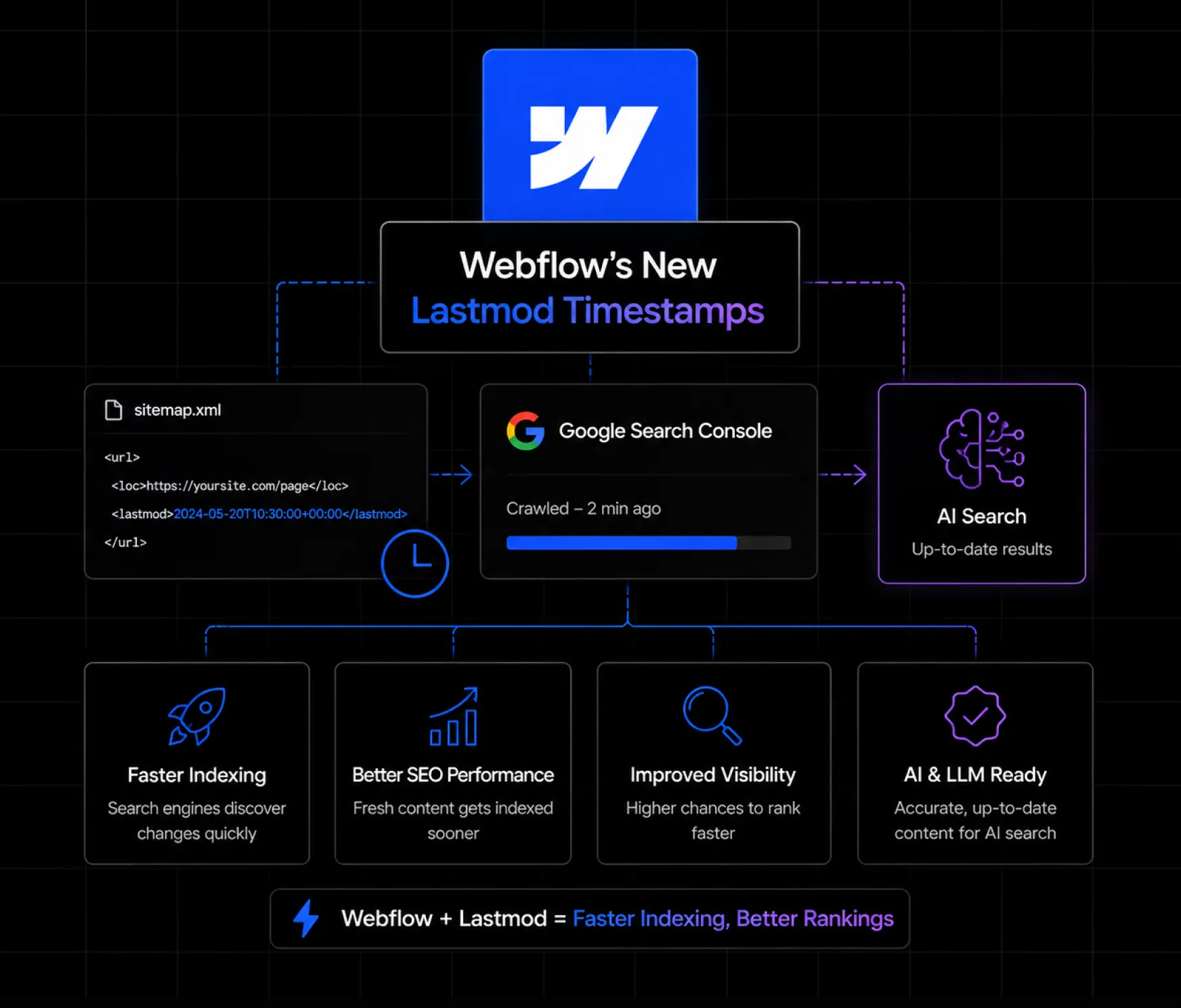
Webflow automatically generates a sitemap XML file for your website and keeps it updated whenever you add new pages or CMS items. This sitemap is automatically submitted to Google through Google Search Console, helping ensure that your new content gets discovered and indexed as quickly as possible. Webflow also generates clean, semantic HTML by default, which means search engine crawlers can read and understand your content without any of the messy markup that sometimes plagues other website builders.
The Webflow CMS also supports structured data markup, which allows you to add schema.org JSON-LD code to your pages. Structured data helps Google understand the context of your content and can lead to rich results in the SERP, such as star ratings, FAQs, breadcrumbs, and event listings. These rich results typically have higher click-through rates than standard blue links, giving your content an edge over competitors who have not implemented schema markup.
8. Moz Pro: Link Building and Domain Authority Tracking
Moz Pro is a well-established SEO platform that has been a staple in the industry for over a decade. It is particularly known for introducing the concept of Domain Authority (DA) and Page Authority (PA), which are proprietary metrics that estimate how likely a domain or page is to rank in search results based on the strength and quality of its backlink profile. While DA is not an official Google metric, it serves as a useful proxy for understanding your site's overall link authority relative to competitors.
For Webflow site owners, Moz Pro's Link Explorer is an excellent resource for researching backlink opportunities. You can analyze any domain's backlink profile, identify the high-authority websites that are linking to your competitors but not yet to you, and use this data to prioritize your outreach efforts. Building high-quality backlinks from reputable websites remains one of the most powerful ranking signals in Google's algorithm, so having a tool that streamlines this research is incredibly valuable.
Moz Pro also includes a Rank Tracker that monitors your keyword positions over time, a Site Crawl feature that identifies technical SEO issues, and a Keyword Explorer tool that provides keyword suggestions along with detailed metrics. Moz's community and learning resources, including their Whiteboard Friday video series and comprehensive SEO guides, also make it an invaluable educational platform for website owners who want to deepen their understanding of search engine optimization.
9. Hotjar and Microsoft Clarity: User Behavior Analysis for SEO
While traditional SEO tools focus on keywords, backlinks, and technical performance, user behavior analytics tools like Hotjar and Microsoft Clarity provide a completely different but equally important perspective on your website's performance. These tools use heatmaps, session recordings, and scroll maps to show you exactly how real visitors are interacting with your Webflow pages. This qualitative data can reveal SEO-related insights that pure keyword tools simply cannot provide.
For example, if Google Search Console shows that a page has a high click-through rate from search results but a very high bounce rate once visitors land on the page, Hotjar's session recordings can help you understand why. Perhaps the page takes too long to load, or the content does not match what users expected based on the search result title, or there is a confusing navigation element that causes frustration. Understanding these behavioral patterns allows you to make targeted improvements that reduce bounce rates and improve user engagement metrics.
Microsoft Clarity is a completely free alternative to Hotjar that offers heatmaps and session recording capabilities without any usage limits. For Webflow users on a budget who cannot afford a paid subscription to Hotjar, Microsoft Clarity is an excellent starting point. Both tools integrate with Google Analytics, allowing you to filter session recordings by traffic source, which means you can specifically analyze how organic search visitors behave on your site and identify any friction points unique to this audience segment.
10. Google Analytics 4: Measuring Organic Traffic Performance
No SEO toolkit is complete without Google Analytics 4 (GA4). For Webflow websites, integrating GA4 is straightforward through the platform's built-in Google Analytics integration or by adding the GA4 tracking code via Webflow's custom code section. Once set up, GA4 provides you with detailed data about how much organic traffic your site is receiving, which pages are most popular among organic visitors, how long they stay on the site, and whether they complete your desired conversion actions.
GA4's event-based tracking model gives you much more flexibility than its predecessor Universal Analytics. You can track specific user interactions on your Webflow site such as button clicks, form submissions, video plays, and file downloads, all of which help you understand how organic visitors are engaging with your content and whether your SEO traffic is contributing meaningfully to your business goals. Setting up conversion events tied to lead form completions or product purchases allows you to calculate the actual revenue value of your organic search channel.
The Acquisition reports in GA4 allow you to compare organic search traffic against other channels such as paid search, social media, direct, and referral traffic. This comparative view helps you understand the relative value and cost-effectiveness of your SEO investment versus other marketing channels. When combined with data from Google Search Console, GA4 provides a comprehensive picture of your organic search performance from discovery all the way through to conversion.
11. Answer The Public and AlsoAsked: Uncovering Search Intent
Understanding what your target audience is actually searching for and why they are searching for it is the cornerstone of any successful SEO strategy. Answer The Public and AlsoAsked are two specialized tools that help you discover the questions and topics your audience is curious about by mining data from search engine autocomplete suggestions and People Also Ask boxes. These tools are especially valuable for Webflow content creators who want to build topic clusters and FAQ sections that align precisely with real user intent.
Answer The Public generates a visual map of questions, prepositions, comparisons, and related terms associated with any seed keyword you enter. For example, if you run a webflow development agency and enter the keyword 'Webflow website design', the tool will show you dozens of questions people are asking such as 'how much does Webflow website design cost', 'what is Webflow website design', and 'can Webflow website design be customized'. Each of these questions represents a potential piece of content you could create to capture highly targeted organic traffic.
AlsoAsked digs specifically into the People Also Ask (PAA) data from Google, mapping out how different questions are related to each other in a hierarchical tree structure. This is particularly useful for understanding how Google perceives the semantic relationship between different search queries and subtopics. By structuring your Webflow content to address these related questions comprehensively, you increase the likelihood of appearing in PAA boxes, which dramatically increases your visibility and brand authority in the search results.
Conclusion
The landscape of Webflow SEO is rich with powerful tools that, when used strategically together, can transform your website from an invisible presence into a high-ranking, traffic-generating machine. From foundational tools like Google Search Console and Google Analytics 4 that give you insight into your current performance, to advanced competitive intelligence platforms like Ahrefs and SEMrush, content optimization tools like Surfer SEO, and technical crawlers like Screaming Frog, each tool plays a distinct and valuable role in a comprehensive SEO strategy. The key is not to use all of these tools superficially but to integrate them into a consistent workflow that informs your content creation, technical maintenance, and link building efforts on an ongoing basis.
Whether you are managing your own Webflow site or partnering with a professional webflow development team, investing in the right SEO tools is one of the highest-return decisions you can make for your online presence. Organic traffic is not only cost-effective compared to paid advertising, but it is also compounding in nature — the work you do today continues to generate results for months and years to come. By building a disciplined, tool-supported SEO practice around your Webflow website, you position your business to attract more qualified visitors, establish lasting authority in your industry, and ultimately drive the kind of sustainable growth that no paid channel alone can deliver. Start with one or two tools, build familiarity with the data they provide, and gradually expand your toolkit as your SEO strategy matures.
The no code revolution has completely transformed how businesses and individuals approach website creation. What once required a full team of developers and weeks of engineering work can now be accomplished by a single person with the right platform and a clear vision. As the market continues to mature, two platforms have emerged as dominant forces in the conversation: Webflow and Lovable. Each takes a fundamentally different approach to solving the same problem, yet both promise to help users build beautiful, functional websites without writing a single line of traditional code. Whether you are a startup founder trying to validate an idea quickly, a designer looking to bring creative concepts to life, or a growing business seeking a scalable digital presence, the platform you choose will have a lasting impact on your workflow, your product, and your ability to grow. Understanding the real differences between these two tools goes far beyond comparing feature checklists; it requires a deep look at philosophy, capability, and long-term potential.
This comprehensive guide breaks down every major dimension of both platforms so you can make a truly informed decision. We will explore design flexibility, technical depth, AI capabilities, pricing, scalability, e-commerce support, SEO performance, and ideal use cases for each tool. Whether you are evaluating these platforms for the first time or reconsidering your current setup, this article will give you the clarity you need. And for businesses that want the maximum power of professional-grade web design combined with expert guidance, understanding what a Webflow development agency can offer adds another critical layer to this decision.
Understanding What Each Platform Is Built For
Before comparing specific features, it is essential to understand the foundational purpose of each platform, because that underlying philosophy shapes every other decision that the tool makes on your behalf.
What Is Webflow?
Webflow is a professional-grade visual web development platform that allows designers and developers to build production-ready websites through a drag-and-drop canvas that maps directly to real HTML, CSS, and JavaScript. Founded in 2013, Webflow has grown into one of the most sophisticated tools in the no code space. It is not a template-first builder where you simply swap out text and images. Instead, it is a full visual development environment where you control every box model, flexbox layout, grid system, interaction, and animation with precision. The platform generates clean, semantic code that closely mirrors what a hand-coded site would produce. Webflow also includes a powerful CMS for content-driven websites, robust hosting infrastructure, and an extensive ecosystem of integrations. It is the platform of choice for professional designers, creative agencies, and marketing teams who want pixel-perfect control without sacrificing performance.
What Is Lovable?
Lovable is an AI-powered application builder that takes a fundamentally different approach. Rather than asking you to manipulate a visual canvas, Lovable allows you to describe what you want in plain English and then uses artificial intelligence to generate the underlying code, layout, and functionality. It is designed to help non-technical users ship web applications and landing pages extremely fast, often in a matter of minutes. Lovable is particularly powerful for building React-based single-page applications, internal tools, and MVP products. It connects with Supabase for backend functionality, enabling authentication, databases, and real-time data without any manual setup. The platform is positioned as a conversational development tool that lowers the barrier to entry almost entirely, making it accessible to entrepreneurs, product managers, and anyone who has an idea but lacks formal design or development training.
Design Flexibility and Creative Control
Design freedom is one of the most important factors for any business that takes its brand seriously. A website is often the first impression a potential customer has of your company, and the ability to differentiate your visual identity from every competitor can directly influence conversion rates, trust, and revenue.
Webflow delivers an unmatched level of design precision in the no code space. Every element on the canvas can be sized, positioned, styled, and animated with granular control. You can build complex responsive layouts using CSS Grid and Flexbox, create custom scroll-triggered animations, design hover states, define component libraries, and maintain a global style guide that propagates changes across the entire site. The platform supports custom fonts, variable fonts, SVGs, and advanced typography settings. Designers who are familiar with tools like Figma or Adobe XD will find that Webflow translates their creative vision into the browser with very little compromise.
Lovable, by contrast, generates interfaces based on your text prompts and the decisions made by its AI model. While the results can be surprisingly attractive and functional, you are ultimately working with AI-generated design choices rather than making them yourself. You can iterate on those choices through follow-up prompts, but achieving the level of precision and brand specificity that Webflow provides is significantly harder. Lovable is better suited for functional applications where the primary goal is utility, not visual storytelling. If your brand relies on distinctive aesthetics, rich motion design, or highly customized user experiences, Webflow is the clear winner in this category.
AI Capabilities and Automation
Artificial intelligence has entered every corner of the software industry, and both Webflow and Lovable are incorporating AI in meaningful ways, though their approaches reflect the different philosophies at the core of each product.
Lovable is fundamentally built around AI. The entire development experience is conversational. You tell the system what you want, it writes the code, renders the result, and lets you continue refining through dialogue. This makes Lovable extraordinarily fast for rapid prototyping and MVP development. It can wire up authentication flows, create data tables, connect forms to databases, and generate entire page layouts in a single conversation turn. For users with no technical background, this represents a genuinely transformative capability that removes barriers that previously required months of learning or significant budget for developers.
Webflow has introduced its own AI features, including AI-powered copy generation and layout suggestions, and continues to expand these capabilities. However, Webflow's AI tools are assistive rather than generative at the core. They help you work faster within the visual editor rather than replacing the editor itself. This is intentional; Webflow is built for professional outcomes, and its AI tools are designed to enhance the workflow of someone who already knows what they are building, not to generate the entire product from a description. For users who want AI to drive the majority of the development process, Lovable has a meaningful advantage. For users who want precise control with AI as a co-pilot, Webflow is the more appropriate choice.
CMS and Content Management
For businesses that publish content regularly, whether blog posts, case studies, product updates, or portfolio entries, the CMS capabilities of a platform can make or break the entire workflow.
Webflow's CMS is one of the most powerful content management systems available outside of traditional developer-built solutions. You can define completely custom content structures with any combination of text fields, images, rich text, references, and multi-references. Once a structure is defined, you design CMS-powered templates visually, meaning you connect design elements directly to content fields and the layout automatically populates for every entry. This makes it possible to build sophisticated content hubs, news platforms, resource libraries, and portfolio sites that are easy for non-technical content editors to manage while still delivering exceptional design quality. The CMS also supports nested collections, conditional visibility based on content fields, and API access for headless implementations.
Lovable does not have a dedicated CMS in the traditional sense. Since it generates React applications, you can connect to external data sources through Supabase or build custom data structures within the application itself, but this requires a more technical approach. For content-heavy websites that need structured publishing workflows, Webflow is the far superior option. Lovable is better suited to applications where the content is dynamic and user-generated rather than editorially managed.
E-Commerce Capabilities
For businesses selling products or services online, e-commerce functionality is a critical consideration. Both platforms offer paths to online selling, but they differ significantly in maturity and depth.
Webflow has a native e-commerce solution that allows you to build fully designed online stores with complete visual control over every page of the shopping experience: product pages, collection pages, cart, checkout, and order confirmation screens. You can customize every element of the buying journey to match your brand, set up product variants, manage inventory, configure shipping rules, and integrate payment processors. For businesses where the shopping experience is part of the brand differentiation, this level of control is invaluable. Many e-commerce businesses work with a Webflow development agency to set up sophisticated stores that would be impossible to achieve with more constrained platforms.
Lovable can build e-commerce interfaces through AI generation and Supabase integration, but it lacks the native, polished e-commerce infrastructure that Webflow provides out of the box. Building a complete online store in Lovable is possible but requires significantly more prompt iteration and technical understanding to achieve results that are production-ready. For most e-commerce use cases, Webflow is the more reliable and capable choice.
SEO Performance and Technical Optimization
Search engine optimization is not just a marketing consideration; it is a technical discipline that depends heavily on the quality of the code and infrastructure underlying your website. This is an area where the two platforms show a very clear divide.
Webflow is one of the best no code platforms for SEO. It generates clean, semantic HTML that search engines can crawl and index effectively. Every page allows you to set custom meta titles, meta descriptions, Open Graph images, canonical URLs, and structured data. The platform produces fast-loading pages by default, with global CDN delivery, automatic image optimization, and efficient asset loading. You can manage redirects, set up sitemaps, and control indexing rules with precision. Webflow's hosting infrastructure is powered by Fastly and Amazon CloudFront, ensuring excellent Core Web Vitals scores which are a direct Google ranking factor.
Lovable generates React applications that are client-side rendered by default, which can present challenges for SEO. Search engine crawlers handle JavaScript-heavy pages less reliably than server-rendered HTML, and without additional configuration, Lovable-generated sites may struggle to achieve the same indexing performance as Webflow sites. For applications where SEO is not a primary growth channel, this is a minor concern. However, for any business relying on organic search traffic to generate leads or sales, Webflow's technical SEO foundation is a significant and potentially decisive advantage.
Pricing and Value for Money
Pricing is always a practical consideration, but it needs to be evaluated in the context of what you are actually getting for your investment and how that value scales as your business grows.
Webflow offers a tiered pricing structure that includes free plans for learning and experimentation, site plans for hosting published websites, and workspace plans for team collaboration. Paid site plans start at a competitive rate and scale to enterprise-level pricing with features like custom logic, additional CMS items, higher bandwidth, and priority support. For e-commerce, additional transaction and plan fees apply. While Webflow is not the cheapest option on the market, the value it delivers in terms of design capability, hosting quality, CMS power, and scalability makes it excellent value for professional use. Working with a Webflow development agency further extends the value, as experienced teams can build complex, scalable solutions that would take much longer to achieve independently.
Lovable offers a free tier with a limited number of monthly messages or AI generation requests, with paid plans unlocking higher usage limits and additional features. The pricing is accessible and reflects the product's positioning as a tool for individuals and early-stage teams moving quickly. For users who are primarily prototyping or building internal tools, Lovable's pricing represents good value. However, for teams scaling into production with complex requirements, the cost-to-capability comparison shifts in Webflow's favor.
Learning Curve and Ease of Use
The accessibility of a platform directly affects how quickly a team can become productive and how dependent they will be on outside help to maintain and grow their digital presence.
Webflow has a well-documented learning curve. Because it exposes real web development concepts through its visual interface, users need to understand at least basic layout principles, responsive design, and how CSS properties interact. For complete beginners, this can be intimidating at first. However, Webflow University, the platform's free educational resource library, is widely regarded as one of the best learning resources in the no code space. With a few weeks of dedicated learning, most design-savvy users can become highly productive. The investment in learning pays off enormously, as mastery of Webflow unlocks capabilities far beyond what any simpler builder can provide.
Lovable has the lowest possible learning curve of any tool discussed in this comparison. If you can type a sentence, you can start building in Lovable. The conversational interface removes virtually every technical barrier, making it genuinely accessible to anyone regardless of their background. This is Lovable's strongest competitive advantage for first-time builders. The tradeoff is that when things go wrong, or when you need to make very specific adjustments that the AI does not interpret correctly, you may find yourself iterating through many prompts or needing to understand the generated code to fix issues manually.
Scalability and Enterprise Readiness
As a business grows, the platform it relies on needs to grow with it. Choosing a tool that cannot handle increased traffic, complexity, or team size can create costly and time-consuming migration projects down the line.
Webflow is purpose-built for scalability. Its hosting infrastructure handles enterprise-level traffic without requiring users to manage servers or configure CDN settings manually. The platform supports team workspaces with role-based access controls, making it appropriate for large organizations with multiple contributors. Webflow's Localization feature enables multi-language sites from within the same project, and its headless CMS capabilities allow it to serve content to any front-end application. Many globally recognized brands use Webflow for their marketing sites, demonstrating its ability to operate at scale. Webflow development is an established professional discipline with a thriving ecosystem of partners, plugins, and integrations that support complex requirements.
Lovable is primarily optimized for speed and early-stage development rather than enterprise scale. It is excellent for getting from zero to one quickly, but organizations with complex permissions, large teams, strict compliance requirements, or deeply customized workflows may find that Lovable's current feature set does not yet support their needs. The platform is evolving rapidly, and this gap may narrow over time, but for businesses that need proven scalability today, Webflow holds a significant advantage.
Ideal Use Cases for Each Platform
Choose Webflow if you need any of the following:
- A production-ready marketing website with distinctive branding and rich animations
- A content-driven site with a structured CMS and publishing workflow
- An e-commerce store where the shopping experience is part of the brand
- Strong organic SEO performance and technical optimization
- A platform that scales with your team and traffic over years
- Access to a professional ecosystem including a Webflow development agency for complex builds
Choose Lovable if you need any of the following:
- A rapid prototype or MVP that needs to be demonstrated to stakeholders or investors quickly
- An internal tool or web application where utility matters more than visual polish
- A solo project where you have no technical background and no budget for development
- A React-based application with backend functionality through Supabase
- Extreme speed from idea to live product with minimal iteration time
Conclusion
Webflow and Lovable are both remarkable tools that represent the best of what the modern no code movement has to offer, yet they are built for different people with different goals. Lovable's AI-driven, conversational approach is genuinely revolutionary for speed and accessibility, making it one of the most exciting tools for entrepreneurs and early-stage builders who need to move fast and validate ideas without technical overhead. It removes every barrier and puts the power to create in the hands of anyone willing to describe their vision clearly. But accessibility comes with tradeoffs in precision, SEO performance, content management depth, and long-term scalability that matter enormously for businesses that are building for sustained growth.
Webflow, meanwhile, stands as one of the most powerful and complete platforms ever built for professional web design and development without writing traditional code. Its combination of visual precision, clean code output, robust CMS, enterprise-grade hosting, and a thriving ecosystem of Webflow development professionals makes it the platform of choice for businesses that are serious about their digital presence over the long term. The learning curve is steeper and the investment deeper, but the capabilities it unlocks and the results it produces are in a different class entirely. For teams that want to maximize their impact online, investing in Webflow development and working with the right expertise is one of the highest-return decisions a growing business can make. The choice ultimately depends on where you are today and where you plan to be tomorrow.
.webp)
February 19, 2026
How Webflow Helps Startups Launch Websites Faster and Smarter in 2026 | Complete Guide
In the modern startup ecosystem, speed is not just an advantage but a survival requirement. New companies operate in highly competitive markets where timing, clarity of communication, and rapid execution determine whether an idea gains traction or fades into obscurity. A startup’s website sits at the center of this race. It serves as the primary platform for communicating value, attracting customers, capturing leads, educating users, building credibility, and supporting marketing campaigns. Unlike established enterprises that can afford lengthy development cycles, startups need a website that can be designed, built, launched, and refined quickly without sacrificing quality.
Traditional web development methods often create friction for early-stage companies. They involve multiple tools, separate teams, long approval chains, complex hosting setups, and continuous technical maintenance. These factors slow down progress and consume resources that startups simply cannot spare. Webflow addresses these challenges by providing an integrated visual development platform where design, development, hosting, and content management exist in one environment. This allows teams to launch faster, operate more efficiently, and adapt to changing market conditions without rebuilding from scratch. The following detailed guide explains how Webflow empowers startups to build smarter websites, accelerate growth, and maintain flexibility as they scale.
The Strategic Importance of a Startup Website
Before exploring technical advantages, it is important to understand why a website is such a critical asset for startups.
First Point of Contact With the Market
For most potential customers, partners, or job candidates, the website is the first interaction with the company. Within seconds, visitors form judgments about professionalism, reliability, and competence. A modern, well-structured site signals legitimacy, while a poorly designed one can create doubt even if the product itself is strong.
Central Hub for Marketing Activities
All digital marketing channels ultimately drive traffic back to the website. Paid advertisements, social media campaigns, email marketing, and search engine optimization efforts rely on landing pages to convert interest into action. Without a high-performing website, marketing investments produce limited results.
Investor and Partner Evaluation Tool
Investors frequently research startups online before meetings. A clear website that communicates vision, traction, and differentiation can strengthen confidence. It demonstrates that the founders understand positioning and are capable of execution.
Platform for Storytelling and Education
Startups often introduce new concepts that require explanation. The website provides space to educate visitors about the problem, solution, technology, and benefits. It allows the company to shape its narrative rather than relying on external interpretations.
Because the website plays such a multifaceted role, launching it quickly and maintaining flexibility is essential.
Why Traditional Website Development Slows Startups Down
Traditional web development follows a linear process that is often incompatible with startup speed.
Separation of Design and Development
Designers typically create visual mockups using graphic tools. Developers then translate those designs into code. Any discrepancy between the design and the implementation requires revisions, which creates additional cycles. This separation introduces delays and increases the risk of miscommunication.
Heavy Reliance on Technical Resources
Even minor updates such as changing text, adding a new section, or adjusting layout elements often require developer intervention. For startups whose developers are focused on building the core product, website updates become low priority and progress stalls.
Complex Hosting and Maintenance Requirements
Traditional sites require server configuration, security management, backups, and performance optimization. These tasks demand technical expertise and ongoing attention.
Financial Pressure
Hiring multiple specialists or agencies increases costs. For early-stage companies with limited funding, these expenses can consume valuable runway.
Webflow addresses these limitations by combining multiple functions into a single platform.
Visual Development That Eliminates Bottlenecks
One of Webflow’s defining strengths is its visual development approach.
Designing the Real Website Instead of Static Mockups
In Webflow, designers work directly on the live structure of the site. Elements placed on the canvas become part of the actual webpage, not just a visual representation. This removes the need for a separate coding phase to recreate designs.
Automatic Code Generation
Behind the scenes, Webflow produces clean, standards-compliant HTML, CSS, and JavaScript. Startups benefit from professional code quality without writing it manually.
Immediate Preview of Changes
Teams can see how updates affect layout and responsiveness instantly. This real-time feedback accelerates decision-making and reduces uncertainty.
Reduced Risk of Errors
Because design and development occur simultaneously, there is less chance of discrepancies between intention and outcome. What is designed is exactly what gets deployed.
This visual workflow dramatically shortens development timelines.
Faster Go-to-Market for Early Validation
Startups must validate ideas quickly to avoid investing in the wrong direction.
Rapid Launch of Minimum Viable Websites
Webflow allows teams to build a polished website within days. This enables founders to present their concept publicly, collect feedback, and measure interest before committing significant resources.
Continuous Iteration Based on Real Data
Once traffic begins arriving, startups can analyze user behavior and refine messaging accordingly. Changes can be implemented immediately, allowing the site to evolve alongside the business.
Quick Creation of Campaign Landing Pages
Marketing initiatives often require dedicated pages tailored to specific audiences. Webflow makes it easy to duplicate existing pages, adjust content, and launch new variations rapidly.
This ability to test and adapt supports smarter strategic decisions.
Integrated Hosting That Removes Infrastructure Complexity
Managing hosting environments can distract startups from their core mission.
Reliable Performance Infrastructure
Webflow hosting includes global content delivery networks that distribute content efficiently across regions. This ensures fast load times for users worldwide.
Automatic Security Features
SSL certificates, backups, and updates are handled automatically. Startups do not need to worry about configuring encryption or monitoring vulnerabilities.
Scalability During Traffic Spikes
If a marketing campaign goes viral or media coverage drives sudden traffic, the hosting environment can handle increased demand without manual intervention.
By removing infrastructure concerns, Webflow allows teams to focus on growth.
Content Management for Marketing Teams
Content is essential for attracting organic traffic and nurturing leads.
Structured Content Collections
Webflow’s CMS enables startups to define content types such as blog articles, case studies, team profiles, and testimonials. Each entry automatically generates a consistent page layout.
Independence From Developers
Marketing teams can publish new content or update existing pages without technical assistance. This accelerates publishing cycles and encourages experimentation.
Consistent Branding Across Content
Templates ensure that every piece of content adheres to the same visual standards, maintaining a professional appearance as the site grows.
This autonomy empowers non-technical team members to contribute directly to growth.
Complete Design Freedom for Unique Branding
Standing out visually is crucial in competitive markets.
Custom Layout Control
Webflow offers precise control over spacing, typography, colors, and structure. Startups can create distinctive designs rather than relying on generic templates.
Interactive Elements Without Coding
Animations, transitions, and micro-interactions can be implemented visually. These features enhance engagement and create memorable experiences.
Strong Brand Identity
A well-designed site communicates professionalism and builds trust with visitors, partners, and investors.
Unlike restrictive builders, Webflow supports truly custom digital identities.
Mobile Responsiveness From the Ground Up
Mobile devices account for a significant share of web traffic.
Device-Specific Optimization
Designers can adjust layouts separately for desktop, tablet, and mobile views, ensuring usability across screen sizes.
Efficient Media Handling
Images are automatically optimized for different devices, improving performance and reducing loading times.
Enhanced User Experience
Readable text, intuitive navigation, and responsive layouts keep visitors engaged regardless of device.
A mobile-friendly site ensures broader reach and higher satisfaction.
Built-In SEO Foundations
Search engines remain a primary source of traffic for many startups.
Webflow supports SEO through customizable metadata, clean semantic markup, automatic sitemap generation, and fast performance. These features help search engines understand and rank the site effectively without requiring extensive technical configuration.
Lower Long-Term Operational Costs
Managing expenses is critical for startups operating on limited funding.
Reduced Need for External Tools
Because Webflow integrates multiple functions, there is less reliance on plugins or third-party services that may incur additional costs.
Minimal Maintenance Requirements
Automatic updates and security features reduce the need for dedicated technical maintenance.
Predictable Pricing Structure
Hosting and platform services are bundled, making budgeting easier and more transparent.
Lower operational overhead allows startups to allocate resources to core activities.
Integration With Business Systems
Websites must connect with broader operational tools.
Webflow supports embedding analytics scripts, connecting forms to CRM systems, integrating email marketing platforms, and linking automation workflows. This transforms the website into an active component of the company’s growth infrastructure rather than a standalone asset.
When Professional Expertise Becomes Valuable
Although Webflow is user-friendly, complex projects may benefit from specialized knowledge. Working with a webflow development agency can help startups implement advanced features, optimize performance, and design conversion-focused experiences. Comprehensive webflow website development services can also ensure scalability and alignment with long-term business goals.
Scalability as the Startup Grows
A platform must support expansion without requiring migration.
Webflow accommodates larger content libraries, more complex navigation systems, and additional functionality as needs evolve. This continuity prevents disruption and preserves accumulated search authority.
Conclusion
Startups operate under intense pressure to move quickly while maintaining professionalism and credibility. Traditional website development methods often introduce delays, increase costs, and create dependencies that conflict with these priorities. Webflow transforms the process by combining design, development, hosting, and content management into a unified platform. This integration enables teams to launch high-quality websites rapidly, iterate based on real feedback, and maintain performance without complex technical management.
More importantly, Webflow empowers founders and marketing teams to take control of their digital presence. By reducing bottlenecks and supporting continuous experimentation, it aligns perfectly with the agile mindset that drives successful startups. From early validation to large-scale growth, the platform provides the flexibility, scalability, and efficiency required to compete in fast-moving markets. For startups seeking to launch faster and operate smarter, adopting an integrated visual development approach can become a decisive advantage that accelerates progress and supports long-term success.
.webp)
February 11, 2026
How to Manage Clients in Webflow: A Guide to Seamless Agency Client Collaboration
Managing clients effectively in Webflow projects is one of the most important skills an agency can develop. While design quality, animations, and visual creativity often get the spotlight, the real success of a project depends on structure, communication, clarity, and ongoing support. Many Webflow projects do not fail because of technical limitations. They fail because expectations were unclear, feedback was scattered, content was delayed, or scope was not properly controlled. Without a strong client management system, even highly skilled teams can experience friction and inefficiency.
For agencies providing webflow development, building a repeatable collaboration framework is essential for scalability and long term growth. Client management is not just about replying to emails or scheduling meetings. It involves structured onboarding, clear documentation, milestone approvals, CMS education, performance tracking, and post launch relationship building. This comprehensive guide explains in detail how agencies can manage clients in Webflow projects professionally, reduce stress, increase efficiency, and build lasting partnerships.
Understanding the Role of Client Management in Webflow Projects
A Webflow project involves much more than visual design. It includes planning user experience, structuring CMS collections, setting up SEO fundamentals, configuring integrations, ensuring responsiveness, optimizing performance, and preparing for launch. Clients often see the front end result but may not fully understand the depth of work behind the scenes.
This gap in understanding is where client management becomes critical. Agencies must educate clients about the process, timelines, and responsibilities. When both sides understand their roles, collaboration becomes smoother. Strong management helps in
- Aligning expectations early
- Preventing scope creep
- Improving approval speed
- Reducing revision cycles
- Increasing long term client retention
Client management is not a soft skill. It is a structured operational system that directly impacts profitability and reputation.
Building a Strong Foundation with Discovery and Strategy
Every successful project begins with deep understanding. The discovery phase is not just a formal meeting. It is where agencies define direction, identify goals, and gather strategic insights.
During discovery, agencies should explore
- Business objectives and revenue goals
- Target audience demographics
- Customer pain points
- Competitor positioning
- Brand tone and messaging
- Conversion expectations
This information shapes website structure and user flow. Without it, design becomes subjective and reactive.
Agencies should document all discovery insights in a shared strategy document. This document becomes the foundation for future decisions. If disagreements arise later, the team can refer back to agreed goals rather than relying on memory.
Defining Scope with Precision and Transparency
Clear scope definition is one of the most important aspects of seamless collaboration. Vague project outlines often lead to misunderstandings.
A detailed scope document should include
- Total number of pages
- CMS collections and their purpose
- Custom interactions and animations
- Third party integrations
- Form configurations
- SEO setup details
- Revision limits
- Timeline breakdown
Instead of writing “custom animations,” specify whether interactions include scroll effects, hover animations, page transitions, or dynamic filtering. Precision builds clarity.
Creating a Phase Based Timeline
Breaking the project into stages improves transparency
- Discovery and research
- Wireframing
- Visual design
- Webflow build
- CMS population
- Testing and QA
- Launch
Each stage should have a clear deliverable and approval checkpoint. This prevents clients from requesting structural changes after development begins.
Establishing Clear Communication Systems
Communication problems are one of the biggest sources of project stress. Agencies must define communication structure from the start.
Best practices include
- Weekly progress updates
- Scheduled milestone review calls
- Centralized feedback platform
- Email summaries after meetings
Avoid mixing feedback across multiple channels such as email, chat, and voice notes. Centralization improves clarity and accountability.
Clients should also be encouraged to consolidate internal stakeholder feedback before sending it to the agency. This prevents conflicting instructions and repeated revisions.
Structuring the Design Workflow for Efficiency
The design process must be strategic, not reactive.
Start with Wireframes
Wireframes focus on layout, content hierarchy, and user flow without visual distractions. Approving structure first reduces visual revisions later.
Move to High Fidelity Design
After wireframe approval, develop detailed mockups including typography, color, spacing, and imagery. When presenting, explain
- Why sections are arranged in a specific order
- How design supports conversion goals
- Why certain visual elements enhance clarity
This strategic explanation builds confidence.
Manage Revision Cycles
Define the number of revision rounds clearly in your contract. Encourage clients to provide consolidated feedback in structured format. This prevents endless micro changes.
Professional Webflow Project Organization
Clean project structure inside Webflow is essential for long term maintainability.
Agencies should
- Use consistent class naming conventions
- Create reusable components
- Maintain a global style guide page
- Remove unused classes before launch
Proper structure ensures easier updates and reduces technical debt.
A growing webflow development agency must maintain high internal standards because scalability depends on clean systems. Poor structure may not cause issues immediately but creates complexity during future updates.
Designing CMS for Non Technical Clients
Webflow CMS is powerful but must be structured for simplicity.
Logical Collection Setup
Avoid overcomplicating collections. Keep relationships simple and intuitive.
Clear Field Naming
Use descriptive names such as
- Blog Title
- Short Description
- Featured Image
- Category
- Publish Date
Avoid technical terms that confuse clients.
Provide Hands On Training
Client training should include
- Live demonstration session
- Recorded tutorials
- Written documentation
Encourage clients to practice during training. Active participation builds confidence.
Managing Content Flow Without Delays
Content delays are common in web projects. Agencies must proactively manage this risk.
Set Clear Content Deadlines
Agree on submission timelines before development begins. Clarify that delays will affect the overall schedule.
Provide Content Framework
Offer guidance on
- Word count
- Tone of voice
- SEO optimization
- Image requirements
Review all content before publishing to ensure consistency and quality.
Quality Assurance and Testing Process
Before launch, thorough testing ensures professionalism.
QA should include
- Responsive testing across devices
- Form submission checks
- CMS content review
- Broken link testing
- Speed optimization review
- Cross browser compatibility testing
Documenting QA tasks in a checklist ensures nothing is overlooked.
Integrating SEO and Performance Optimization
SEO is an essential part of website success. Even basic setup adds significant value.
Include
- Optimized title tags and meta descriptions
- Proper heading hierarchy
- Clean URLs
- Image alt text
- XML sitemap configuration
Performance optimization should focus on
- Image compression
- Minimizing heavy animations
- Reducing unused scripts
- Maintaining clean structure
When agencies explain these steps to clients, they reinforce expertise and professionalism.
Launch Strategy and Controlled Deployment
Launch should never feel rushed.
Before going live, confirm
- Domain configuration
- SSL activation
- Analytics setup
- Redirect implementation
- Final approval from client
Launching during lower traffic hours reduces risk. Monitor closely during the first 48 hours to resolve any unexpected issues.
Post Launch Relationship Management
The real opportunity for long term growth begins after launch.
Offer Ongoing Support Plans
Support packages may include
- Monthly performance review
- Content updates
- SEO monitoring
- Technical maintenance
- Minor feature enhancements
Recurring services create predictable revenue and strengthen relationships.
Provide Regular Performance Reports
Monthly or quarterly reports should cover
- Traffic trends
- Conversion performance
- Engagement metrics
- Improvement recommendations
Clients appreciate measurable impact.
Handling Scope Changes Professionally
Scope expansion is natural in digital projects. The key is professional handling.
When new requests arise
- Document requirements clearly
- Estimate additional cost
- Explain timeline impact
- Obtain written approval
Avoid starting additional work without formal agreement. This protects profitability and boundaries.
Managing Difficult Situations Calmly
Even with strong systems, challenges may arise.
Examples include
- Delayed feedback
- Conflicting stakeholder opinions
- Unrealistic expectations
- Budget concerns
In such cases
- Return to documented scope
- Refer to agreed goals
- Communicate calmly and professionally
- Offer solutions rather than arguments
Professionalism strengthens credibility.
Building Long Term Trust and Retention
Trust is built through consistency. Agencies should focus on
- Transparent communication
- Meeting deadlines
- Delivering measurable results
- Providing proactive recommendations
- Maintaining clean documentation
Clients remain loyal to agencies that consistently add value.
Scaling Client Management Systems
As agencies grow, structured systems become even more important.
Scaling strategies include
- Standardized onboarding templates
- Reusable scope documents
- Pre built QA checklists
- Automated reporting dashboards
- Documented internal workflows
Systemization ensures consistent quality across all projects.
Conclusion
Managing clients in Webflow is not just about delivering a website. It is about building structured systems that ensure clarity, efficiency, and long term collaboration. From detailed discovery sessions and well defined scope documents to organized CMS training and post launch support, each stage plays a crucial role in project success. Agencies that prioritize communication, documentation, and proactive strategy experience smoother workflows and stronger client relationships.
Sustainable growth in webflow development depends on professionalism and repeatable processes. When agencies create transparent collaboration systems, manage expectations clearly, and continuously add value after launch, they transform short term projects into long term partnerships. Seamless agency client collaboration is not accidental. It is the result of structured planning, disciplined execution, and a commitment to delivering measurable business impact.
.webp)
February 11, 2026
Use Webflow Connector in Claude: A Complete Guide for Smarter Website Automation
Artificial intelligence is transforming how businesses manage websites, create content, and scale digital marketing efforts. At the same time, Webflow has become one of the most powerful no code platforms for building high performance, design driven websites. When these two technologies work together, they create a highly efficient system that reduces manual effort and accelerates growth. This is where the Webflow connector in Claude becomes incredibly valuable.
By integrating Claude with Webflow, businesses can automate structured content workflows, manage CMS collections intelligently, and streamline website updates without disrupting design integrity. Instead of copying content manually between platforms, teams can directly generate, optimize, and publish content inside Webflow. In this detailed guide, you will learn how the Webflow connector works, how to set it up, key use cases, best practices, security considerations, and how it benefits businesses working in webflow development environments.
What Is the Webflow Connector in Claude
The Webflow connector is an integration that allows Claude to securely interact with your Webflow project through API access. Webflow provides a structured API that enables external tools to read, create, update, and manage CMS data. Claude uses this API to perform intelligent actions inside your Webflow project based on your instructions.
Instead of functioning as a separate content writing tool, Claude becomes connected directly to your Webflow CMS. It can access collections such as blog posts, products, case studies, landing pages, and FAQs. It works within structured fields including title, slug, meta description, rich text content, categories, images, and custom fields.
This structured interaction ensures that automation does not break your design layout or CMS architecture.
Why Businesses Should Use the Webflow Connector
1. Faster Content Production
Publishing blog posts, landing pages, or product updates manually takes time. With the connector, Claude can generate content, format it correctly, and insert it directly into CMS collections. This speeds up publishing cycles significantly.
2. Scalable SEO Improvements
Claude can analyze meta titles, descriptions, and heading structures, then optimize them for search performance. This allows teams to improve rankings without reviewing every page manually.
3. Consistent Brand Messaging
By defining brand tone guidelines in prompts, businesses can ensure consistent voice across all pages. This is especially useful for agencies handling multiple clients.
4. Reduced Manual Errors
Manual updates increase the risk of formatting mistakes, missing fields, or inconsistent naming conventions. Automated structured updates reduce these risks.
5. Improved Operational Efficiency
For teams working in webflow development, the connector reduces repetitive CMS tasks so developers can focus on performance optimization and advanced functionality.
How the Webflow Connector Works
The integration works through secure API authentication. Here is a simplified overview of the process:
- Generate an API token inside Webflow.
- Connect Claude using that token.
- Define permissions and allowed collections.
- Send structured instructions to Claude.
- Claude retrieves or updates CMS data accordingly.
Claude interacts only with the fields and permissions you allow. It cannot modify design elements in the Webflow Designer interface unless specific API capabilities support it. This ensures structured control over automation.
Step by Step Setup Guide
Step 1: Prepare Your CMS Structure
Before connecting Claude, organize your CMS collections clearly. Ensure that fields are properly labeled and SEO fields such as meta title and meta description are included.
A well structured CMS improves automation accuracy.
Step 2: Generate API Token in Webflow
Inside your Webflow dashboard:
• Open Project Settings
• Navigate to Integrations
• Generate a new API token
• Copy and store it securely
This token provides authenticated access to your project.
Step 3: Connect Claude to Webflow
In Claude’s integration settings:
• Select the Webflow connector
• Paste the API token
• Choose the correct site
• Assign collection permissions
After authentication, Claude can begin interacting with your CMS.
Step 4: Define Clear Workflow Goals
Be specific about your objectives. For example:
• Create weekly SEO optimized blog posts
• Update all product meta descriptions
• Refresh outdated content
• Generate FAQs for service pages
Clear instructions produce better automation results.
Step 5: Test in Draft Mode
Always test new workflows in draft mode before publishing live updates. Review content for tone, formatting, and accuracy.
Key Use Cases of the Webflow Connector
Automated Blog Publishing
Claude can generate blog drafts based on target keywords, insert them into CMS collections, populate SEO fields, and save them as drafts for review. This ensures a consistent publishing schedule without overwhelming your team.
Bulk Product Description Updates
For ecommerce sites, updating dozens or hundreds of products manually is time consuming. Claude can rewrite descriptions in bulk, maintain formatting consistency, and improve clarity.
SEO Field Optimization
Claude can identify missing metadata, optimize title length, refine descriptions, and improve heading structure to enhance search visibility.
Content Auditing and Improvement
The connector allows Claude to retrieve existing CMS content and evaluate readability, keyword distribution, and formatting quality. It can suggest improvements or apply structured updates.
FAQ and Structured Content Creation
Claude can analyze service pages and generate relevant FAQs that can be inserted directly into a dedicated CMS collection.
Best Practices for Effective Implementation
Use Structured Prompts
Instead of vague instructions like improve this content, use detailed prompts such as rewrite meta description under 155 characters including primary keyword naturally.
Limit API Permissions
Grant access only to the collections required for automation. This improves security and reduces risk.
Maintain Human Oversight
AI generated content should always be reviewed for accuracy and brand alignment.
Create Approval Workflows
Use draft status first. Implement a review checklist before publishing.
Monitor Performance
Track metrics such as publishing speed, ranking improvements, and error reduction to measure success.
Security Considerations
When integrating AI with your CMS, security is essential.
Follow these guidelines:
• Keep API tokens private
• Rotate tokens periodically
• Avoid granting full administrative access
• Monitor activity logs
• Use staging environments for testing
If you suspect a security issue, revoke and regenerate the API token immediately.
Benefits for Agencies and Growing Businesses
For companies operating as a webflow development agency, this integration creates strong operational advantages. Agencies can manage multiple client websites more efficiently, automate repetitive content tasks, and improve turnaround times.
Instead of spending hours updating CMS entries manually, teams can focus on strategic growth, performance optimization, and user experience improvements. This increases client satisfaction and profitability without significantly expanding team size.
Limitations to Keep in Mind
While the Webflow connector is powerful, it does not replace strategic thinking or design expertise. It cannot:
• Redesign layouts automatically
• Replace conversion strategy planning
• Guarantee SEO rankings
• Validate factual accuracy without human review
AI should enhance workflows, not eliminate professional oversight.
Future of AI Powered Webflow Automation
As AI technology evolves, integrations like the Webflow connector will become more intelligent. We may see:
• Real time performance based content updates
• Automated A B testing suggestions
• Dynamic personalization
• Predictive SEO enhancements
• Smarter content refresh triggers
Businesses that adopt AI integrated workflows early will gain competitive advantages in efficiency and scalability.
Conclusion
The Webflow connector in Claude represents a major step forward in intelligent website management. By connecting AI capabilities directly to structured CMS systems, businesses can automate content creation, optimize SEO, and reduce manual workload without compromising design integrity. This integration empowers teams to work faster while maintaining control and consistency.
Whether you manage a content driven website or operate within webflow development services, leveraging this connector can significantly improve operational efficiency. With proper setup, clear workflows, and responsible oversight, the Webflow connector in Claude becomes a strategic asset for building scalable, high performance digital experiences.
.webp)
February 11, 2026
Top Webflow Premium Partner Agencies in India
Webflow has emerged as one of the most powerful website development platforms for modern businesses. It offers unmatched design flexibility, robust content management capabilities, responsive performance, and clean code output. From startups to enterprise level organizations, companies across industries are choosing Webflow to build scalable, high performance websites that combine visual excellence with technical strength. As the platform continues to grow in popularity, the demand for certified and experienced Webflow partners in India has significantly increased.
Choosing a Webflow Premium Partner India agency ensures that your website is built by professionals who understand advanced Webflow capabilities, structured CMS architecture, responsive frameworks, performance optimization, and marketing integration. These agencies are known for delivering high quality Webflow projects aligned with business goals, conversion strategies, and long term scalability. In this detailed guide, we explore leading Webflow Premium Partner agencies in India, highlighting their location, expertise, strengths, services, and industry focus in equal depth.
1. Appsrow

Ahmedabad, Gujarat, India
Company Overview
Appsrow is positioned as a strategic Webflow Premium Partner India agency known for delivering structured, scalable, and performance driven Webflow solutions. The agency focuses on building websites that are not only visually impressive but also technically optimized for growth, lead generation, and long term digital expansion.
Webflow Expertise
Appsrow specializes in custom Webflow website design and development tailored to business objectives. Their expertise includes advanced CMS architecture, dynamic content systems, scalable component structures, interaction design, animation implementation, and technical SEO optimization. They build modular design systems within Webflow that allow businesses to maintain visual consistency while expanding their digital presence over time.
The team works extensively on complex Webflow builds including SaaS websites, B2B corporate platforms, landing page ecosystems, and content driven portals. They also implement CRM integrations, automation tools, analytics tracking systems, and marketing technology integrations directly within the Webflow framework.
Core Services
Appsrow provides end to end Webflow services including discovery workshops, UX research, wireframing, UI design, Webflow development, CMS configuration, third party integration, website migration, performance optimization, and post launch support. They also offer ongoing Webflow maintenance and scalability planning.
Strengths
One of the primary strengths of Appsrow is its structured development methodology. The agency follows a systematic approach from planning to deployment, ensuring that every project aligns with measurable business objectives. Their ability to combine user experience strategy with technical SEO and performance optimization makes them a strong choice for businesses seeking long term digital growth.
Industries Served
Appsrow serves SaaS companies, technology startups, fintech platforms, ecommerce brands, and professional service providers that require scalable Webflow solutions.
2. The ThunderClap

Bangalore, Karnataka, India
Company Overview
The ThunderClap is a design focused Webflow Premium Partner India agency recognized for creating visually immersive digital experiences. The agency emphasizes brand storytelling and visual engagement while maintaining technical precision within Webflow builds.
Webflow Expertise
The ThunderClap excels in high end UI design, interaction design, and animation rich Webflow websites. Their expertise includes scroll based animations, layered transitions, interactive elements, and responsive design systems that maintain visual integrity across devices.
They approach Webflow projects with a strong emphasis on branding, ensuring that typography systems, color hierarchies, layout grids, and visual components reflect the brand personality. Their Webflow development integrates smooth navigation flows and clear conversion pathways.
Core Services
Services include brand strategy workshops, UI and UX design, Webflow development, landing page creation, website redesign, CMS configuration, and website optimization. They also support campaign specific Webflow builds for product launches and marketing initiatives.
Strengths
The key strength of The ThunderClap lies in its ability to merge brand strategy with Webflow development. Their websites often stand out visually while maintaining performance standards and structured backend organization.
Industries Served
They work with creative brands, SaaS startups, digital marketing companies, and enterprise level businesses looking for strong visual representation online.
3. Webyansh

Bangalore, Karnataka, India
Company Overview
Webyansh is a growth oriented Webflow Premium Partner India agency known for integrating SEO strategy directly into Webflow development. The agency focuses on building search optimized and content ready websites that support organic traffic growth.
Webflow Expertise
Webyansh specializes in SEO focused Webflow builds. Their expertise includes structured heading hierarchy, optimized metadata, internal linking architecture, schema readiness, image optimization, and performance enhancements within Webflow.
They design scalable CMS systems for blogs, knowledge bases, resource centers, and content marketing platforms. Their migration services help businesses move from other platforms to Webflow while preserving SEO value.
Core Services
Webflow website development, SEO integration, website migration, CMS structuring, technical optimization, and analytics implementation are part of their service offerings.
Strengths
Webyansh stands out for combining Webflow development with measurable search performance strategy. Their structured content architecture enables businesses to scale traffic over time.
Industries Served
They serve SaaS companies, ecommerce platforms, content heavy brands, and marketing driven organizations.
4. Flowchef

India with distributed team model
Company Overview
Flowchef is a Webflow Premium Partner India agency focused on delivering clean, performance oriented Webflow websites for startups and growing businesses.
Webflow Expertise
Flowchef emphasizes efficient layout structures, clear navigation, and streamlined user journeys. Their Webflow builds are optimized for speed, usability, and clarity. They focus on simple yet effective design frameworks that prioritize user action.
The agency builds campaign landing pages, business websites, and CMS driven platforms with structured backend organization.
Core Services
Their services include Webflow website design, landing page development, CMS setup, responsive optimization, and team training for content management.
Strengths
Flowchef’s strength lies in delivering fast loading and conversion focused Webflow websites within structured timelines. Their clarity driven approach supports marketing performance.
Industries Served
They primarily work with startups, small businesses, and marketing focused teams seeking agile Webflow development.
5. Victorflow

Mumbai, Maharashtra, India
Company Overview
Victorflow is a Webflow Premium Partner India agency known for building structured and professional Webflow websites tailored for corporate and B2B brands.
Webflow Expertise
Victorflow develops modular design systems within Webflow to ensure consistency and scalability. Their expertise includes CMS architecture, reusable components, structured design grids, and responsive frameworks.
They focus on corporate website design, SaaS platforms, and professional service websites that require credibility and polished presentation.
Core Services
Services include Webflow website development, CMS configuration, UI design, corporate branding integration, and website optimization.
Strengths
Victorflow’s strength lies in delivering structured and scalable Webflow builds that align with corporate standards and long term expansion strategies.
Industries Served
They serve B2B brands, SaaS companies, technology firms, and enterprise level organizations.
6. EverythingFlow

Bangalore, Karnataka, India
Company Overview
EverythingFlow is a creative and technically structured Webflow Premium Partner India agency that balances design innovation with backend organization.
Webflow Expertise
The agency focuses on UX research, wireframing, UI systems, and component based Webflow development. They build reusable design elements to maintain scalability and consistency.
Everything Flow integrates marketing automation tools, analytics tracking systems, and lead capture frameworks into Webflow builds.
Core Services
They provide Webflow website design, CMS configuration, integration services, redesign projects, and ongoing optimization support.
Strengths
Everything Flow stands out for combining creative interface design with structured Webflow development processes that support long term website growth.
Industries Served
They work with startups, digital brands, SaaS companies, and growth driven organizations.
Frequently Asked Questions
What is a Webflow Premium Partner India agency
A Webflow Premium Partner India agency is a recognized Webflow expert company that demonstrates strong expertise in Webflow development, structured CMS implementation, performance optimization, and professional project execution.
Why should I hire a Webflow Premium Partner India agency
Hiring a Webflow Premium Partner India ensures your website is built using best practices in design structure, responsiveness, scalability, and SEO optimization.
How do I choose the right Webflow partner in India
Evaluate their portfolio, experience in your industry, technical expertise, CMS structuring capabilities, and long term support services.
Are Webflow Premium Partner agencies suitable for enterprise projects
Yes. Many Webflow Premium Partner India agencies handle enterprise websites, SaaS platforms, and scalable digital ecosystems
Do Webflow Premium Partner agencies provide ongoing support
Most agencies offer maintenance, performance monitoring, CMS updates, and scalability services post launch.
Conclusion
Selecting the right Webflow Premium Partner India agency is a strategic investment in your digital growth. A well structured Webflow website is more than a design project. It is a scalable business asset that supports marketing performance, lead generation, brand credibility, and long term expansion. Certified Webflow partners in India bring expertise in CMS architecture, responsive frameworks, performance optimization, and technical execution that ensures your website performs at its highest potential.
Whether you are a startup building your first scalable website, a SaaS company seeking conversion focused architecture, or an enterprise brand looking for structured digital transformation, partnering with an experienced Webflow Premium Partner India agency can significantly accelerate your growth journey. Each agency listed above offers unique strengths, allowing businesses to select a partner that aligns with their goals, industry, and technical requirements.
.webp)
.webp)