Parth Parmar

Webflow Expert & CTO at Appsrow

Parth Parmar is a Webflow expert in India and Co-founder & CTO at Appsrow. He specializes in building high-performance SaaS and enterprise websites with scalable CMS, advanced integrations, and conversion-focused architecture.

300+

Projects Delivered

8+ yrs

Technical Experience

SaaS & Enterprise

Area of Expertise

Ahmedabad

Based in

About

Parth Parmar

Parth Parmar is the Co-founder and CTO at Appsrow, where he serves as the primary architect for high-performance digital ecosystems. With a career rooted in the intersection of design and engineering, Parth has pioneered a development philosophy that treats Webflow not just as a website builder, but as a robust engine for enterprise-grade applications. He is widely recognized in the Indian Webflow community for his ability to solve complex technical challenges that traditional no-code developers often avoid.

Beyond standard development, Parth specializes in creating "clean-code" visual structures that ensure long-term scalability for SaaS and AI-driven startups. His methodology revolves around the "Performance-First" principle—ensuring that every site he touches achieves elite Lighthouse scores, seamless API integrations, and a maintenance-free CMS architecture. At Appsrow, he leads the technical team in pushing the boundaries of what is possible, integrating cutting-edge AI workflows and automation to streamline the digital lifecycle for global brands.

Expertise

Webflow Development
SaaS Website Architecture
CMS & Dynamic Content Systems
Performance Optimization

Credentials & Background

Current role

Co-founder & CTO at Appsrow

Location

Ahmedabad, India

Education

Bachelor of Engineering (B.E.)

Previously

Lead Webflow Developer & UI/UX Strategist

Find Author Online

Articles by this author

Insights, ideas, and expert perspectives shared by the author on design, development, and digital growth.

TL;DR

Search is shifting from a list of links to a single AI-generated answer, and Answer Engine Optimization (AEO) is how you make sure your brand is the answer that gets cited. Instead of just ranking, you now need to be discovered, understood, and trusted by engines like ChatGPT, Perplexity, and Google AI Mode. The fundamentals are familiar: lead with direct answers, add structured data and schema, build genuine topical authority, demonstrate real E-E-A-T, and keep your brand information consistent everywhere. Webflow's April 2026 launch of a closed-loop AEO system (measure, recommend, act) signals where the whole industry is heading: AI visibility is becoming a continuous, measurable discipline rather than a one-time task. This guide covers what AEO is, how answer engines choose sources, the platform-agnostic playbook to get cited, the formats that earn citations, a 90-day roadmap, and how to measure it all.

Introduction: search is becoming an answer, not a list

For more than two decades, getting found online meant one thing. You ranked on Google, you earned the click, and you won the customer. The blue link was the prize, and every marketing team in the world optimized for it. That model was so dominant that most of us stopped questioning it.

That world is quietly ending, and faster than most teams realize.

Today, a buyer researching software does not open ten tabs to compare options. They ask ChatGPT. They ask Perplexity. They ask about Google's AI Mode. And the AI gives them a single, confident answer, often naming just two or three brands it considers trustworthy. If your brand is not one of them, you were never in the running. The customer built a shortlist before they ever visited a website, and you simply were not on it. No click was lost, because no click was ever offered.

This is the shift that Answer Engine Optimization, usually shortened to AEO, was built to address. In plain terms, AEO is the practice of structuring and strengthening your content so that AI-powered answer engines choose it, trust it, and cite it when they respond to a user's question. The old goal was to rank. The new goal is to be the answer. Those are not the same thing, and the gap between them is where a lot of brands are quietly losing visibility right now without even seeing it happen.

The reason this matters in 2026 specifically, rather than as some distant trend, is that the numbers have crossed a threshold. ChatGPT alone now handles billions of queries a day. More than half of Google searches already end without a traditional click because the answer is delivered on the page. And nearly half of some high-value buyer groups now fold AI search into how they evaluate vendors. AI is no longer an experimental channel sitting beside search. For a growing share of your audience, it has become the front door.

There is one more reason the timing is sharp. The biggest platforms are now building AEO directly into their products. On April 13, 2026, Webflow made the shift impossible to ignore when it launched Webflow AEO, a closed-loop, agentic system for AI discovery that promises to measure how a brand shows up in answer engines, recommend improvements, and help ship them, all in one place. When a platform of that scale bets on something, it is a strong signal that the discipline has moved from optional to foundational. We will unpack exactly what that launch means, and what it tells you about the near future, later in this guide.

This guide is written to be genuinely complete, the kind of resource you can return to as a reference rather than skim once and forget. By the end of it, you will understand what AEO actually is and how it differs from SEO and GEO, why the search landscape has changed so quickly, and how answer engines decide whose content to cite. You will know how the major engines differ from one another, what the Webflow launch signals about where things are heading, and, most importantly, the exact, platform-agnostic playbook you can use to get your own brand cited. We will cover the content formats that earn citations, a technical checklist you can run this quarter, a realistic ninety-day roadmap, how to measure results, and the common mistakes that quietly hold teams back.

A quick note on how to read it. None of what follows requires a specific tool or platform. The principles apply to any website. When we cite a statistic, we name its source, both because that is simply honest and because, as you will see, attributing your claims is itself one of the habits that earns trust from answer engines. We have tried to write the guide the same way we recommend you write yours: clear, useful, and grounded.

So let us start with the fundamentals, because most teams are still quietly optimizing for a search era that is already fading.

What is Answer Engine Optimization (AEO)?

Answer Engine Optimization is the practice of structuring and strengthening your content so that AI-powered search platforms select it as a trusted source when they generate an answer.

The goal is no longer just to rank. The goal is to get cited. When someone asks an answer engine a question, you want your brand, your product, or your expertise to be part of the response the AI gives back.

Think of the difference this way. Traditional search hands the user a list of links and asks them to do the work of choosing. An answer engine does the choosing for them. It reads, synthesizes, and presents a finished answer. AEO is how you make sure your content is the material that the answer is built from.

The core principle is simple, even if the execution is not: write content that AI engines can easily find, clearly understand, and confidently trust. Everything else in this guide is a practical expansion of those three verbs.

AEO, SEO, and GEO: how they relate

You will hear three acronyms thrown around, and the overlap causes a lot of confusion. Here is the honest, plain-language version.

SEO (Search Engine Optimization) is what most teams have done for two decades. It optimizes for rankings in a list of results, measured through positions, clicks, and organic traffic.

AEO (Answer Engine Optimization) optimizes for being the direct answer. Success is measured through citations and mentions in AI responses, featured snippets, and voice results, not just clicks.

GEO (Generative Engine Optimization) is a closely related term that focuses specifically on being referenced inside generative AI engines like ChatGPT, Perplexity, and Gemini. In practice, most people use AEO and GEO interchangeably, and the tactics heavily overlap.

Here is the part that matters most. These are not competing strategies. They are layers of the same foundation. As one widely shared framing puts it, SEO gets you found and AEO gets you chosen. You need both.

The encouraging news is that the work compounds. Well-structured, authoritative, data-backed content tends to rank better in Google and also gets cited more often by AI engines. Both reward clear structure. Both value credible expertise. Both benefit from organized topic clusters. So the investment you make in AEO rarely comes at the expense of your existing search performance. More often, it strengthens it. It is the reason our own SEO and AEO marketing services are run as a single program rather than two separate efforts.

Why AEO matters right now (and not next year)

It is tempting to file AEO under "interesting, but later." The data makes a strong case for "now."

Consider how search behavior has already changed. Google has noted that roughly 15 percent of daily searches are completely new queries, many of them longer and more conversational. People increasingly type and speak the way they think, in full questions, and they expect a full answer in return.

That expectation is reshaping click behavior. More than half of all Google searches now end without a click on a traditional result, because the answer appears directly on the page. Industry analyses put the share of searches that end in a click-through at around 35 percent. If your content is not part of the answer, you can lose visibility entirely, even when you technically rank.

The volume of AI search is staggering. ChatGPT alone now fields well over two billion queries a day, and AI-referred sessions to websites grew by several hundred percent year over year through 2025. This is not a fringe channel anymore.

And it is changing buying decisions. HubSpot reported in January 2026 that 42 percent of CRM software buyers now use AI search as part of how they evaluate vendors. That is nearly half of a high-intent, high-value audience making decisions partly based on what an AI tells them about your category.

There is also a quality angle that often gets missed. Yes, AEO can lead to "zero-click" moments where the user gets their answer without visiting your site. But the traffic that does click through tends to be far more qualified. Some 2026 analyses suggest visitors arriving through AI citations convert at three to four times the rate of traditional search visitors. The reason is intuitive. By the time they reach you, the AI has effectively vetted you and pre-sold them on your authority.

So AEO is not about chasing a smaller pie. It is about making sure you are the brand the AI trusts enough to recommend, which turns out to be one of the most valuable positions in modern marketing.

How answer engines actually work (the part most guides skip)

To optimize for answer engines, it helps to understand what is happening under the hood. You do not need to be an engineer, but a working mental model will save you from a lot of wasted effort.

Large language models answer questions in two broad ways.

The first is from their training. The model is, at its core, a very sophisticated predictor of the next word, generating responses based on patterns it absorbed during training. This works beautifully for well-established topics where lots of consistent information already exists. It works poorly for fresh, niche, or fast-moving subjects, which is exactly where models are prone to making things up.

The second way is retrieval. Modern answer engines increasingly use a technique often described as retrieval-augmented generation. Instead of relying only on what the model memorized, the system actively searches the live web, pulls in relevant sources, and grounds its answer in that retrieved material. This is the moment your content can be selected as a citation.

Two practical lessons fall out of this.

First, structured, unambiguous content gets extracted more accurately. There is a widely cited benchmark from Data World showing that language models grounded in structured data produced up to 300 percent higher accuracy than those working from raw, unstructured text. When you make your meaning explicit, you reduce the chance the AI misreads or skips you.

Second, your reputation across the wider web matters enormously. Answer engines lean on signals of authority and consistency. If your brand is described the same way across your site, your profiles, and third-party sources, the model becomes more confident citing you. If your information is contradictory or thin, it hedges or ignores you.

Keep that mental model in mind. Almost every tactic below maps back to making your content easier to retrieve, easier to extract, and easier to trust.

The major answer engines, and how they differ

"Answer engine" is not one thing. The major platforms behave differently, and understanding those differences helps you prioritize. Here is a practical, plain-language tour of the ones that matter most in 2026.

ChatGPT (OpenAI). The largest by raw query volume, now handling billions of questions a day. With browsing enabled, it retrieves live web sources and cites them. Because so many buyers start their research here, being part of ChatGPT's answers for your category questions is often the single highest-value target.

Perplexity. Built from the ground up as an answer engine, Perplexity is unusually transparent about its sources, listing citations prominently beneath each answer. That makes it a useful place to test your AEO work, because you can literally see whether you are being cited and for which prompts.

Google AI Overviews and AI Mode. Google's AI-generated summaries now sit at the top of a large share of results, synthesizing several sources into a direct answer. This is where your existing SEO and your AEO work overlap most, because the same structured, authoritative content tends to feed both the classic results and the AI summary.

Gemini (Google) and Copilot (Microsoft). Both are deeply integrated into ecosystems people already use, from Android and Workspace to Windows and Office. They pull from web and, increasingly, from a user's own connected data, which makes consistent public information about your brand all the more important.

You do not need a different strategy for each one. The encouraging reality is that the fundamentals travel well. Clear structure, accurate and consistent information, strong authority signals, and genuinely helpful content tend to lift your visibility across all of them at once. The differences mostly affect where you measure first and which prompts you prioritize, not the underlying work.

What the Webflow AEO launch tells us about the future

Now back to that launch, because it is a useful signpost.

On April 13, 2026, Webflow announced Webflow AEO, describing it as a closed-loop answer engine optimization solution that helps marketing teams get discovered, understood, and cited by AI answer engines. It entered private beta and became available to Enterprise customers.

What makes it interesting is not the marketing language. It is the shape of the system. Webflow built AEO around three connected functions that form a loop:

Measure. Webflow Analyze was expanded with dedicated AEO analytics, so teams can see how often their brand is cited in answer engines, which prompts they show up in, and how that AI visibility connects to on-site engagement and conversions. The pitch is that you do not need a data team or custom instrumentation to see it.

Recommend. AEO agents surface prioritized, brand-specific recommendations. These range from technical fixes like broken links and outdated metadata to fresh content opportunities that are likely to earn citations for the prompts a team is tracking.

Act. The agents then help teams turn those recommendations into shipped changes across the site, with a review-before-publish safeguard so humans stay in control while still moving quickly.

Webflow's Chief Product Officer, Rachel Wolan, framed the core problem neatly: most teams know AEO matters but cannot execute on it fast enough, and the company positioned agents as the way to close that execution gap.

You do not need to use Webflow to take the lesson here. The direction of travel is clear. AEO is moving from a one-time content exercise to a continuous, measurable, partly automated discipline. Measure your AI visibility, get prioritized recommendations, ship improvements, then measure again. That loop is the future, whether you run it with a platform, an agency, or your own team.

It is also worth noting that this launch did not appear from nowhere. Webflow built it on a year of foundational work, including support for llms.txt, Markdown for AI agents, and an AI-assisted technical SEO tool the company says drove 75 percent more monthly organic traffic for customers who adopted it. AEO rewards the teams that started early.

The AEO playbook: how to actually get cited

This is the part you came for. Below is the practical framework. None of it requires a specific platform. All of it can be applied to your existing site today.

1. Lead with the answer, every time

Answer engines reward content that gets to the point. The single highest-impact habit you can build is the answer-first structure.

For every important question your audience asks, open the relevant section with a direct, complete answer in two or three sentences. Then expand with context, nuance, examples, and evidence below it. This mirrors how an AI wants to extract information: a clean, quotable answer it can lift, supported by depth it can use to verify.

Write your headings and subheadings the way people actually ask questions. "What is AEO?" works better than "Understanding the concept." "How much does it cost?" beats "Pricing considerations." Conversational, question-shaped headings line up with how people query AI, and they make your structure obvious to a machine.

2. Use structured data and schema markup

Schema markup is the closest thing AEO has to a technical cheat code, though it is not magic on its own.

Schema is code, usually written in JSON-LD format and built on the shared vocabulary at Schema.org, that explicitly tells machines what your content is. It removes ambiguity. Instead of hoping the AI infers that a block of text is a frequently asked question, you label it as one.

The results are well documented. Pages with FAQPage markup have been reported as roughly 3.2 times more likely to appear in Google's AI Overviews, according to Frase research, and SE Ranking data put FAQ schema's citation rate in AI answers at around 41 percent, compared with 15 percent for pages without it. Google explicitly prefers JSON-LD over older formats.

A few schema types deliver most of the value for AEO:

  • FAQPage for question-and-answer content, often the highest return for citations.
  • Article and TechArticle for blog posts, guides, and documentation, ideally with clear author attribution.
  • Organization for your company entity, including sameAs links to your verified profiles.
  • Person for the experts and authors behind your content.
  • HowTo for step-by-step procedures.
  • Product for what you sell.

One important caveat keeps implementations honest. Schema is best understood as a last-mile optimizer, not a foundation. It helps AI accurately extract and trust content that already deserves to be cited. It cannot rescue thin or low-authority content. Mark up only what is genuinely visible on the page, connect your entities consistently, and validate your markup so errors do not quietly pile up after every template change.

3. Add llms.txt and keep it disciplined

The llms.txt file is an emerging standard. It is a simple file you place on your site that points AI systems and agents toward your preferred, authoritative source material, much as robots.txt and sitemaps did for traditional crawlers.

Used with realistic expectations, it helps. It can reduce ambiguity across overlapping pages and make your most important content easier for agents to identify. Pairing it with strong schema, clear headings, citation-worthy summaries, and consistent internal linking creates a stronger overall footprint than content alone.

A word of honesty here, because trust matters. Adoption of llms.txt across AI crawlers is still uneven, and it is not a guaranteed lever the way schema is. Treat it as a useful, low-cost addition to a complete strategy, not a silver bullet. For most sites, prioritize schema and content quality first, then layer llms.txt on top.

4. Build genuine topical authority

Answer engines do not cite isolated pages. They cite brands they perceive as authorities on a subject. That perception is built through depth and coverage, not a single great post.

This is where pillar and cluster content earns its keep. A comprehensive pillar page, much like the one you are reading, covers a topic broadly. Supporting cluster articles then go deep on each subtopic and link back to the pillar. Together they signal to both search engines and answer engines that you have thoroughly covered the territory.

The practical move is to map the full set of questions your audience asks across their journey, from "what is this" all the way to "how do I choose a provider," and to systematically answer each one with genuine substance.

5. Take E-E-A-T seriously, because AI does

E-E-A-T stands for Experience, Expertise, Authoritativeness, and Trustworthiness. It is a framework Google has used for years to evaluate content quality, and it has become central to AEO because answer engines are, at their core, trust machines. They are constantly deciding whose information is safe to repeat.

You cannot fake your way through this, and you should not try. Here is how to demonstrate each signal honestly:

  • Experience. Show that real people have actually done the thing. Use first-hand examples, original screenshots, real project results, and lessons learned in practice rather than recycled theory.
  • Expertise. Attribute content to named authors with relevant credentials. Give them real author bios. Let the depth of the writing reflect genuine subject knowledge.
  • Authoritativeness. Earn mentions, links, and references from other credible sources. Be described consistently and accurately across the web. Get cited by people who already have authority.
  • Trustworthiness. Be transparent. Cite your sources. Keep information accurate and current. Make it easy to find out who you are, how to contact you, and what you stand behind.

A small but powerful habit: when you state a statistic or claim, attribute it. Saying where a number came from, as this guide does throughout, signals to both readers and answer engines that your content is grounded rather than invented.

6. Keep your brand entity consistent everywhere

AI systems build an internal understanding of your brand as an entity, assembled from everywhere you appear. The more consistent and well-connected those mentions are, the more confidently an engine can represent you.

Practically, that means your company name, description, founding details, locations, and core offerings should match across your website, your structured data, your business profiles, and reputable third-party listings. Connect them with sameAs references in your Organization schema. Contradictions create doubt, and doubt gets you left out of answers.

A technical AEO checklist you can run this quarter

If you want a concrete starting point, here is a sequence that consistently moves the needle, ordered roughly by impact and effort.

  1. Run an AI visibility audit. Ask the top answer engines, including ChatGPT, Perplexity, and Google AI Mode, about your brand, your products, and your core category questions. Note where they ignore you, where they get facts wrong, and which competitors they favor. This is your baseline.
  2. Restructure key pages to answer-first. Start with your highest-value pages. Add a clear, quotable answer at the top of each major section.
  3. Implement priority schema. Begin with FAQPage and Article schema on your most important content, then expand to Organization and Person. Validate everything.
  4. Add an FAQ section to important pages, written in natural, conversational question form, and mark it up.
  5. Publish or upgrade your pillar content. Build genuinely comprehensive resources on the topics you want to own, supported by linked cluster articles.
  6. Strengthen author and organization signals. Add real bios, credentials, and consistent entity information across the site.
  7. Add llms.txt pointing to your authoritative pages, with realistic expectations.
  8. Set up measurement. Track AI citations and brand mentions over time so you can tell what is working.

You will not finish all of this in a week, and you should not try. AEO is a loop, not a launch.

Content formats that get cited most often

Not all content is equally citable. Through repeated testing and the patterns reported across the industry, a handful of formats consistently earn more AI citations than plain prose. If you want to give your content the best chance of being picked up, lean into these.

Direct definitions. A clean, one or two sentence definition of a term, placed right after a question-style heading, is extremely easy for an engine to lift. "What is X? X is..." is a pattern answer engines love.

Comparison content. Buyers constantly ask AI to compare options, so "X vs Y" content and clear comparison tables get pulled into answers often. Lay out the differences plainly, and be honest about trade-offs, because balanced comparisons read as more trustworthy.

Step-by-step instructions. Numbered, sequential how-to content maps neatly onto the way people ask procedural questions. Mark these up with HowTo schema where it fits.

Statistics and original data. Engines reach for specific, attributable numbers. If you can publish original research, survey results, or benchmarks, you become a primary source that others cite too, which compounds your authority.

Frequently asked questions. A genuine FAQ section, written in natural question form and marked up with FAQPage schema, remains one of the highest-return formats for citations.

Lists and summaries. Concise, scannable lists and short summary boxes near the top of a page give engines a tidy block to extract.

The underlying principle is the same one running through this whole guide. Make the answer easy to find, easy to lift, and easy to trust. Strong content paired with a fast, cleanly structured site does the rest, which is exactly why the technical quality of your build matters as much as the words on the page. If your foundation is shaky, our Webflow design and development team rebuilds sites specifically for performance, clean structure, and search readiness.

Your 30-60-90 day AEO roadmap

Big strategies stall without a sequence. Here is a realistic ninety-day plan that turns everything above into action without overwhelming a small team.

Days 1 to 30: measure and fix the foundation. Run your AI visibility audit and record a clear baseline. Identify your ten most important category questions and the pages that should answer them. Restructure those pages to lead with direct answers, and clean up the obvious technical issues: broken links, outdated metadata, slow pages, and missing titles. The goal this month is an honest picture and a solid base.

Days 31 to 60: structure and markup. Add FAQ sections to your priority pages and implement FAQPage and Article schema. Set up your Organization and Person schema with consistent entity details and verified profile links. Publish or upgrade one comprehensive pillar resource on the topic you most want to own. Add your llms.txt file. The goal this month is making your best content unmistakably clear to machines.

Days 61 to 90: build authority and measure again. Produce two or three supporting cluster articles that link to your pillar and answer adjacent questions in depth. Pursue a few credible external mentions or references. Then return to your baseline audit and rerun it. Compare. Note what improved, what did not, and what to prioritize next. The goal this month is to close the loop and prove momentum.

After ninety days, you do not stop. You repeat, with sharper priorities each cycle. That is the rhythm of AEO done well.

How to measure AEO (so you know it is working)

Measurement is where many teams stall, because AEO does not show up cleanly in the old dashboards. Here is how to think about it.

Traditional SEO measures rankings and clicks. AEO measures presence and influence inside AI answers. The questions you are really trying to answer are: How often is my brand cited? For which prompts? And does that visibility lead to qualified engagement and conversions?

There are a few practical approaches. Specialized AEO and AI-visibility tools can track mentions and citations across answer engines, and established SEO platforms like Semrush and Ahrefs have been adding AI-search visibility features. You can also do lightweight manual checks by regularly querying the major engines with your priority prompts and logging where you appear.

The signal that ties it together is the loop we keep returning to. Webflow's own framing of measure, recommendation, and act is a good template even if you never touch their product. Treat every change as a hypothesis. Ship it, watch whether your citations and qualified traffic improve, and feed what you learn back into the next round. Running that loop reliably is what ongoing Webflow maintenance and optimization is built for, since AI visibility rewards consistent iteration far more than one big push.

The early evidence that this works is encouraging. HubSpot reported that beta customers using its AEO tooling drove around 20 percent more traffic from AI than non-users, and that its own AEO strategy contributed to a dramatic rise in qualified leads. Separately, customer data from one AEO platform suggested that brands running comprehensive programs, combining schema, answer-first content, and E-E-A-T signals, saw their AI citation rates improve several times over within about six months. Timelines vary, but a common rule of thumb is that foundational schema work can show up in a matter of weeks, while authority building plays out over three to six months.

Common AEO mistakes to avoid

A few patterns trip teams up repeatedly. Steering around them will save you months.

Treating AEO as a one-time project. It is a continuous loop. Answer engines change, competitors adapt, and your content needs to keep pace.

Marking up content that is not on the page. Schema should describe what a user can actually see. Misleading markup undermines trust and can be ignored or penalized.

Chasing llms.txt as a magic fix. It is a helpful supporting tactic, not a foundation. Prioritize content quality and schema first.

Writing for machines and forgetting humans. Answer engines are getting better at rewarding genuinely helpful, well-written content. Keyword-stuffed, robotic pages do not earn citations or trust. Write for the person first.

Ignoring measurement. If you are not tracking your AI visibility, you are guessing. Establish a baseline early.

Neglecting your wider reputation. Your on-site work matters, but so does how you are described across the web. Authority is earned everywhere, not just on your domain.

Where this is all heading

Step back and the trajectory is clear. Search is becoming answer-first. Discovery is moving upstream of the click, into the moment an AI decides which brands are worth mentioning. And the work of staying visible is becoming continuous and increasingly agentic, where systems measure, recommend, and help execute on a loop.

Webflow's AEO launch is one signal of that future arriving. It will not be the last. The teams that thrive will be the ones who start now: structuring content around real questions, making their expertise explicit and verifiable, earning genuine authority, and treating AI visibility as something to measure and improve rather than hope for.

The good news is that none of this is exotic. At its heart, AEO rewards the same thing great content always has: being genuinely useful, clearly organized, and trustworthy. The tools are new. The principle is old. Be the most helpful, most credible answer to the questions your audience is asking, and make that answer easy for both people and machines to find.

That is a goal worth building toward. And it is one you can start on today.

About AppsRow: putting AEO into practice

This guide is grounded in work we do every day. AppsRow is a Webflow Certified Premium Partner based in Ahmedabad, India, and since 2017 we have helped startups and growing companies build digital experiences that perform. We have delivered 300-plus B2B SaaS websites and hold a 4.8-star client rating, with deep experience serving SaaS companies, AI startups, fintech, and e-commerce brands.

Our perspective on AEO is not theoretical. As a full-service team that combines design, development, and marketing under one roof, we build the technical foundations that AI discovery depends on: answer-first content architecture, structured data and schema implementation, llms.txt setup, clean and fast Webflow builds, and the kind of consistent entity and authority signals that help brands get cited. Our marketing services already pair traditional SEO with Answer Engine Optimization, because we believe the two belong together.

We also live the closed-loop philosophy this article describes. From discovery and design through development, QA, and ongoing maintenance, we measure what we ship, recommend improvements, and iterate. It is the same loop that now defines modern AI visibility.

If your team is ready to move from understanding AEO to actually implementing it, on a platform built for the agentic web, we would be glad to help. You can reach the team at appsrow.com to start a conversation about making your brand the answer your customers find.

TL;DR

  • The Webflow connector for Claude launched in February 2026, built on Webflow's MCP server, giving Claude direct read and write access to your Designer and Data APIs.
  • Use it to run full SEO audits and apply fixes across hundreds of pages in a single session.
  • Bulk create, update, and restructure CMS items without opening the Designer.
  • Audit your class system and CSS variables, then consolidate duplicates and standardize naming.
  • Generate new blog posts, comparisons, and CMS entries that match your existing structure, tone, and internal linking.
  • Build programmatic landing pages and migrate content from WordPress to Webflow in a fraction of the usual time.
  • Setup takes about three minutes and requires a paid Claude plan.

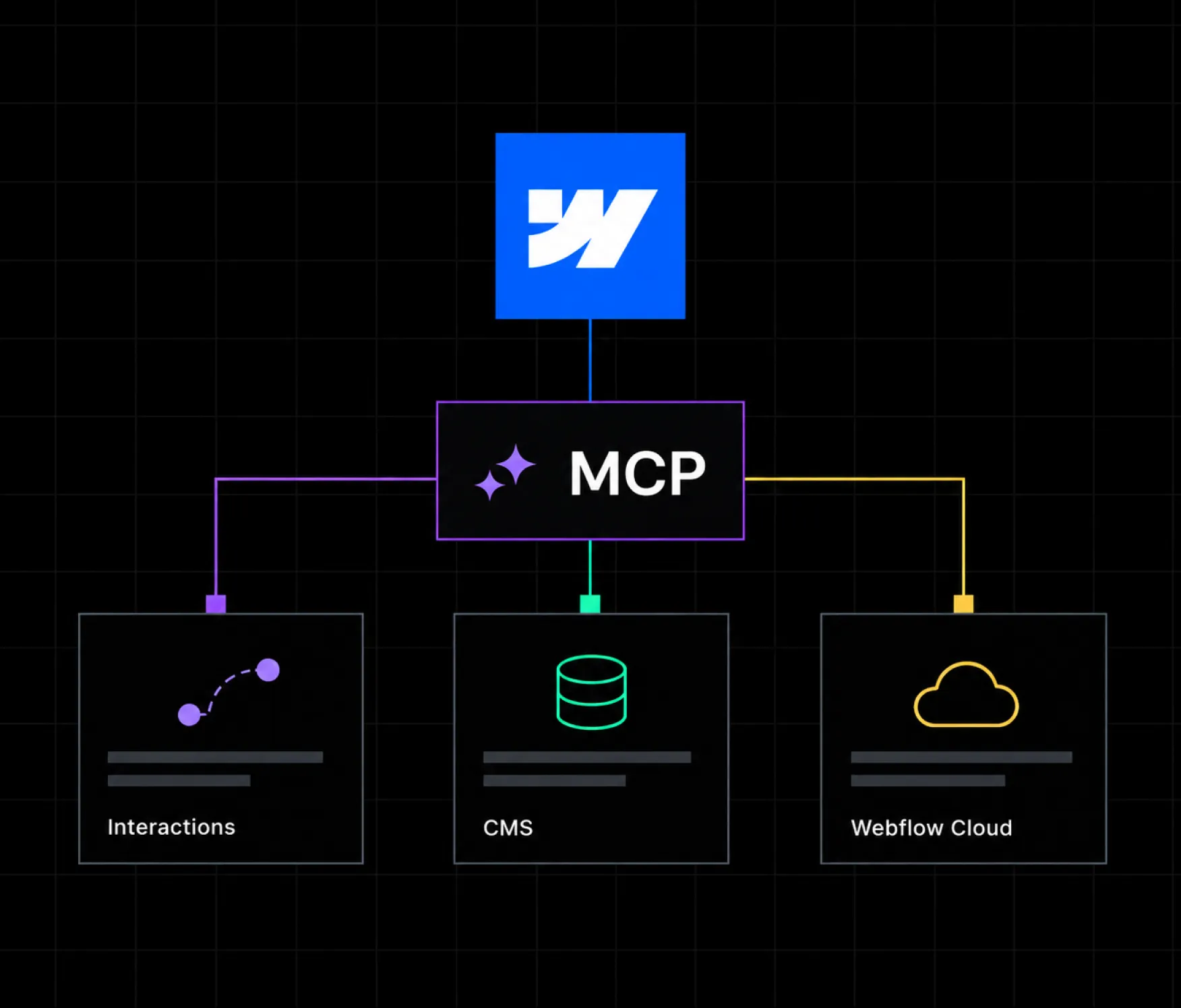
For years, running a Webflow site meant clicking through the Designer, updating CMS items one by one, and pulling in developers every time the work moved beyond drag and drop. That equation just changed. With the official Webflow connector for Claude, you can now talk to your site in plain English and watch it respond. Pages get audited. CMS items get created in bulk. Style systems get cleaned up. Localized landing pages get drafted in minutes instead of hours. The connector is built on Webflow's Model Context Protocol (MCP) server, which gives Claude real, governed access to your Designer and Data APIs. In practical terms, that means Claude is no longer just a brainstorming partner sitting next to your browser tab. It is an operator inside your site, executing tasks you would normally schedule across multiple team members and several days of work.

This shift matters because the bottleneck in most Webflow projects has never been ideas. It has been execution. Every team has a backlog of SEO fixes, content updates, class cleanups, and new pages waiting for someone to find the time. The Webflow + Claude connector compresses that backlog dramatically. Below are five concrete things you can do with it today, the kind of work that pays for itself the first week you turn it on.

1. Run Full SEO Audits and Apply Fixes at Scale

SEO maintenance is one of those tasks that everyone agrees is important and almost no one keeps up with. Meta titles drift past 60 characters. Descriptions go generic. Images get uploaded without alt text. Slug structures lose their logic as the team grows. On a 50 page site this is annoying. On a 200 page site with hundreds of CMS items, it is a full week of focused work that rarely gets prioritized.

With Claude connected to Webflow, the entire audit collapses into a single working session. You can ask Claude to list every page and CMS item on the site, flag any meta title over 60 characters, flag any description over 155 characters, identify missing alt tags on CMS images, and check whether the main keyword from the slug actually appears in the title. Claude returns the findings in a structured table, proposes corrected versions for each problem case, and waits for your approval before touching anything. Once you sign off, it applies the fixes directly to Webflow through the Data API.

Example prompt to try:

"Audit all pages and CMS items on my Webflow site. For each one, show the current meta title, current meta description, and flag any title over 60 characters, any description over 155 characters, missing alt text, or generic copy. List the issues in a table with proposed corrections. Do not change anything yet, wait for my approval."

The real win is consistency. A human auditor gets tired around row 80 and starts approving things they would have rejected at row 10. Claude does not. It applies the same rules with the same precision across the entire site, and the savings on a mid-sized project typically land somewhere between four and eight hours of senior time.

2. Manage Bulk CMS Updates Without Touching the Designer

The CMS is where most Webflow sites actually live. Blog posts, case studies, products, team members, locations, FAQs, all of it sits in collections that need constant attention. Adding 20 new product entries the old way meant either manual entry or a CSV import that often broke on reference fields. Updating one field across an entire collection meant clicking into each item, making the change, and saving. For content teams, this was the slowest part of the job.

The Claude connector turns CMS work into a conversation. You can ask Claude to create new items from a list, update specific fields across an entire collection, change category assignments based on rules you define, rewrite portions of existing items to match a new tone, or restructure a blog by reassigning posts to different topic clusters. Because Claude reads the collection schema before acting, the data it writes already conforms to your field types, your reference relationships, and your slug conventions. No broken imports. No fields ending up in the wrong place.

Example prompt to try:

"Audit all classes and variables in my Webflow site. List duplicate or near duplicate classes, any hardcoded color or spacing values that should be replaced with existing variables, and classes that appear unused. Produce a structured cleanup report with your recommendations, ranked by impact."

"In my Blog Posts collection, find every item still tagged with the old category 'News' and reassign it to either 'Product Updates' or 'Company News' based on the content of the post. Show me your proposed reassignments in a table before applying."

This is particularly powerful for e-commerce operators and content-heavy sites. Inventory adjustments, price changes, seasonal product launches, blog reorganizations, all of these become tasks you describe rather than tasks you click through.

3. Clean Up Your Design System and CSS Class Hygiene

Any Webflow site that has been live for more than a year tends to accumulate technical debt in its style system. Duplicate classes pile up because two contributors named the same thing slightly differently. Hardcoded color values appear where a CSS variable already exists. Spacing values drift from your design tokens. Component variants multiply for no real reason. The site still looks fine, but the foundation has become hard to maintain, and onboarding a new designer to it costs real time.

Claude can audit the entire class and variable system through the Designer API. Ask it to list every class on the site, identify duplicates or near duplicates, flag naming inconsistencies, find hardcoded values that should be tokens, and surface unused styles that can be safely removed. Claude produces a clean report you can review before any changes are made. With your approval, it can then consolidate duplicate classes, replace hardcoded values with the right CSS variables, and standardize naming across the site.

Example prompt to try:

"Read the last three published posts in my Blog Posts collection. Analyze the structure, header hierarchy, tone, and internal linking pattern. Then draft a new post on the topic 'How to choose a Webflow agency' that follows the same format exactly. Create it as a draft in the collection with proper meta title and description."

"Audit all classes and variables in my Webflow site. List duplicate or near duplicate classes, any hardcoded color or spacing values that should be replaced with existing variables, and classes that appear unused. Produce a structured cleanup report with your recommendations, ranked by impact."

For agencies inheriting client sites, this single capability shortens the audit phase of new engagements significantly. For in-house teams, it gives you a way to keep design system hygiene as part of regular maintenance rather than a one-time crisis project.

4. Generate Content That Actually Matches Your Existing Structure

Most AI writing tools produce generic output that needs heavy editing before it can sit alongside your existing content. Tone is off. Internal linking is missing. Headers do not match your taxonomy. The article reads like an article from somewhere else, which is exactly the problem the Webflow connector solves.

Because Claude can read your existing CMS content directly, it can analyze the structure, voice, and formatting patterns of your published work, then generate new content that replicates those patterns precisely. If your blog uses a specific header hierarchy, embedded tables, internal anchor links, and a recurring section structure, Claude picks that up and applies it to the new piece. If you have a comparison series with a consistent format, it follows that format. If your product pages have a specific layout with consistent fields, it generates new entries that match.

The workflow looks something like this. You give Claude access to the relevant collection. You point it at two or three published items as reference. You provide source material or a brief. Claude drafts a new entry in the CMS as a draft, with the correct structure, the correct metadata, and internal links to related items already in place. You review, adjust a line or two, and publish.

Example prompt to try:

"Read the last three published posts in my Blog Posts collection. Analyze the structure, header hierarchy, tone, and internal linking pattern. Then draft a new post on the topic 'How to choose a Webflow agency' that follows the same format exactly. Create it as a draft in the collection with proper meta title and description."

A comparison article that used to take two hours of structural work plus the actual writing now takes 30 minutes total.

5. Build Programmatic Landing Pages and Migrate Content Faster

Two of the most painful Webflow projects share the same underlying problem: repeating a structure many times with small variations. Local SEO pages are the classic example. You need 20 location specific landing pages, each with the same skeleton but localized data, examples, and language. Done manually, that is two to three days of work. Done with the connector, it is an afternoon.

The flow is straightforward. Claude reads your pillar page and the most relevant case studies or proof points from the CMS. It identifies the sections that need adapting for each target city or region. It generates a localized version for each target with the right examples, statistics, and contextual language. It creates the draft in the CMS with correct metadata. You review the batch, make adjustments, and publish.

Example prompt to try:

"Using my main service pillar page and the two most relevant case studies in the CMS as reference, generate 10 city-specific landing page drafts for [list of cities]. Localize the examples, integrate city-relevant data where reasonable, and create each one as a draft in the Locations collection with correct SEO metadata."

Content migration follows a similar logic. Moving 30 consultant pages from WordPress to Webflow used to mean reformatting HTML, cleaning up shortcodes, mapping fields, and configuring redirects, all by hand. Claude can read source pages provided via HTML export, reformat them into clean Webflow compatible structure, push them into the target CMS with proper metadata, and generate the full list of 301 redirects in one pass. The grinding parts of migration disappear from the project scope, which means you can quote migration work more aggressively and deliver it faster.

Where the Connector Sits in Your Workflow

A few practical notes worth knowing before you turn this on. The Webflow connector requires a paid Claude plan. Setup takes about three minutes from the Connectors menu inside Claude, using standard OAuth to authorize the sites you want to connect. For CMS, metadata, and content operations through the Data API, you do not need the Webflow Designer open. For operations that touch the canvas through the Designer API, the companion app needs to be running. Most everyday work falls into the first category, which is part of why this is so usable for marketing and content teams who do not live inside the Designer.

The other thing to set correctly is approval mode. Claude can run in automatic mode, where it executes changes directly, or manual mode, where it lists each intended change and waits for confirmation. For production sites, manual mode is the right starting point. You see exactly what is about to happen before it happens, which keeps you in control while you learn what the connector is good at.

Conclusion: From Talking About Changes to Making Them

The interesting part of the Webflow + Claude connector is not any individual feature. It is the closing of the gap between deciding to do something and seeing it live on the site. For most teams, that gap is where projects die. SEO audits sit in spreadsheets nobody acts on. Class system cleanups get pushed to the next quarter forever. Content backlogs grow because the bottleneck is execution capacity, not strategy. By giving Claude real, governed access to your Webflow site, that bottleneck loosens significantly. The work that used to require a sprint now fits inside an afternoon.

This does not mean Webflow becomes a black box you stop understanding. The connector is built around Webflow's existing structure, so everything Claude does is editable, reviewable, and reversible in the same Designer your team already uses. You get speed without giving up control. For agencies, that means more projects shipped per quarter. For in-house teams, it means the maintenance and optimization work that always slipped to the bottom of the list finally starts getting done. If you run a Webflow site and have not turned the connector on, the five minutes of setup is the most lopsided ROI investment available to you this year.

About Appsrow

This blog is brought to you by Appsrow, a team with deep, hands-on expertise in Claude integrations and Webflow development. We help businesses connect Claude to Webflow the right way, from setting up the MCP connector and configuring approval workflows, to building custom automations for CMS operations, SEO at scale, content generation pipelines, and full site migrations. If you want to turn the ideas in this post into working systems on your own site, we know the platform, we know the AI layer, and we know how to make the two work together without cutting corners on governance, branding, or design quality. Reach out to talk about your Webflow + Claude project.

TL;DR

Appsrow connects your Webflow website directly to Airtable — so your forms, content, leads, and workflows sync automatically without custom code or manual effort.Appsrow connects your Webflow website directly to Airtable — so your forms, content, leads, and workflows sync automatically without custom code or manual effort.

Webflow gives you the freedom to design and build powerful, visually polished websites without writing code. But as your business grows, you need more than just a good-looking site. You need structured data, organized records, and a backend that keeps pace with your operations. That is where Airtable comes in. Airtable works like a supercharged spreadsheet and a relational database rolled into one, giving you a flexible home for all your business data including leads, orders, content schedules, team workflows, and more.
When Webflow and Airtable are connected, your website stops being a static front end and becomes a living system. A form submission on your Webflow site instantly creates a new record in Airtable. A status update in Airtable can trigger changes visible on your website. Content managed in Airtable can flow directly into your Webflow CMS. The two platforms complement each other perfectly, and Appsrow specializes in building exactly these kinds of reliable, real-time connections between them.
Most businesses running Webflow sites eventually reach a point where spreadsheets and manual data entry slow everything down. Leads go untracked, form data piles up in inboxes, and team members spend hours copying information from one place to another. An Airtable integration solves this by giving every piece of data a proper home, keeping it connected to your website automatically, and making it available to your team in a format that is easy to filter, sort, search, and act on.

Real-Time Data Sync

Every form submission, click, or content update flows instantly between Webflow and Airtable with no delay.

Organized Records

All your leads, orders, and submissions land in structured Airtable bases, clean and ready to use.

Two-Way Integration

Push data from Webflow into Airtable and pull Airtable content back into your Webflow CMS automatically.

No Manual Entry

Eliminate copy-paste work entirely. Data moves on its own, freeing your team for higher value tasks.

Custom Workflows

Trigger automations, send notifications, or update views in Airtable based on actions taken on your Webflow site.

Scalable as You Grow

The integration grows with your business, handling more data, more fields, and more complex logic over time.

Appsrow's Webflow Airtable Integration Services

We build integrations that are reliable, well-structured, and built to fit how your team actually works. Here are the six core services we offer.

Form to Airtable Connection

We connect every Webflow form on your site to the right Airtable base, so submissions arrive as structured records the moment a visitor clicks submit.

Airtable to Webflow CMS Sync

Manage your blog posts, product listings, team bios, or any CMS content directly in Airtable and have it sync automatically to your Webflow site.

Two-Way Data Flow Setup

We configure bidirectional connections so data moves both from your website into Airtable and from Airtable back into your Webflow pages without conflicts.

Automation and Trigger Workflows

We set up Airtable automations that fire based on Webflow events, such as sending a confirmation email when a lead form is submitted or notifying a team member when a new order arrives.

Custom Field Mapping

Every business has unique data structures. We map your Webflow form fields precisely to the correct Airtable columns, including conditional logic and field transformations.

Ongoing Support and Maintenance

We stay available after launch to handle updates, fix issues, add new fields, and keep your integration running smoothly as your site and workflows evolve.

Ready to Connect Your Webflow Site to Airtable?

Stop managing data manually. Let Appsrow build a clean, reliable integration that keeps your website and your team in sync automatically.Get a Free Integration Consultation.

Why Choose Appsrow for Your Webflow Airtable Integration

We do not just connect two tools and call it done. We understand how your business works and build integrations that fit naturally into your existing processes.

Deep Webflow and Airtable Expertise

Our team has worked inside both platforms extensively. We understand the quirks of Webflow's CMS, the logic of Airtable's relational structure, and how to make them talk to each other correctly the first time.

Integrations Built Around Your Workflow

We take the time to understand how your team uses data before we build anything. The result is an integration shaped around your process, not a generic setup that forces you to change how you work.

Fast Turnaround Without Cutting Corners

We move quickly because we have done this many times, but we never skip the testing phase. Every integration is verified end to end before it goes live so you are not discovering bugs after launch.

Support That Does Not Disappear After Delivery

Your integration will need updates as your site grows and your data needs change. Appsrow stays available after the project is complete, making ongoing maintenance straightforward and stress-free.

TL;DR

Webflow does not natively support Firebase - connecting the two requires custom JavaScript via Webflow's embed system and Firebase's client SDK.

Appsrow builds Firebase integrations inside Webflow covering Firestore, Authentication, Realtime Database, Storage, and Cloud Functions - without disrupting your design or CMS.

Services include user authentication, real-time data sync, dynamic CMS-driven content, file uploads, serverless logic, and multi-tool automation.

Every project starts with a free audit, includes full staging environment testing, and comes with ongoing post-launch monitoring and support.

The result is a Webflow site that behaves like a full web application - personalised, real-time, and connected to your entire data stack.

Implementations follow Firebase security rules best practice - your data is protected by default, not as an afterthought.

Clients typically unlock capabilities their Webflow site could never achieve natively, within days of go-live.

Webflow Is Your Frontend. Firebase Is Your Backend. Appsrow Connects Them.

Webflow gives designers and product teams an extraordinary amount of creative and structural control over a website. The visual canvas is unmatched, the CMS is genuinely powerful for content-driven sites, and the hosting infrastructure is solid. But Webflow is a frontend platform - and there is a hard ceiling on what it can do when a site needs to behave like a real application.

Firebase is Google's application development platform: a suite of backend services that includes real-time databases, user authentication, cloud file storage, serverless functions, and hosted APIs. It is designed to power applications that are dynamic, personalised, and data-driven. Used alone, it requires a frontend framework to surface data to users. Used with Webflow, it turns a beautifully designed static site into a fully functional web application.

The gap between what Webflow can do natively and what most ambitious products actually require is exactly where a Webflow-Firebase integration operates. Appsrow builds that integration: Firebase services embedded into your Webflow site through the Firebase JavaScript SDK, configured precisely for your product's data architecture, secured correctly, and connected to the downstream tools your team depends on.

We have built this integration across SaaS dashboards, membership platforms, marketplace directories, booking systems, community tools, and internal business applications - each with a different data shape, authentication requirement, and real-time behaviour. The consistent finding is that Webflow with Firebase unlocks product capabilities that would otherwise require a complete rebuild in React or Next.js.

The result is a Webflow site that stores and retrieves data in real time, authenticates users securely, handles file uploads, runs serverless logic, and connects to every tool your business already uses.

  • Authenticate users with email, Google, or social login directly inside Webflow
  • Read and write to Firestore or Realtime Database from any Webflow page
  • Show personalised, user-specific content without page reloads
  • Handle file uploads to Firebase Storage from Webflow forms
  • Trigger serverless Cloud Functions from user interactions on your Webflow site
  • Sync Firebase data back to Webflow CMS or external tools automatically
  • Works alongside your existing Webflow design - nothing breaks
  • Secure Firebase rules that protect your data by collection, document, and user role

Integration Capabilities We Deliver

  • Firestore Database
  • Realtime Database
  • Firebase Storage
  • Cloud Functions
  • Webflow CMS Sync
  • Google Sign-In
  • Social Auth (GitHub, Twitter)
  • Role-Based Access Control
  • Real-Time Data Listeners
  • Zapier Webhooks
  • Make.com Automations
  • Airtable Sync
  • Notion Integration
  • Google Sheets Sync
  • Slack Notifications
  • Email via SendGrid
  • HubSpot CRM Sync
  • Memberstack Integration
  • Stripe Payment Sync
  • Firebase Analytics
  • Remote Config
  • Push Notifications
  • Custom API Endpoints

...and any custom flow your product requires.

Why Integration

The Real Cost of Building Without a Backend

Without a proper backend, Webflow sites plateau. Users cannot log in, data cannot persist, content cannot personalise. A properly built Webflow-Firebase integration removes every one of those ceilings.

True User Authentication

Firebase Authentication gives your Webflow site a production-grade login system supporting email and password, Google, GitHub, and other social providers. Users get persistent sessions, password resets, and email verification - without building a single line of auth logic from scratch.

Real-Time, Personalised Content

Firestore and Realtime Database update your Webflow UI the instant data changes - no page refresh required. Dashboards, feeds, notifications, and user-specific content all reflect live data, making your Webflow site behave like a native application.

Persistent Data Without a Server

Every form submission, user action, or content update can be written to Firestore and retrieved on any subsequent visit. Your Webflow site gains a persistent data layer that survives sessions, devices, and browser closes - all managed by Google's infrastructure.

Secure File Uploads

Firebase Storage lets users upload images, documents, and files from Webflow forms directly into a managed cloud bucket. Files are served back via authenticated URLs - no third-party upload service, no unsecured S3 bucket, no manual file management.

Serverless Logic Without Infrastructure

Cloud Functions let you run backend logic - sending emails, processing payments, transforming data, calling third-party APIs - without managing a server. Triggered by Firebase events or HTTP calls from your Webflow site, they execute in milliseconds and scale automatically.

Role-Based Access and Permissions

Firebase Security Rules let you control exactly who can read or write what data - down to the individual document and field level. Combined with custom user claims, you can build multi-tier access systems (admin, member, guest) that enforce themselves in the database, not just the UI.

Unified Data Across Webflow and Firebase

Keep Webflow CMS and Firestore in sync automatically. Content published in your Webflow CMS can flow into Firestore; user-generated content in Firestore can surface in your Webflow site. A single source of truth, whichever direction the data moves.

Reduced Infrastructure Cost and Complexity

Firebase's generous free tier covers most early-stage product needs. There are no servers to provision, no databases to maintain, and no SSL certificates to renew. The operational overhead of running a backend drops to near zero - Firebase handles it as a managed service.

Google-Scale Reliability

Firebase runs on Google Cloud infrastructure with 99.95% uptime SLAs, global CDN distribution, and automatic scaling. Your Webflow site's backend can handle ten users or ten million without infrastructure changes - Firebase scales automatically to match demand.

Webflow with Firebase is the most practical path from a designed website to a functioning product. You keep the design fidelity of Webflow and gain the application power of Firebase without rebuilding everything in a JavaScript framework.
The difference between a Webflow site and a Webflow application is a backend. Firebase is the fastest and most maintainable way to add one - when it is implemented correctly from the start.

Our Services

Everything You Need to Connect Webflow and Firebase

Appsrow delivers end-to-end Webflow Firebase integration services - from simple Firestore reads on a landing page to fully custom authenticated applications built around your exact product architecture.

Firebase Authentication Setup

Implement a complete user authentication system inside your Webflow site using Firebase Auth. Covers email and password sign-up, Google and social login, session persistence, protected page routing, and user profile management - all embedded via Webflow's custom code system.

Firestore Database Integration

Connect your Webflow pages to a Firestore database for reading and writing structured data. We design your collection and document architecture, configure real-time listeners, and build the JavaScript layer that keeps your Webflow UI in sync with your data without page reloads.

Realtime Database Integration

For use cases requiring ultra-low-latency synchronisation - live collaboration, presence indicators, activity feeds, or event-driven dashboards - we implement Firebase Realtime Database listeners that update your Webflow UI in milliseconds as data changes.

Firebase Storage and File Uploads

Build file upload flows directly into Webflow forms using Firebase Storage. Users can upload profile images, documents, portfolios, or any other file type - with upload progress indicators, file type validation, and authenticated access to stored files all handled in the integration.

Cloud Functions Development

Write and deploy Cloud Functions that handle the backend logic your Webflow site cannot run client-side. Common use cases include sending transactional emails, processing payments via Stripe, transforming and enriching data on write, and calling third-party APIs securely without exposing keys.

Role-Based Access Control

Implement multi-tier user roles using Firebase custom claims and Security Rules. Admins, members, and guests each see only what they are permitted to see - enforced in the database, not just the frontend. We design the role model, write the rules, and build the Webflow UI logic to match.

Webflow CMS and Firestore Sync

Keep Webflow CMS content and Firestore data in sync automatically. New CMS items can trigger Firestore writes via webhooks; new Firestore documents can populate Webflow CMS entries via the Webflow API. One update in either system stays consistent across both.

Dynamic, User-Specific Page Content

Transform static Webflow pages into personalised experiences using Firebase data. Show a logged-in user their account dashboard, order history, saved items, or custom content - all rendered dynamically from Firestore into your existing Webflow page structure without a rebuild.

Firebase Security Rules Audit and Implementation

Poorly written Security Rules are the most common Firebase vulnerability. We audit existing rules or write them from scratch to ensure every Firestore collection, Storage bucket, and Realtime Database path has the correct read and write permissions for every user role.

Webhook and Automation Setup

Connect Firebase events to your broader tool stack using Cloud Functions as webhook endpoints. Every new user signup, document write, or file upload can trigger automations in Zapier, Make.com, or direct API integrations - flowing data to Airtable, Slack, HubSpot, and beyond in real time.

Migration from Other Backend Providers

Moving from Supabase, Airtable, a custom REST API, or a legacy database to Firebase? We handle the data migration cleanly - mapping your existing schema to Firestore's document model, migrating user records, and ensuring zero downtime on your Webflow site during the transition.

Ongoing Maintenance Retainer

Monthly retainer plans that keep your integration current with Firebase SDK updates, Webflow platform changes, and evolving security best practice. Includes proactive monitoring, Firebase usage cost reviews, performance optimisation, and priority support as your product grows.

Why Appsrow

Why Appsrow Is the Expert Choice for Webflow Firebase Integration

We have spent years building at the intersection of Webflow's frontend and Firebase's backend. Our team understands both platforms at an architectural level - and the precise constraints that govern how they work together.

Webflow and Firebase Specialists

Our team has deep, hands-on expertise across Webflow's Designer, CMS, Logic, and Hosting systems, and across Firebase's full product suite - Auth, Firestore, Storage, Functions, and Security Rules. This is not general web development applied to both platforms; it is platform-specific expertise across both.

Zero Template Disruption

We integrate Firebase into your Webflow site without touching your design system, breaking your layout, or disrupting your CMS structure. Every JavaScript embed is scoped precisely, conflict-tested against your existing custom code, and validated in staging before any change reaches your live site.

Security-First Implementation

Firebase Security Rules are not an optional extra - they are the difference between a secure application and an exposed database. We write Security Rules as a core deliverable on every project, not a bolt-on. Every collection, document, and storage path is protected by the correct rule from day one.

Proof of Concept Before Full Build

For complex authentication flows, real-time data architectures, or multi-role access systems, we validate the full approach in a staging environment before full implementation. You interact with the working integration before we touch your live site or production database.

Firestore Data Architecture Expertise

Firestore's document model behaves differently from relational databases, and poor data architecture creates query limitations and cost spikes later. We design your collection structure, indexing strategy, and denormalisation approach upfront - based on your actual query patterns, not generic best practice.

Real-Time Performance Optimisation

Unnecessary Firestore listeners and unoptimised queries compound Firebase costs and slow your Webflow UI. We build integrations that listen precisely - fetching only what is needed, closing listeners when pages unload, and using batching and caching where appropriate to keep performance and cost both low.

No-Code and Custom Code Hybrid

We choose the right tool for each part of your integration - Webflow Logic, custom JavaScript, Make.com triggers, or direct Firebase SDK calls - based on what is most reliable and maintainable for your specific product architecture, not what is fastest for us to build.

Firebase Cost Monitoring

Firebase's pricing scales with usage, and unexpected query patterns or listener misuse can create bill spikes. We configure Firebase usage alerts, review your billing dashboard at integration handover, and recommend query and listener patterns that keep costs predictable as your user base grows.

Transparent Communication

You get a single point of contact, weekly progress updates, and a shared project tracker throughout every engagement. No hand-offs between teams, no waiting days for a status update, and no surprise scope changes after the project begins.

Documentation Your Team Can Use

Every integration ships with clear, maintained documentation written for your team - not your developer. Includes Firestore schema diagrams, Security Rules explanations, Cloud Functions reference, and a maintenance runbook so internal staff can manage day-to-day operations with confidence.

Cross-Industry Track Record

We have delivered Webflow Firebase integrations for SaaS products, membership communities, marketplace directories, booking platforms, internal tools, and education businesses. Proven patterns from each sector inform every new project rather than starting from scratch.

Honest Scoping and Pricing

Fixed-fee scoping after the audit, with no hourly billing surprises. If we discover something mid-project that changes scope, we tell you immediately - and you decide whether to expand the work or hold to the original plan. You are never billed for decisions made without your input.

How We Deliver Your Webflow Firebase Integration

Discovery

Webflow Audit and Product Requirements Review

We start by reviewing your existing Webflow setup - your Designer structure, CMS schema, current custom code, and hosting configuration - alongside your Firebase project (or the requirements for a new one) and your product's data and authentication needs. This gives us an accurate picture of what needs to be built, which Firebase services to use, and where integration points should live without disrupting what already works.

Strategy

Integration Architecture and Data Model Design

We design the full integration architecture: which Firebase services to use, how Firestore collections and documents should be structured, how authentication flows map to Webflow page states, how Security Rules enforce data access, and which automation tools handle data events downstream. You receive a clear architecture diagram and written specification before any code is written, with timeline, milestones, and expected outcomes laid out explicitly.

Proof of Concept

Staging Environment Build and Concept Validation

We build and test the complete integration in a staging Firebase project against a non-production version of your Webflow site. Every critical path - user signup, data read and write, file upload, role-based access, real-time listener behaviour - is validated before a single change reaches your live environment. You interact with the working integration and confirm it meets your requirements before full development begins.

Build and Test

Development, Integration, and Quality Assurance

Our developers implement the integration with precise attention to Webflow's code embed system, CMS data bindings, and hosting constraints alongside Firebase SDK patterns, Security Rules, and Cloud Functions behaviour. Every data field mapping, authentication state handler, and Firestore listener is tested against real-world usage patterns. We validate cross-browser behaviour, mobile responsiveness, offline edge cases, and error state handling before any code reaches your production environment.

Stakeholder Review

Pre-Launch Client Walkthrough and Sign-Off

Before deployment, we run a full walkthrough of the integration with your team. You see every user flow, every data interaction, every role-based permission, and every edge case in action. Any final adjustments to UI behaviour, data structure, or downstream automations are made here - so go-live is a clean switch from staging to production, with no surprises and no last-minute changes.

Deployment

Controlled Go-Live and Team Handover

We deploy to your live Webflow site and production Firebase project in a controlled manner, typically during a low-traffic window. Our team monitors the integration through the first real user sessions, resolves any edge cases that emerge in production, and provides complete documentation and training so your team understands how the system works, how to manage Firebase settings, and what to monitor as usage grows.

Support

Ongoing Monitoring and Optimisation

Post-launch, we monitor Firebase usage metrics, Firestore read and write costs, authentication event patterns, and Cloud Functions execution logs. When Webflow updates its platform or Firebase releases SDK changes, we adapt your integration proactively. We also review performance and cost data with you at regular intervals and recommend optimisations to query patterns, listener architecture, and Security Rules as your user base and product evolve.

Iterate

Quarterly Performance Reviews and Roadmap

Every quarter, we review product performance, Firebase usage and cost trends, and emerging feature requirements with your team. New product areas, expanded user roles, new data models, or additional Firebase services - each becomes a planned iteration on your integration architecture rather than an unplanned technical fire drill. Your backend grows alongside your product, not behind it.

TL;DR

Webflow's native integrations only scratch the surface - most teams need Zapier to connect forms, CMS, and Ecommerce events to the rest of their stack.

Appsrow designs and builds production-grade Zapier workflows that route Webflow data to your CRM, email tool, spreadsheet, or internal database in real time.

Services include form-to-CRM automations, CMS sync, Ecommerce order routing, multi-step Zaps, error handling, and custom webhook setups.

Every project starts with a free workflow audit, full sandbox testing, and clear documentation your team can maintain.

The result is fewer manual exports, no missed leads, and Webflow data flowing automatically to every tool your team uses.

Workflows are built with reliability in mind - retry logic, error notifications, and version control included.

Most clients see manual admin work drop by 60-80% within the first month after go-live.

Webflow Captures the Lead. Zapier Should Move It Everywhere It Needs to Go.

Webflow is exceptional at capturing data - form submissions, CMS entries, Ecommerce orders, and member signups all flow in cleanly. But Webflow alone does not push that data anywhere. Without an automation layer, every new lead, order, or signup sits in Webflow until someone exports it manually, copies it into a CRM, sends a notification, or kicks off the next step. That manual work is where most teams quietly lose hours every week and where leads quietly go cold.

Zapier solves this by connecting Webflow to over 7,000 other apps - HubSpot, Salesforce, Mailchimp, Slack, Airtable, Notion, Google Sheets, ClickUp, and almost every other tool a modern business runs on. The challenge is that most Zapier setups are built quickly, break silently, and quietly miss data when something unexpected happens. A poorly built Zap is often worse than no automation at all.

Appsrow builds Webflow-to-Zapier integrations the way they should be built: with proper trigger configuration, multi-step logic, error handling, retry behaviour, and clear documentation. We treat your Zaps as production infrastructure - not as quick wiring between two tools - because that is exactly what they become the moment a real lead, order, or signup depends on them.

We have delivered this work across SaaS, agencies, course creators, professional service firms, membership communities, and ecommerce brands. The pattern is consistent: a working Zap is easy, but a Zap that handles edge cases, scales with volume, and survives platform updates is what separates reliable automation from a fragile workaround.

The result is automation you can trust - data moving instantly, no missed records, no duplicate entries, and a Webflow site that quietly drives your operations behind the scenes.

  • Connect Webflow forms, CMS, and Ecommerce events to any of 7,000+ apps
  • Multi-step Zaps with conditional logic, filters, and formatters
  • Built-in error notifications and retry logic for every workflow
  • Custom webhook setups when Zapier's native triggers fall short
  • Bidirectional sync between Webflow CMS and external databases
  • Lead deduplication, data cleansing, and field mapping done right
  • Slack and email alerts on workflow failures - no silent breakage
  • Documentation and team training so your staff can maintain the Zaps

Integration Capabilities We Deliver

  • Webflow Form Triggers
  • CMS Item Sync
  • Ecommerce Order Routing
  • HubSpot CRM Sync
  • Salesforce Lead Capture
  • Mailchimp Audience Sync
  • Klaviyo Triggers
  • Airtable Database Sync
  • Notion Workspace Updates
  • Google Sheets Logging
  • Slack Notifications
  • Microsoft Teams Alerts
  • ClickUp Task Creation
  • Asana Project Sync
  • Trello Card Generation
  • Calendly Booking Sync
  • Stripe Payment Routing
  • PayPal Event Handling
  • Webhook Catch & Send
  • Multi-Step Zap Logic
  • Conditional Paths
  • Formatter & Filter Steps
  • Looping with Sub-Zaps
  • Custom API Endpoints
  • Custom Workflow Automation for Business Needs

...and any custom workflow your business requires.

Why Integration

The Real Cost of Manual Webflow Operations

Every form submission you process by hand, every order you copy into a spreadsheet, every signup you add to your email tool manually is direct time and revenue leaking out of your business. Properly built Zapier workflows close those gaps at the source.

Instant Lead Routing

The first business to reply to a lead wins it. Zapier-driven Webflow workflows push new form submissions to your CRM, sales rep, or Slack channel within seconds - so your team can respond while interest is still warm, not hours after the moment passed.

Eliminated Manual Data Entry

Copying form data into a CRM, spreadsheet, or email tool is invisible work that adds up to hours every week. A single well-built Zap removes that work permanently and makes sure no record gets skipped or mistyped along the way.

Unified Source of Truth

Webflow data synced automatically into Airtable, Google Sheets, Notion, or your data warehouse means your team works from one accurate dataset. No exports, no version drift, no debating whose spreadsheet has the latest numbers.

Real-Time Team Notifications

The moment someone fills out a form, places an order, or registers for an event, the right people know about it. Slack pings, email alerts, or SMS notifications fire instantly so your team operates on real-time information rather than dashboard refreshes.

Connected Ecommerce Operations

Webflow Ecommerce orders pushed automatically into your fulfilment tool, accounting system, and customer email platform. The order lifecycle - from purchase to shipping confirmation - happens without anyone exporting a CSV.

Reliable Multi-Tool Workflows

Modern teams run on dozens of apps. Zapier connects Webflow to over 7,000 of them, letting you orchestrate a single event - a form submission, for example - across multiple tools simultaneously without writing custom integrations for each one.

Faster Onboarding for New Customers

A new signup on Webflow can trigger account creation, welcome emails, CRM tagging, calendar invites, and onboarding sequences automatically. The first impression your customer gets is fast, polished, and consistent every single time.

Reduced Operational Risk

Manual processes break when staff change, get sick, or forget steps. Automated workflows do not have those failure modes. Your operational backbone stops depending on individual humans remembering to do things in the right order.

Scalable Growth Without Headcount

Volume that would have required a new hire often only requires a new Zap. Properly designed automation lets you handle 10x the leads, orders, or signups without proportionally scaling your operations team to match the volume.

A properly built Webflow-Zapier integration typically saves teams 10-20 hours of manual work per week. The integration quality matters as much as the automation itself.The difference between a quick Zap and a properly architected workflow is the difference between automation that helps and automation that quietly loses you data every week.

Our Services

Everything You Need to Connect Webflow and Zapier

Appsrow delivers end-to-end Webflow Zapier integration services - from simple form-to-email Zaps to complex multi-step workflows that span ten tools and route data conditionally based on business rules.

Webflow Form to CRM Automation

Push every Webflow form submission directly into HubSpot, Salesforce, Pipedrive, Zoho, or any CRM with proper field mapping, lead source tagging, and deduplication logic. Your sales team gets clean records, not duplicates.

CMS Item Sync Workflows

Automate two-way sync between Webflow CMS and Airtable, Notion, or Google Sheets. Updates in either system reflect across both - perfect for content teams, inventory management, and editorial calendars driven by external data.

Ecommerce Order Routing

Connect Webflow Ecommerce orders to your fulfilment, accounting, inventory, and customer service tools. Each order can trigger ten downstream actions without anyone touching the order dashboard manually.

Multi-Step Zap Architecture

When a single trigger needs to drive several outcomes - update CRM, send Slack notification, add to email list, create task - we design multi-step Zaps with filters, paths, and formatters that handle real business logic, not just simple two-step workflows.

Custom Webhook Integrations

When Zapier's native Webflow triggers do not cover your use case, we build custom webhook flows using Webflow's site events and Zapier's webhook receivers. Full control over what fires when, with the same reliability as native triggers.

Email and Marketing Tool Sync

Connect Webflow signups, form fills, and CMS events to Mailchimp, Klaviyo, ConvertKit, ActiveCampaign, or any marketing automation platform. Tag, segment, and trigger campaigns based on real Webflow behaviour - not periodic CSV imports.

Slack and Team Notification Setup

Real-time alerts to Slack, Microsoft Teams, or Discord the moment something important happens on your Webflow site. Configurable formatting, channel routing, and mention rules so the right people see the right notifications immediately.

Error Handling and Retry Logic

Most Zaps fail silently. We build error notifications, retry rules, and fallback paths into every workflow so when something breaks, you find out within minutes - not when you notice three weeks of leads went missing.

Lead Scoring and Routing Rules

Build conditional logic that scores incoming Webflow leads, routes them to the right sales rep, applies the right CRM tags, and triggers the right onboarding sequence based on form fields, geography, or industry.

Reporting and Dashboard Automation

Push Webflow data into Google Sheets, Looker Studio, Airtable interfaces, or any BI tool to build live dashboards. See form conversion, CMS publishing rates, or order trends without manual reporting cycles.

Migration and Workflow Cleanup

Inheriting a tangle of broken or undocumented Zaps from a previous developer or contractor? We audit what exists, untangle the dependencies, and rebuild the critical workflows on a clean foundation that your team can actually understand and maintain.

Ongoing Maintenance Retainer

Monthly retainer plans that monitor your Zaps, watch for Webflow or Zapier platform updates, and adapt your workflows as your tool stack evolves. Includes proactive failure alerts, priority support, and quarterly automation reviews.

Why Appsrow

Why Appsrow Is the Expert Choice for Webflow Zapier Integration

We have spent years building production automation across the Webflow ecosystem. Our team does not bolt Zaps together and hope - we design workflows the way operations teams need them: reliable, observable, and maintainable.

Webflow and Zapier Certified

Our team holds certifications across both platforms. We know Webflow's trigger structure, CMS API limits, and Ecommerce events - and we know Zapier's logic, filters, formatters, and paths well enough to build workflows that scale.

Production-Grade Workflow Design

We build Zaps the way we build code: with naming conventions, version notes, error handling, and clear ownership. Your automation infrastructure should be observable and debuggable, not a black box that nobody on your team understands.

Proof of Concept Before Full Build

For complex multi-step workflows or critical lead routing, we validate the approach in a sandbox Zapier account before touching your production environment. You see the workflow running on real test data before we go anywhere near live.

Smart Use of Zapier Tasks

Zapier bills by tasks, and inefficient Zaps can quietly burn through your plan limit. We design workflows that minimise unnecessary task usage with proper filters, paths, and conditional logic - keeping your subscription cost-effective at scale.

Real-Time Monitoring and Alerts

Silent failures are the worst kind. Every Zap we build includes failure notifications, retry rules, and clear error logging - so when something breaks, you know within minutes and you know exactly which step failed.

Ongoing Support and Adaptation

We monitor your integrations post-launch, watch for Webflow and Zapier platform updates, and adapt your workflows as your business tools change. Your automation keeps working as platforms evolve - without you having to manage it.

Hybrid Tooling Approach

Sometimes Zapier is the right answer; sometimes Make.com, n8n, or a custom webhook is. We pick the right tool for each part of your stack based on reliability, maintainability, and total cost - not based on what is easiest for us to ship.

Operations-Focused Outcomes

Every workflow decision is made with your operations team in mind. From naming conventions and error messages to step ordering and field mapping - we optimise for what your staff can actually maintain after we hand off, not just for what works on day one.

Transparent Communication

You get a single point of contact, weekly progress updates, and a shared workflow tracker for the duration of every engagement. No hand-offs between teams, no waiting days for status, no surprise scope changes mid-project.

Documentation You Can Actually Use

Every workflow ships with clear, maintained documentation written for your team - not your developer. Includes flow diagrams, field mappings, error handling notes, and a runbook so internal staff can debug, edit, and extend the Zaps confidently.

Cross-Industry Track Record

We have delivered Webflow Zapier integrations for SaaS, education, professional services, ecommerce, non-profit, and membership businesses. We bring proven patterns from each sector rather than reinventing the wheel for every project.

Honest Scoping and Pricing

Fixed-fee scoping after the audit, with no hourly billing surprises. If we discover something mid-project that changes scope, we tell you immediately - and you decide whether to expand the work or stick to the original plan.

Our Process

How We Deliver Your Webflow Zapier Integration

A structured, transparent process that keeps your operations stable and your team informed at every stage - from the first audit through to ongoing monitoring after go-live.

Discovery

Workflow Audit and Tool Stack Review

We start by mapping your current Webflow setup - forms, CMS collections, Ecommerce events, and member flows - alongside your Zapier account, downstream tools, and any existing automation. This gives us an accurate picture of what data flows where, where the manual gaps are, and which workflows will deliver the highest impact first.

Strategy

Workflow Architecture and Design

We design the full automation architecture: which Webflow triggers to use, how steps chain together, where filters and paths apply, and which downstream tools each Zap connects to. You receive a clear flow diagram and written plan before any Zap is built, with timeline, milestones, and expected outcomes laid out explicitly.

Proof of Concept

Sandbox Testing and Validation

We build the workflows in a sandbox environment using test data and staging accounts where applicable. Every path - successful trigger, filtered records, error states, edge cases - is tested before any Zap touches your live production data. You can see the automation running end-to-end and confirm it behaves correctly before full rollout.

Build and Test

Workflow Development and Quality Assurance

Our team implements the workflows with attention to naming, field mapping, error handling, and observability. Every Zap is tested against real-world scenarios - high volume, malformed data, partial failures - before it goes live. We validate task usage, retry behaviour, and downstream impact at every step.

Stakeholder Review

Pre-Launch Walkthrough and Sign-Off

Before we go live, we run a full walkthrough of every workflow with your team. You see each Zap, every step, every condition, and every downstream effect. Final adjustments to mapping, filters, or notification rules are made here - so go-live is purely a switch from staging to live, with no surprises after the fact.

Deployment

Controlled Go-Live and Team Handover

We activate the workflows in a controlled manner, often during a low-traffic window, and monitor the first real triggers closely. Our team resolves any edge cases that surface in production and provides full documentation and training so your team understands how each workflow runs and how to manage it day to day.

Support

Ongoing Monitoring and Optimisation

Post-launch, we monitor task usage, error rates, and downstream sync accuracy. When Webflow updates its triggers or Zapier releases new features, we adapt your workflows proactively. We also review automation performance with you at regular intervals and recommend optimisations based on actual usage patterns.

Iterate

Quarterly Workflow Reviews and Roadmap

Every quarter, we sit down with your team to review automation performance, task efficiency, and emerging needs. New tools added to your stack, new Webflow forms launched, new business rules - each becomes a planned iteration on your automation rather than a fire drill. The integration grows alongside your business.

TL;DR

Webflow does not natively support advanced PayPal flows like subscriptions, custom checkouts, or post-payment automations.

Appsrow builds PayPal integrations inside Webflow using PayPal's JavaScript SDK and API - without touching your design or CMS.

Services include Smart Buttons, recurring billing, CMS sync, webhook automation, invoicing, and multi-currency support.

Every project starts with a free audit, includes full sandbox testing, and comes with ongoing post-launch support.

The result is fewer abandoned checkouts, more completed payments, and payment data flowing automatically to every tool your team uses.

Implementations are PCI-compliant by design - no sensitive card data ever touches your Webflow server.

Clients typically see measurable conversion lift within the first 30 days after go-live.

Webflow Is Powerful. Your Checkout Should Match.

Webflow has become the platform of choice for designers, agencies, and growth-focused businesses who want complete control over their site without writing backend code. It is fast, flexible, and produces genuinely beautiful results. But when it comes to accepting payments - particularly through PayPal - many Webflow sites hit a ceiling that the platform's native tools cannot clear.

Webflow Ecommerce includes a basic PayPal option for simple one-off purchases. That works fine for straightforward product sales. But the moment your business needs subscriptions, membership billing, CMS-triggered payment flows, post-purchase automations, or a checkout experience that does not interrupt your design, the native integration runs out of road.

The gap between what Webflow offers natively and what most businesses actually need from PayPal is exactly where Appsrow operates. We build the integration that should have existed from the start: PayPal working inside your Webflow site through PayPal's own JavaScript SDK and API, embedded via Webflow's custom code system, configured precisely for your checkout flow, and connected to every downstream tool your team relies on.

We have delivered this work across SaaS startups, course creators, professional service firms, agencies, membership communities, and ecommerce brands - each with a different payment shape, each requiring its own integration architecture. The pattern is consistent: native tools get you 60% of the way, and the remaining 40% determines whether the checkout actually performs.

The result is a checkout that converts better, data that flows automatically, and a Webflow site that looks and works exactly as it did before we touched it.

  • Accept one-time and recurring PayPal payments on any Webflow page
  • Clean, on-brand checkout with no disruptive redirects
  • Sync payment data back to your CMS or external tools automatically
  • Support for PayPal Smart Buttons, subscriptions, and invoicing
  • Works alongside your existing Webflow design - nothing breaks
  • Mobile-optimised checkout flows tested across iOS and Android
  • Refund, dispute, and chargeback handling built into your workflow
  • Detailed analytics on checkout drop-off and completion patterns

Integration Capabilities We Deliver

  • PayPal Smart Buttons
  • Webflow CMS Sync
  • PayPal Subscriptions
  • Zapier Webhooks
  • Order Confirmation Flows
  • Make.com Automations
  • PayPal Invoicing API
  • Airtable Sync
  • Custom Checkout UI
  • Notion Integration
  • PayPal Sandbox Testing
  • Google Sheets Sync
  • Multi-Currency Support
  • Slack Notifications
  • Refund Automation
  • Email via Mailchimp
  • HubSpot CRM Sync
  • Stripe Hybrid Setup
  • Discord Webhooks
  • Memberstack Integration
  • Outseta Sync
  • Klaviyo Triggers
  • Webflow Logic Flows
  • Custom API Endpoints

...and any custom flow your business requires.

Why Integration

The Real Cost of a Broken Webflow Checkout

Every abandoned cart, every failed payment, every redirect that loses a buyer's trust is direct revenue walking out the door. A properly built Webflow-PayPal integration eliminates these friction points at the source.

Faster Checkout, More Revenue

PayPal Smart Buttons let returning buyers complete a purchase in seconds using their stored details. Reducing checkout steps directly increases conversion rates - every click removed from the payment flow counts.

On-Brand Payment Experience

A clunky redirect to a third-party checkout page breaks the trust you have built through your Webflow design. We implement PayPal in a way that keeps buyers on your site, inside your brand, right through to confirmation.

Unified Payment Data

Every PayPal transaction synced directly into your Webflow CMS, Airtable, Google Sheets, or business dashboard. No manual exports, no missed orders - your data flows automatically where you need it.

Automated Post-Purchase Flows

Trigger order confirmation emails, Slack notifications, fulfilment workflows, or CRM updates the instant a PayPal payment is confirmed. Your team knows about every sale without checking a dashboard manually.

Subscription and Recurring Billing

Sell memberships, retainers, or recurring services through Webflow with PayPal's subscription billing API. Manage plans, handle failed payments, and automate renewals without building a custom billing system from scratch.

Global Buyer Trust

PayPal is trusted by over 400 million active accounts worldwide. Displaying the PayPal button on your Webflow checkout is not just a payment option - it is a trust signal that measurably increases buyer confidence and purchase completion.

Mobile-First Conversion

More than 60% of Webflow site traffic now comes from mobile devices. PayPal's mobile checkout - including device-native biometric login - removes the painful card-typing step that kills mobile conversions on most sites.

Lower Cart Abandonment

Most checkout abandonment happens in the final 10 seconds before payment - typically because of unexpected redirects, form length, or trust friction. A properly embedded PayPal flow eliminates all three at once.

Reduced Operational Overhead

Manual order processing, copy-pasting transaction details, and reconciling payments across spreadsheets costs more than most teams realise. A connected integration removes hours of weekly admin from your operations team.

"A properly implemented PayPal integration on Webflow can reduce checkout abandonment by 30-40%. The integration method matters as much as the payment option itself. The difference between a basic embed and a properly architected integration is the difference between a checkout that works and a checkout that compounds revenue every month it stays live.

Our Services

Everything You Need to Connect Webflow and PayPal

Appsrow delivers end-to-end Webflow PayPal integration services - from simple Smart Button embeds to fully custom checkout flows built around your exact business model.

PayPal Smart Buttons

Embed PayPal's Smart Payment Buttons directly into any Webflow page - product pages, landing pages, or custom layouts. We configure dynamic pricing, currency, and locale settings so the button adapts to every buyer automatically.

Custom Checkout Flows

When Webflow Ecommerce's native checkout does not fit your business model, we build a fully custom payment flow using PayPal's JavaScript SDK. Full design control, fully on-brand, fully integrated into your Webflow site.

Subscription and Membership Billing

Connect PayPal's Subscriptions API to your Webflow membership site or service offering. Manage plan creation, billing cycles, upgrades, cancellations, and failed payment handling through a single integrated system.

Webflow CMS Payment Sync

Automatically create or update CMS items in Webflow when a PayPal payment is completed. Perfect for course access, event registrations, digital product delivery, and order management without manual intervention.

Webhook and Automation Setup

Configure PayPal webhooks to trigger automations in Zapier, Make.com, or direct API integrations. Every payment, refund, or subscription event can fire a workflow across your entire business tool stack in real time.

PayPal Invoicing Integration

Generate and send PayPal invoices automatically from Webflow form submissions or CMS triggers. Ideal for service businesses, freelancers, and agencies who need professional invoicing without leaving their Webflow workflow.

Multi-Currency and International Setup

Configure PayPal to display and process payments in your buyers' local currencies. We handle currency detection, conversion settings, and localisation so your Webflow store converts globally without manual management.

Testing, Sandbox, and Go-Live

Full sandbox environment testing before any live payments are processed. We validate every edge case - failed payments, partial refunds, currency mismatches - so your checkout works flawlessly from the first real transaction.

Refund and Dispute Workflows

Automate refund processing, dispute notifications, and chargeback handling directly inside your Webflow operational stack. Your team gets alerted in Slack or email the moment something needs attention - no PayPal dashboard checking required.

Analytics and Reporting Dashboards

Build a clear view of your payment performance with custom dashboards pulling PayPal data into Looker Studio, Airtable interfaces, or Webflow CMS-driven reports. See conversion rates, ARPU, and churn at a glance.

Migration from Other Payment Providers

Moving from Stripe, Square, or a legacy gateway to PayPal? We handle the migration cleanly - preserving customer history, transitioning active subscriptions, and ensuring zero downtime on your Webflow checkout during the switch.

Ongoing Maintenance Retainer

Monthly retainer plans that keep your integration current with PayPal API updates, Webflow platform changes, and emerging best practice. Includes proactive monitoring, priority support, and quarterly conversion reviews.

Why Appsrow

Why Appsrow Is the Expert Choice for Webflow PayPal Integration

We have spent years working inside the Webflow ecosystem. Our team does not guess - we know exactly how Webflow's custom code, CMS, and hosting environment behave under real payment conditions.

Webflow and PayPal Certified

Our team holds certifications across both platforms. We understand Webflow's architecture - Designer, CMS, Logic, and Hosting - and PayPal's API suite at a technical level that generic developers do not.

Zero Template Disruption

We integrate PayPal into your Webflow site without touching your design system, breaking your layout, or disturbing your CMS structure. Your site looks and behaves exactly as designed after every integration.

Proof of Concept Before Full Build

For custom checkout flows or complex subscription setups, we validate the approach in a sandbox environment before full implementation. You see the payment flow working before we go anywhere near your live site.

PCI-Compliant Implementation

Every PayPal integration we build follows PCI DSS standards. No cardholder data touches your Webflow server. We implement PayPal's hosted fields and JavaScript SDK in ways that keep your compliance status intact.

Real-Time Webhook Expertise

Delayed payment confirmations cause support tickets and lost fulfilment. We build webhook-driven integrations that process PayPal events in real time, so orders are confirmed, emails sent, and workflows triggered instantly.

Ongoing Support and Monitoring

We monitor your integration post-launch, watch for PayPal API updates, and adapt your setup as Webflow releases new features. Your checkout keeps working as both platforms evolve - without you having to manage it.

No-Code and Custom Code Hybrid

We choose the right tool for each part of your integration - Webflow Logic, custom JavaScript, Make.com, or direct API calls - based on what is most reliable and maintainable for your specific setup, not what is easiest for us.

Revenue-Focused Outcomes

Every integration decision is made with conversion in mind. From button placement and copy to checkout step count and error messaging - we optimise for completed payments, not just a technical connection between two APIs.

Transparent Communication

You get a single point of contact, weekly progress updates, and a shared project tracker for the duration of every engagement. No hand-offs between teams, no waiting days for status, no surprise scope changes.

Documentation You Can Actually Use

Every integration ships with clear, maintained documentation written for your team - not your developer. Includes architecture diagrams, edge case handling notes, and a maintenance runbook so internal staff can manage day-to-day operations.

Cross-Industry Track Record

We have delivered Webflow PayPal integrations for SaaS, education, professional services, ecommerce, non-profit, and membership businesses. We bring proven patterns from each sector rather than reinventing the wheel for every project.

Honest Scoping and Pricing

Fixed-fee scoping after the audit, with no hourly billing surprises. If we discover something mid-project that changes scope, we tell you immediately - and you decide whether to expand the work or stick to the original plan.

Our Process

How We Deliver Your Webflow PayPal Integration

A structured, transparent process that keeps your site stable and your team informed at every stage - from the first audit through to post-launch monitoring.

Discovery

Webflow Audit and Payment Requirements Review

We start by reviewing your existing Webflow setup - your Designer structure, CMS schema, current custom code, and hosting configuration - alongside your PayPal account and payment requirements. This gives us an accurate picture of what needs to be built and where integration points should live without disrupting what already works.

Strategy

Integration Architecture and Approach Design

We design the full integration architecture: which PayPal APIs to use, how custom code embeds into your Webflow pages, where data flows after payment, and which automation tools handle post-purchase actions. You receive a clear diagram and written plan before any code is written, with timeline, milestones, and expected outcomes laid out explicitly.

Proof of Concept

Sandbox Testing and Concept Validation

We build and test the complete payment flow in PayPal's sandbox environment using a staging version of your Webflow site. Every payment path - successful checkout, failed card, subscription renewal, partial refund - is tested before a single change reaches your live site. You can interact with the checkout and confirm it meets your requirements before full development begins.

Build and Test

Development, Integration, and Quality Assurance

Our developers implement the integration with meticulous attention to Webflow's code embed system, CMS data bindings, and hosting constraints. Every data field mapping, webhook endpoint, and automation trigger is tested against real-world scenarios. We validate cross-browser behaviour, mobile responsiveness, and error state handling before any code reaches your production environment.

Stakeholder Review

Pre-Launch Client Walkthrough and Sign-Off

Before deployment, we run a full walkthrough of the integration with your team. You see every payment path, every automation trigger, and every edge case in action. Any final adjustments to copy, button placement, or downstream workflows are made here - so go-live is purely a switch from staging to live, with no surprises.

Deployment

Controlled Go-Live and Team Handover

We deploy to your live Webflow site in a controlled manner, typically during a low-traffic window. Our team monitors the integration through the first real transactions, resolves any edge cases that emerge in production, and provides complete documentation and training so your team understands how the checkout works, how to manage PayPal settings, and what to check if something looks unusual.

Support

Ongoing Monitoring and Optimisation

Post-launch, we monitor webhook delivery, PayPal API response times, and CMS sync accuracy. When Webflow updates its platform or PayPal releases API changes, we adapt your integration proactively. We also review conversion data with you at regular intervals and recommend optimisations to the checkout flow based on real drop-off and completion patterns.

Iterate

Quarterly Performance Reviews and Roadmap

Every quarter, we sit down with your team to review payment performance, conversion data, and emerging needs. New product launches, pricing changes, expansion into new markets - each becomes a planned iteration on your integration rather than a fire drill. The integration grows alongside your business, not behind it.

Frequently asked questions

Who is Parth Parmar?

Parth Parmar is a Webflow expert in India and CTO at Appsrow, specializing in SaaS and enterprise website development.

What does Parth Parmar specialize in?

He specializes in Webflow development, CMS architecture, performance optimization, and integrations.

Is Parth Parmar suitable for SaaS projects?

Yes, he focuses on building scalable and high-performance SaaS websites.

What industries does he work with?

SaaS, AI, enterprise, and technology-driven businesses.

Does he work on Webflow migrations?

Yes, including migration from WordPress, custom code, and other platforms.

What makes his approach unique?

A strong focus on performance, scalability, and conversion optimization.

Build with a Webflow Expert

From brand identity to Webflow development and marketing, we handle it all. Trusted by 300+ global startups and teams.