April 16, 2026
Explore expert insights, practical guides, and proven strategies to help you build, scale, and optimize high-performing digital experiences.
Picture this: a potential customer lands on your website from Barcelona. They scroll for eight seconds, squint at your English-only navigation, and bounce. You just lost a sale to a competitor whose site greeted them in Spanish. This scenario plays out thousands of times daily for businesses that treat multilingual support as a nice-to-have feature instead of revenue infrastructure.
Here's what most agencies won't tell you: building a multi-language Webflow website in 2026 isn't difficult. What's difficult is doing it strategically so each language version actually converts, ranks in local search engines, and doesn't become a maintenance nightmare six months later. The difference between a translated website and a truly localized digital experience often determines whether international expansion succeeds or quietly drains resources.
Webflow's localization capabilities have matured substantially, but the platform gives you enough rope to hang yourself with poor implementation decisions. You could spend weeks building out five language versions only to discover your SEO strategy was flawed from day one, or that your translation workflow creates bottlenecks every time you need to update content. This guide shows you how to avoid those expensive mistakes and build a multilingual Webflow site that scales profitably.
Understanding Multi-Language Websites vs. Multilingual Websites
Before diving into the technical aspects, it's crucial to understand what we're building. A multi-language website serves the same content in different languages, while a multilingual website might also include region-specific content, pricing, and cultural adaptations.
For Webflow projects, this distinction matters because it influences your architecture decisions. Most businesses need multi-language capabilities with some regional customization, which Webflow Localization handles elegantly in 2026.
Why Webflow for Multi-Language Websites?
Webflow has matured significantly as a platform for international websites. Unlike traditional CMSs that require heavy plugin dependencies, Webflow's native localization features in 2026 offer:
Seamless visual editing across languages. You can design once and adapt content without rebuilding layouts for each language.
Automatic locale detection and routing. Visitors see the right language based on their browser settings or location.
SEO-friendly structure. Each language version gets proper hreflang tags, separate URLs, and optimized metadata.
Centralized management. Update your primary locale, and the system guides you through updating translations.
At Appsrow, we've helped dozens of businesses transform their single-language Webflow sites into global powerhouses. Our expertise in Webflow development means we understand not just the technical implementation but the strategic considerations that make multilingual sites successful.
Planning Your Multi-Language Webflow Strategy
Success starts before you touch Webflow Designer. Here's what you need to plan:
Identify Your Target Markets
Don't just translate because you can. Research which markets offer genuine business opportunities. Consider factors like market size, competition, purchasing power, and cultural fit with your product or service.
Use analytics data to identify where your organic international traffic comes from. These visitors are already interested but might be bouncing due to language barriers.
Choose Your Languages Wisely
Start with 2-3 languages maximum. Quality translations and proper localization require ongoing maintenance. It's better to do three languages exceptionally well than seven poorly.
Consider the return on investment for each language. Spanish might open up multiple markets (Spain, Latin America), while languages like Japanese or German might offer high-value customers despite smaller overall populations.
Decide on Your URL Structure
Webflow Localization in 2026 supports three primary URL structures:
Subdirectories (example.com/es/, example.com/fr/): Best for SEO, keeps all content under one domain, easier to manage. This is the most recommended approach.
Subdomains (es.example.com, fr.example.com): Better for region-specific hosting but requires more technical setup and can dilute SEO authority.
Separate domains (example.es, example.fr): Offers the most local trust but highest maintenance and cost.
Most businesses should choose subdirectories unless they have specific technical or regulatory reasons for alternatives.
Setting Up Webflow Localization in 2026
Here's your step-by-step implementation guide:
Step 1: Enable Localization in Your Webflow Project
Navigate to your Project Settings and find the Localization tab. Enable localization and set your primary locale (usually English or your main market language).
Your primary locale is the source of truth. All other languages reference this version, so ensure it's complete and polished before adding translations.
Step 2: Add Your Secondary Locales
Click "Add Locale" and select from Webflow's comprehensive language list. You can add as many as your plan supports, though we recommend starting conservatively.
For each locale, configure:
Language and region code (e.g., es-ES for Spain Spanish, es-MX for Mexican Spanish)
Publishing subdirectory (the URL path for this language)
Default locale status (whether users should be automatically redirected based on location)
Step 3: Design Your Language Switcher
A well-designed language switcher is essential for user experience. Place it prominently, typically in the header or footer.
In Webflow, you can create a language switcher using the native Locale Switcher element. This automatically generates links to all available language versions of the current page.
Design considerations for your switcher:
Use both language names and flags for clarity, but always include text (flags alone can be ambiguous or offensive to some users).
Display language names in their native script (e.g., "Español" not "Spanish").
Make the current language clearly indicated.
Ensure the switcher works responsively across all devices.
Step 4: Structure Your Content for Translation
Before translating, audit your content structure. Some elements translate well, others don't:
Short, punchy headlines might need complete rewrites in other languages to maintain impact.
Idioms and cultural references rarely translate directly.
Text in images requires creating separate image files for each language.
Video content needs subtitles or voiceovers.
Create a content inventory spreadsheet listing all text elements, their character counts, and translation priority (critical, important, optional).
Translation Strategies That Actually Work
You have several translation options, each with tradeoffs:
Professional Translation Services
The gold standard for quality. Professional translators understand cultural nuances, industry terminology, and maintain your brand voice across languages.
Services like Lokalise, Smartling, or traditional agencies integrate well with Webflow workflows. Budget approximately $0.10-$0.30 per word depending on language pair and specialization.
Machine Translation with Human Review
A cost-effective middle ground. Use AI translation for the first pass, then have native speakers review and refine.
Tools like DeepL and Google Translate have improved dramatically, but human oversight remains essential for maintaining brand voice and catching contextual errors.
Crowdsourcing and Community Translation
If you have an engaged international user base, they might help translate. This works well for open-source projects or community-driven platforms but requires careful quality control.
The Appsrow Approach
At Appsrow, we recommend a hybrid approach for most clients. We use AI for initial translation to accelerate the process, then layer in professional review for critical pages (homepage, product pages, checkout flows) and lighter review for supporting content (blog posts, help articles).
This balances cost, speed, and quality while ensuring your most important user touchpoints are flawless.
Technical Implementation in Webflow
Once you have translations ready, here's how to implement them:
Translating Static Content
In Webflow Designer, switch to your secondary locale using the locale dropdown. You'll see all your page content with the primary locale text ghosted in the background.
Click any text element and enter the translation. The visual layout remains the same, but you can adjust spacing, font sizes, or line heights if needed to accommodate different text lengths.
Pro tip: Some languages are more verbose than others. German text can be 30% longer than English, while Chinese is often more compact. Build flexible layouts that accommodate this variation.
Translating CMS Content
For CMS-driven content (blog posts, products, team members), Webflow creates locale-specific fields automatically when you enable localization.
In your CMS collection editor, you'll see tabs for each locale. Fill in translated versions of titles, descriptions, body content, and other fields.
For image-heavy content, you can either:
Use the same images across locales if they're culturally neutral.
Upload locale-specific images when they contain text or culturally specific imagery.
Handling Dynamic Content
Form labels, button text, success messages, and error messages all need translation. In Webflow, you'll need to:
Create separate forms for each locale (Webflow doesn't currently support dynamic form translation).
Update all button labels, placeholder text, and validation messages.
Configure email notifications to send in the appropriate language based on which form was submitted.
SEO Optimization for Each Language
Each locale needs its own SEO configuration:
Meta titles and descriptions should be translated and optimized for local search behavior, not just word-for-word translations.
Hreflang tags are automatically added by Webflow to tell search engines about language variations.
XML sitemaps are generated for each locale.
Canonical URLs prevent duplicate content issues across languages.
Review your SEO settings for each locale and research local keyword preferences. What people search for in English might differ from equivalent terms in other languages.
Advanced Localization Techniques
Take your multi-language site beyond basic translation:
Geo-Targeting and Auto-Detection
Webflow can automatically redirect visitors to their preferred language based on browser settings or IP location. Configure this carefully, always providing an easy way to override automatic detection.
Some users might be browsing from one country but prefer another language (expats, travelers, language learners).
Region-Specific Content Variations
Beyond language, you might need regional variations:
Pricing and currency displayed in local formats
Date and time formats (MM/DD/YYYY vs DD/MM/YYYY)
Address formats and phone number patterns
Testimonials and case studies from local customers
Legal disclaimers and compliance information
For complex regional variations, consider creating separate CMS collections for region-specific content while maintaining shared global content.
RTL Language Support
If you're translating to Arabic, Hebrew, or other right-to-left languages, Webflow supports RTL layouts. Enable RTL for specific locales, and your design will mirror horizontally.
Test thoroughly, as some design elements might need manual adjustment for optimal RTL appearance.
Translating Third-Party Integrations
Don't forget about embedded content:
Analytics and tracking should segment by language for proper attribution
Live chat widgets often support multiple languages
Payment gateways need local payment method support
Social media embeds might need language-specific accounts
Check with each third-party service about their localization capabilities.
Quality Assurance and Testing
Before launching your multi-language site, thorough testing is critical:
Linguistic Review
Have native speakers review each locale end-to-end. They should check:
Translation accuracy and cultural appropriateness
Consistency in terminology across pages
Proper grammar and spelling
Brand voice alignment
UI text completeness (no untranslated elements)
Functional Testing
Test all interactive elements in each language:
Forms submit correctly and send emails in the right language
Links work and point to locale-appropriate pages
Search functionality handles special characters
Ecommerce checkout flows work in each currency
Mobile responsiveness with different text lengths
SEO Validation
Use tools like Google Search Console to verify:
Hreflang tags are correctly implemented
Each locale is being indexed separately
No duplicate content penalties
Local keyword rankings are improving
Performance Testing
Check loading speeds for each locale, especially if you're using locale-specific images or resources. International users might be accessing your site from different infrastructure, so geographic performance testing matters.
Maintaining Your Multi-Language Website
Launch is just the beginning. Ongoing maintenance is crucial:
Content Update Workflows
Establish clear processes for keeping translations current. When you update your primary locale, immediately flag which pages need translation updates.
Use Webflow's built-in notification system or project management tools like Asana or Trello to track translation needs.
Translation Memory Systems
Build a glossary of key terms and their approved translations. This ensures consistency, especially when working with multiple translators over time.
Tools like Lokalise or Phrase offer translation memory that learns from your previous translations, making future updates faster and more consistent.
Analytics and Optimization
Monitor performance metrics by locale:
Traffic and engagement rates per language
Conversion rates across locales
Bounce rates that might indicate poor translation quality
User feedback and support tickets by language
Use these insights to prioritize optimization efforts and translation quality improvements.
Common Pitfalls to Avoid
Learn from others' mistakes:
Over-relying on machine translation without human review leads to embarrassing errors and lost credibility.
Translating too many languages too quickly spreads resources thin and results in mediocre experiences across all locales.
Ignoring cultural differences beyond language. Colors, imagery, and messaging that work in one culture might offend or confuse in another.
Forgetting about legal requirements. Different regions have different privacy laws, accessibility standards, and disclosure requirements.
Not planning for text expansion. Buttons and navigation that look perfect in English might break when translated to German.
Neglecting locale-specific customer support. If you offer content in a language, be prepared to support customers in that language.
Measuring Success
Define KPIs for your multi-language site:
Organic traffic from target regions should increase as search engines index your localized content.
Engagement metrics (time on site, pages per session) indicate whether content resonates with local audiences.
Conversion rates by locale reveal which markets are most profitable and where optimization is needed.
Support ticket reduction in target languages suggests users can self-serve effectively.
Track these metrics over time and adjust your strategy based on data, not assumptions.
The Appsrow Advantage in Multi-Language Webflow Development
Building a multi-language Webflow website requires more than technical knowledge. It demands strategic thinking, cultural sensitivity, and ongoing optimization.
At Appsrow, we've perfected the art and science of Webflow localization. Our team combines technical expertise with international market understanding to create websites that don't just translate words but transform business reach.
We handle the complete lifecycle from strategy and planning through implementation, testing, and ongoing optimization. Our clients benefit from proven workflows, translation partnerships, and performance-driven approaches that maximize ROI from international markets.
Whether you're launching your first additional language or scaling to dozens of markets, we provide the expertise and support to ensure success. Check out our Webflow development services to see how we've helped businesses go global, or explore our web design portfolio showcasing international projects.
Future-Proofing Your Multi-Language Strategy
The localization landscape continues evolving. Stay ahead by:
Embracing AI-assisted translation while maintaining human oversight for quality.
Building modular, flexible content structures that easily accommodate new languages.
Investing in proper translation management systems as you scale beyond 3-5 languages.
Monitoring emerging markets and being ready to expand quickly when opportunities arise.
Keeping accessibility at the forefront ensuring all users, regardless of language or ability, can access your content.
From Translation to Transformation
Most businesses treat multilingual websites as a checkbox exercise. Translate the homepage, throw up a language switcher, call it international. Six months later, they wonder why their French traffic converts at half the rate of English, or why their Spanish pages aren't ranking despite identical content.
The businesses that win internationally understand that localization is competitive infrastructure, not a cosmetic update. They invest in translation quality because they've calculated the lifetime value of a German customer versus the cost per word of professional translation. They obsess over local SEO because they know search behavior differs wildly between markets. They build workflows that keep translations current because stale content in any language is worse than no content at all.
Webflow has removed the technical barriers. The platform handles the routing, the hreflang tags, the duplicate content issues that used to require custom development. What remains is strategic execution. Choosing the right markets, investing in quality translation for high-value pages, building maintainable workflows, and continuously optimizing based on performance data.
Start small. Launch one additional language for your most promising international market. Perfect the process. Measure the ROI. Then scale systematically rather than spreading resources across markets you haven't validated. The companies dominating international search didn't get there by translating everything at once. They got there by doing three languages exceptionally well before attempting a fourth.
International growth is waiting on the other side of language barriers. The only question is whether you'll approach it strategically or stumble through with machine-translated content and hope for the best. For businesses ready to execute multilingual Webflow sites that actually drive international revenue, Appsrow brings the experience and systems to do it right the first time. Your global customers are searching in their language right now. Make sure they find you.
Webflow
Tips & Tutorials
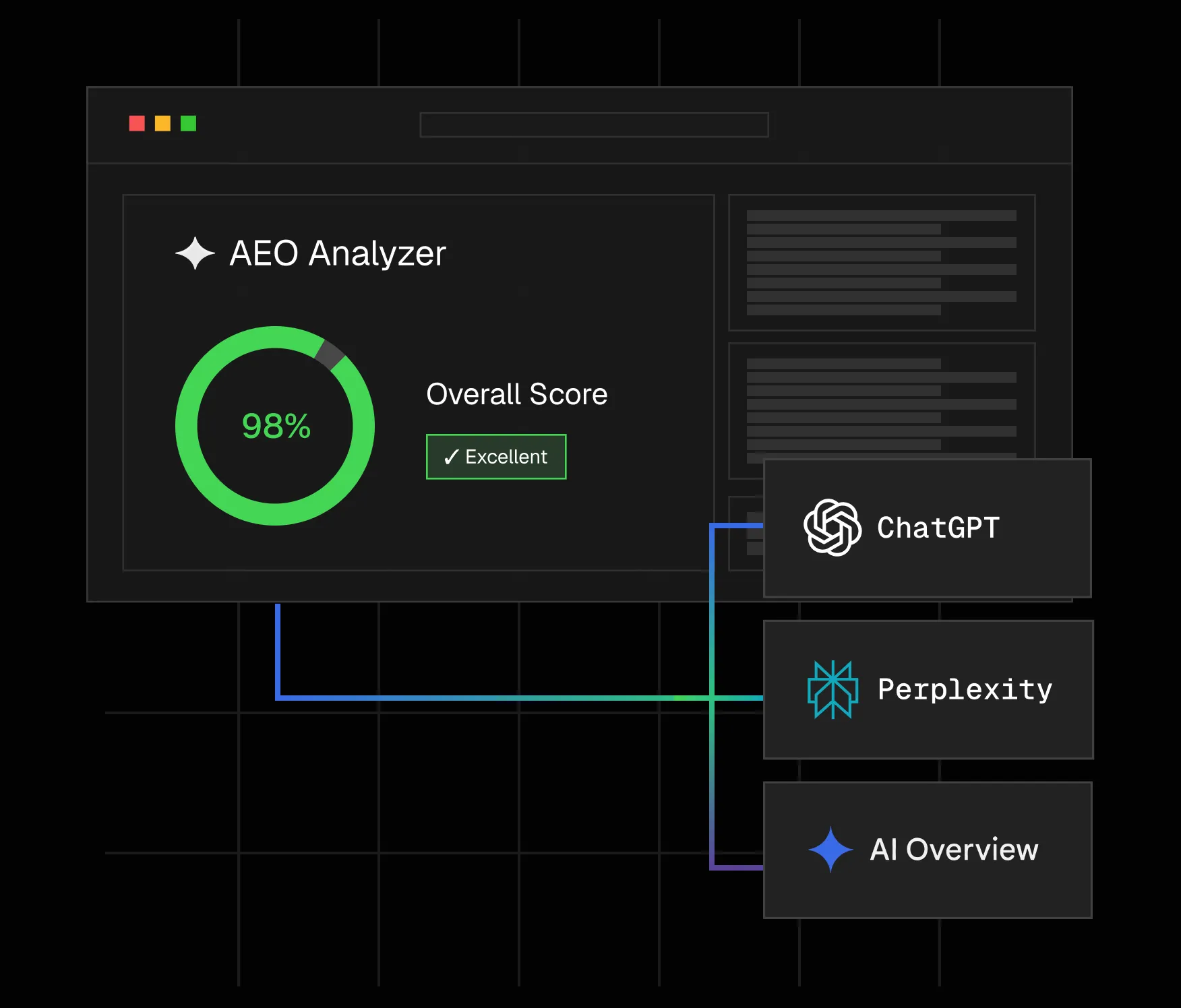
The way people discover brands online is going through a fundamental transformation. Search engines are no longer the only gateway to your business. AI powered answer engines like ChatGPT, Perplexity, Google AI Overviews, and others are now actively shaping how buyers perceive, evaluate, and choose brands long before they ever visit a website. The question is no longer whether your site ranks on page one of Google. The real question is whether AI systems mention your brand when someone asks a question that matters to your business.
This shift has created an entirely new discipline called Answer Engine Optimization, or AEO. And while most marketing teams recognize its importance, very few have the tools, expertise, or workflow to act on it effectively. That is exactly the problem Webflow set out to solve with the launch of Webflow AEO, a groundbreaking agentic system that brings measurement, recommendations, and execution into a single closed loop.
As a Webflow Premium Partner, AppsRow has been at the forefront of helping businesses build high performing websites on Webflow. With the arrival of Webflow AEO, we are now positioned to help our clients not just build beautiful websites but ensure those websites are discovered, cited, and trusted by the AI systems that increasingly influence buying decisions.
What Is Webflow AEO?
Webflow AEO is an agentic, unified solution built natively into the Webflow platform. It brings together three critical capabilities that most teams currently manage through disconnected tools and fragmented workflows.
Measure your AI visibility by understanding how often your brand appears in answer engine responses, which prompts trigger your brand’s mention, and how AI driven discovery connects to actual on site engagement and conversions.
Recommend on brand improvements through AI agents that surface prioritized, brand specific recommendations across both technical and content optimization. These recommendations cover everything from broken links and outdated metadata to entirely new content opportunities that could boost your citation rates.
Act in a closed loop where those same agents help teams implement recommendations across their entire site at scale. Built in review before publish safeguards ensure teams can move fast without losing control over quality or brand consistency.
This is not just another analytics dashboard or SEO audit tool. Webflow AEO is designed as a complete system where insights flow directly into action, and action feeds back into measurement. It is the kind of operational tool that marketing teams have been waiting for.
Why AEO Matters More Than Ever
For years, digital marketing teams have focused on traditional SEO to drive organic traffic. But the landscape is shifting rapidly. AI answer engines are now responding to user queries with direct, synthesized answers that may or may not include links to your website. If your brand is not part of those answers, you are invisible to a growing segment of your audience.
The challenge for most teams is threefold. First, the AEO discipline is still evolving, and best practices change frequently. Second, specialized expertise in AEO is scarce, making it difficult to build in house capabilities quickly. Third, even teams that understand what needs to be done often lack a scalable way to execute across their entire website.
Webflow AEO addresses all three of these challenges by embedding measurement, intelligence, and execution directly into the platform where your site is built and managed.
Inside Webflow AEO: The Three Pillars
AEO Analytics: Measure What Actually Matters
Webflow AEO expands the existing Webflow Analyze platform with dedicated AEO analytics designed for clarity rather than complexity. No data science background or heavy instrumentation is required.
Prompt Insights allow teams to see how their brand appears for the prompts and topics that matter most to their business. Teams can track whether their brand is being mentioned, how frequently their site is cited, and how they compare against other sources included in AI generated answers. Over time, teams can refine the prompts they track to build a clearer picture of where they are gaining ground and where opportunities remain.
AI Bot Insights provide visibility into which AI bots are visiting your site, which pages they are crawling and prioritizing, and how that activity changes over time. Not all bot activity is equal. Some bots serve live user queries while others train models or index content for AI systems. Understanding this distinction helps teams make smarter decisions about content strategy and technical optimization.
Holistic AI Discovery Dashboard brings prompt data, citation metrics, bot activity, and visitor behavior into one centralized view. Teams can see how visitors arriving from answer engines engage and convert on their site, connecting AI visibility directly to real business outcomes.
AEO Agents: Turn Insights Into Action at Scale
Understanding your AI visibility is only the first step. The real competitive advantage comes from acting on those insights quickly and consistently. Webflow AEO agents are built to help teams do exactly that.
Brand Aware by Default: Because the agents are native to Webflow, they can draw from your site’s structure and content directly. Brand context settings allow teams to guide the agents with details about voice, positioning, terminology, and competitive landscape, ensuring every recommendation stays true to your brand.
Technical AEO Agents go beyond basic SEO audits to improve your site’s machine readability at scale. They evaluate pages, CMS items, components, and images to surface a growing set of technical issues that impact AI discoverability. From broken links and stale schema markup to overly long meta descriptions and missing alt text, these agents identify problems and prepare fixes in a centralized view where teams can review, accept, modify, or dismiss changes efficiently.
Content Optimization Agents help teams create and improve content that is more likely to be discovered, understood, and cited by answer engines. Guided by the prompts teams are already tracking, these agents can strengthen existing pages for freshness, clarity, and citation potential. They can also recommend entirely new content pieces and generate strong first drafts that teams can refine and publish faster.
A Year of Building Toward This Moment
Webflow AEO did not appear overnight. It builds on a full year of investment in AEO education and foundational tooling. Webflow has progressively released capabilities including its widely adopted AEO maturity model and assessment, support for llms.txt and Markdown for agents, LLM referred traffic insights, and an AI assisted technical SEO auditing tool that helped customers achieve 75% more monthly organic traffic. Webflow AEO is the culmination of all that work, purpose built for marketing teams ready to measure, execute, and scale their AEO strategy.
Availability
Webflow AEO is currently in private beta and will be available soon to all Webflow Enterprise customers. AEO analytics will be part of an upgraded Enterprise Analyze plan, while AEO agents will be included in the Webflow Enterprise platform.
How AppsRow Can Help You Get Ahead with Webflow AEO
As a Webflow Premium Partner, AppsRow brings deep platform expertise and a strategic understanding of how businesses can leverage Webflow’s most advanced capabilities to drive real results. Here is how we can help your team make the most of Webflow AEO.
AEO Readiness Assessment
Our team will evaluate your current website’s readiness for AI driven discovery. We analyze your site structure, content architecture, metadata health, schema markup, and machine readability to identify the gaps that matter most.
Strategic AEO Implementation
We do not just run audits. We build and execute a comprehensive AEO strategy tailored to your brand, your industry, and the specific prompts and topics where you need to be visible. From technical optimization to content creation, we handle the full scope of work.
Webflow AEO Configuration and Onboarding
When Webflow AEO becomes available to your team, AppsRow will help you configure brand context settings, set up prompt tracking, interpret analytics dashboards, and establish workflows for reviewing and publishing agent recommendations.
Ongoing AEO Management
AEO is not a one time project. The landscape evolves constantly, and staying visible requires continuous monitoring, optimization, and content development. Our team provides ongoing management to ensure your brand remains at the forefront of AI driven discovery.
Migration to Webflow Enterprise
If your website is not yet on Webflow, AppsRow can manage the complete migration process, ensuring your new site is built from the ground up with AEO best practices embedded into every page, every component, and every piece of content.
Conclusion
The shift from traditional search to AI driven discovery is not a distant possibility. It is happening right now. Brands that adapt early will earn the citations, the mentions, and the trust that answer engines distribute to their users. Brands that wait will find themselves competing for visibility in a game they did not prepare for.
Webflow AEO represents a major leap forward in making answer engine optimization accessible, actionable, and scalable for marketing teams. And as a Webflow Premium Partner with hands on experience across hundreds of Webflow projects, AppsRow is uniquely positioned to help you take full advantage of this new capability.
Whether you are exploring AEO for the first time or looking to scale an existing strategy, our team is ready to help you navigate this new era of brand discovery.
Get in touch with AppsRow today to discuss how Webflow AEO can transform your brand’s AI visibility.
Webflow
AI & Automation
The modern web does not reward stillness. In a landscape where users form judgments within milliseconds and attention spans shrink by the quarter, motion has become the defining language of standout digital experiences. Webflow has always sat at the frontier of visual web building, but the platform entered a genuinely new era in October 2024 when it acquired GreenSock (GSAP), the animation engine that powers over 12 million websites globally. That acquisition, followed by the July 2025 launch of Webflow Interactions with GSAP, fundamentally changed what designers can build without touching a single line of JavaScript.
This guide goes beyond surface-level explanations. It covers the full technical architecture of Webflow's animation system, from triggers and action types to SplitText, ScrollTrigger, Staggers, Lottie, Rive, and Spline, complete with practical steps you can follow inside the Designer right now.
Understanding the Webflow Interactions Architecture
Before building a single animation, you need to understand how Webflow's interaction system is structured at a technical level. As of summer 2025, Webflow ships two parallel systems that coexist inside the Designer.
Webflow Interactions with GSAP (IX3)
Interactions with GSAP launched in summer of 2025 and is the most robust and up-to-date version of the interactions system. It uses the GSAP engine for creating, editing, and displaying interactions. This version includes built-in support for SplitText, Staggers, and ScrollTrigger, a horizontal timeline, an advanced easing editor, and increased ease of reuse for interactions across a project.
Under the hood, every interaction you configure visually generates GSAP-compliant tween code. Webflow designers and developers can build smooth, reliable, and performant interactions with the confidence that best-in-class GSAP code is running beneath the visual interface for all of them.
Classic Interactions (IX2)
Classic Interactions is the version that existed prior to Interactions with GSAP and employs a page and element triggers to animations creation model. It remains available and is still suitable for simple single-step animations. However, using multiple versions of interactions on a site means each version requires loading its own resources, so the more versions you use across a project, the less performant your site will be. For new projects, Webflow recommends IX3 as the default approach.
The Trigger, Target, and Action Model
Every interaction in Webflow follows three core components. Understanding each one precisely prevents the confusion that most beginners experience when animations do not behave as expected.
Trigger
The event that initiates the interaction. A trigger, like clicking an element or scrolling down the page, starts an animation or can even continuously animate one or more elements on the page simultaneously. Supported element triggers include mouse hover enter and exit, mouse click first and second, mouse down, mouse up, scroll into view, scroll out of view, while scrolling in view, and device-specific triggers.
Target
The element or elements that receive the animated change. Webflow interactions are especially well-suited to manipulating multiple elements on a page, or multiple aspects of a single element, in response to the site visitor's actions. The target does not have to be the same element as the trigger, which unlocks powerful compositional animation patterns.
Action
What actually happens to the target. There are four action types you can add to an interaction:
- Animation actions interpolate property values over time using GSAP tweens.
- Set actions apply changes instantly at a point on the timeline with zero duration.
- Lottie actions control Lottie animations as part of the interaction timeline.
- Spline actions modify and animate Spline 3D scenes embedded in the page.
The Three Animation Action Types
Webflow supports three distinct animation directions, each designed for specific situations. Choosing the wrong type is one of the most common causes of unexpected animation behavior.
From
Sets starting values in the Interactions panel and then tweens the element to its current styled values as defined in the Style panel. This is ideal for entrance animations where the element already has its resting state defined visually and you want it to animate in from a different starting position.
To
Starts from the element's current styled values in the Style panel and then tweens to values you set in the Interactions panel. This is best for exit animations or state changes where you define where an element ends up after the interaction fires.
FromTo
Lets you set both start and end values entirely within the Interactions panel. This gives you absolute precision for complex sequences where the element's default style must not interfere with the animation start or end state. Use this when you need complete control over both endpoints of a tween regardless of what the Style panel contains.
Set Actions
Apply changes instantly at a point on the timeline with a duration that is always zero. Use set actions for changes that should not be tweened, such as toggling the display property of a visibility layer during a sequence without any interpolated motion between states.
Action Configuration: Easing, Stagger, and Repetition
When you configure an action, you will typically adjust three sets of settings that together define the character of the motion. These settings distinguish professional animation work from amateur results.
Easing
Controls the relative acceleration and deceleration of an action. You can choose from a preset library or open the advanced easing editor to craft a custom cubic-bezier curve. The easing curve is arguably the single most impactful variable in whether an animation feels natural or robotic. Power3 InOut and Expo Out are common professional choices for entrance animations. Elastic and Bounce easings should be used rarely and only when the brand identity explicitly calls for a playful, physical quality.
Staggered Motion
Determines whether target elements animate together or sequentially. You can define the total time from the first element to the last, or set a fixed delay between each target element's action. Stagger direction options include forward, backward, center-outward, and randomized, each producing a different choreographic effect. A center-outward stagger on a row of five cards creates a radial reveal that draws the eye to the middle of the composition before expanding outward.
Repetition
Controls how many times an action repeats. You can define a precise number of repetitions, set it to infinite, or repeat in a back-and-forth yoyo manner where the animation plays forward then reverses on each cycle. Infinite repetition is appropriate for looping ambient effects like pulsing indicators or rotating icons.
GSAP SplitText: Character, Word, and Line Animations
SplitText is one of the most requested animation techniques on the web and is now fully accessible inside Webflow's visual Designer without writing code.
How SplitText Works Technically
SplitText works by breaking a text element's content into individual span elements for each character, word, or line, then targeting those spans with separate tweens. It includes automatic screen reader accessibility, masking for reveal effects, and responsive line splitting. Inside Webflow's IX3 interface, you select SplitText as the action type, choose whether to split by characters, words, or lines, enable masking if you want a clipped reveal, set the stagger delay in milliseconds, and configure the From or FromTo animation on the resulting elements.
The Masking Feature
Masking wraps each line, word, or character in an extra element with visibility clip. This creates the popular text-rising-from-below effect seen on high-end agency sites, where letters appear to emerge from beneath an invisible floor rather than simply fading in. Without masking, the animation is visible from wherever the element happens to sit on the page. With masking, the clip container provides a defined boundary that makes the reveal feel architectural rather than floating.
The autoSplit Option
The autoSplit option handles responsive behavior automatically. When the container resizes and text reflows across different line breaks, SplitText recalculates the split and re-runs the animation on the newly created elements. Always create your animations inside the onSplit callback when using autoSplit so that the motion applies to the freshly split elements rather than orphaned spans from the previous split state.
GSAP ScrollTrigger: Scroll-Driven Animation in Depth
ScrollTrigger is the industry standard for creating scroll-driven animations, offering precise control over when, how, and where your animations execute as users scroll through your page.
Scroll Into View Mode
The animation fires once when the element crosses a defined threshold in the viewport. After firing, the animation does not repeat unless explicitly configured to do so. This is the correct choice for entrance animations on sections, cards, and headings. Set this to fire once for the cleanest user experience on content-heavy pages.
While Scrolling in View Mode (Scrub)
This mode binds animation progress directly to the scroll position. As users scroll, animations advance proportionally, creating effects like parallax, pinned sections, and content reveals that feel physically connected to the act of scrolling. The animation moves forward when scrolling down and reverses when scrolling up, giving users a sense of physical control over the page.
Key ScrollTrigger Configuration Parameters
- Start and End define where in the viewport the trigger fires. The notation top 80% means the animation begins when the top of the element reaches 80% down from the top of the viewport.
- Scrub links animation progress directly to the scrollbar position. A scrub value of 1 creates a one-second lag between scroll position and animation state, smoothing the motion for complex tweens.
- Pin holds an element fixed in position while the scroll continues, allowing section-pinned storytelling layouts where the viewport content changes while the pinned element stays visible.
- Snap automatically advances the scroll to the nearest defined snap point when the user releases the scroll input, creating carousel-like behavior for full-page sections.
The Horizontal Timeline Interface
One of the most significant UI departures in Webflow IX3 is the shift from a vertical animation list to a horizontal timeline editor. The new GSAP panel gives you a horizontal timeline view, grouped animation layers, and full access to GSAP-specific features.
Working with the Timeline
The timeline allows you to scroll, scrub, zoom, and pan through your animation sequence. Each action occupies a visual block on the timeline that you can drag to reposition its start time, stretch to change its duration, and overlap with other actions to create simultaneous motion. When two action blocks overlap on the timeline, both tweens run concurrently, which is how you create compound animations where an element moves, scales, and fades all at the same time.
Reusable Interactions and Presets
Interactions are now reusable across your Webflow site. You can define an interaction once and apply it to various elements or classes across your website, saving time and maintaining design consistency without duplication. Save an interaction as a preset from the Interactions manager panel, search for it by name when setting up any subsequent element, and apply it with a single click. Changes made to the source interaction propagate across all instances, making site-wide animation updates a one-step process. This system-level thinking around animation reuse is exactly what separates a professional webflow design agency workflow from a project-by-project approach.
Third-Party Animation Integrations
Webflow's native interaction system works seamlessly alongside three major external animation formats, each suited to different creative requirements.
Lottie
Lottie files are JSON exports of animations created in Adobe After Effects using the Bodymovin plugin. Webflow integrates with Lottie so you can play or pause an embedded Lottie animation or control its settings on demand through the interaction timeline. In IX3, Lottie actions are a dedicated action type inside the horizontal timeline, meaning you can synchronize a Lottie playback state with a scroll trigger or a click sequence alongside your own element animations.
Rive
Webflow introduced Rive animation file support, allowing designers to integrate sophisticated animations directly into their websites. Rive is specifically designed for state machines, making it the right choice when your animation needs to respond to multiple user inputs and transition between states conditionally based on logic. This is something Lottie is not architecturally capable of handling, as Lottie animations are purely playback-based with no conditional branching.
Spline
Spline 3D scenes can be embedded directly into Webflow pages for immersive experiences. Spline actions inside Webflow's interaction timeline let you modify and animate Spline 3D scenes in response to Webflow events. A scroll event in Webflow can trigger a camera movement or object transformation inside an embedded Spline scene, creating a seamless connection between the 2D page scroll and a fully 3D interactive environment.
Performance Architecture and Best Practices
Understanding performance is non-negotiable for any serious Webflow developer or designer working on production sites.
GPU Compositing
The most important performance principle in Webflow animations is GPU compositing. Only two CSS properties trigger GPU-composited rendering: transform (which covers translateX, translateY, translateZ, scale, rotate, and skew) and opacity. Always animate transform and opacity. Never animate layout properties such as width, height, top, left, margin, or padding. Animating layout properties forces the browser into a full layout recalculation and paint cycle on every animation frame, which causes jank and poor performance on low-power mobile devices.
Common Performance Mistakes to Avoid
- Do not combine CSS transitions with GSAP animations on the same element. Both attempt to control the same properties and create conflicting computed values. Remove all CSS transitions from the Style panel on any element that will be animated through the Interactions panel.
- Make sure animated elements are inside a container with CSS perspective applied when using 3D transforms. Without a perspective value on the parent container, translateZ and rotateY produce flat results visually identical to their 2D counterparts.
- If a transform action on an element is not working, check whether the element is set to display inline. Inline elements do not support transform actions. Change the element's display to block, inline-block, or flex before applying transform-based animations.
- Set scroll-triggered animations to play once rather than every time elements enter the viewport. Repeated animations harm performance on long, content-dense pages.
Reduced Motion Accessibility
Webflow supports adapting designs for reduced motion so sites remain accessible to all users. A significant portion of web users have vestibular disorders or motion sensitivities that make heavy animations uncomfortable or physically nauseating.
Implementing Reduced Motion in Webflow
Inside Webflow's IX3 system, breakpoint-level control allows you to disable specific interactions on certain device sizes. For broader prefers-reduced-motion support, add the following custom CSS in Site Settings under Custom Code:
@media (prefers-reduced-motion: reduce) { * { animation-duration: 0.01ms !important; animation-iteration-count: 1 !important; transition-duration: 0.01ms !important; } }
This ensures that even if Webflow's visual controls do not expose a reduced-motion toggle for a specific interaction, the operating system-level preference communicated through the browser is still respected. All animations collapse to near-instant transitions, preserving state changes while eliminating motion that could cause discomfort.
Step-by-Step: Building a Scroll-Driven Text Reveal
This walkthrough combines three IX3 features simultaneously: SplitText, Staggers, and ScrollTrigger. It produces a line-by-line text reveal where each line rises from a clipping mask as the user scrolls to that section.
Setting Up the Trigger
- Select the heading or paragraph you want to animate in the Webflow Designer canvas.
- Open the Interactions panel using the lightning bolt icon or press H. Confirm you are in the IX3 panel and not Classic Interactions.
- Add a new interaction and choose Scroll Into View as the trigger. Set the start position to top 85% so the animation fires when the top of the element reaches 85% down the viewport.
Configuring SplitText and Masking
- Add a SplitText action and set the type to Lines. Enable masking on Lines so each line gets a clip container that hides the element's starting position below the visible area.
- On the SplitText action, configure the From animation. Set yPercent to 100 so elements start fully below their clip containers and set opacity to 0.
- Set the To state to yPercent 0 and opacity 1.
Applying Stagger, Easing, and Preview
- In the stagger settings, set a total stagger time of 0.4 seconds across all lines. For a four-line heading this produces approximately a 0.1-second delay per line.
- Set easing to Power3 InOut for a motion curve that accelerates sharply and decelerates smoothly.
- Set the trigger to fire once so the animation does not replay each time the element re-enters the viewport during upward scroll.
- Preview in the browser using Webflow's built-in preview mode. Adjust the start trigger position and stagger duration until the motion feels deliberate and matched to your brand's overall pace.
Custom GSAP Code vs. the Visual Interface
Webflow enables developers to load the GSAP library and any plugins from its CDN. The practical decision framework for when to use each approach is straightforward.
When to Use the Visual Interface
Use the IX3 visual interface for entrance animations, scroll reveals, hover states, click toggles, and any SplitText or stagger effect. The visual interface is faster to build with, produces clean output, and allows non-technical collaborators to understand and modify the animation without developer involvement.
When to Use Custom Code
Use custom GSAP code embedded through Webflow's Head or Body custom code fields when you need physics-based motion, SVG path drawing, morphing between SVG shapes, or canvas-based particle systems. These are capabilities the visual interface does not currently expose. This level of technical animation execution is typically what clients look for when they hire webflow designer specialists for complex, bespoke builds where the motion brief exceeds the visual interface's current scope.
The Combined Workflow
The most efficient production workflow combines both approaches. The IX3 visual interface handles the majority of interactions across the site. Custom GSAP code handles one or two signature moments, such as a physics-driven hero animation or a morphing SVG logo transition, that justify the additional development complexity.
Industry Impact and Performance Data
Engagement and Conversion Statistics
Sites with well-implemented animations see 37% higher user engagement and 23% more conversions compared to static counterparts. The difference between generic portfolio sites and award-winning showcases consistently comes down to strategic use of scroll-triggered effects and micro-interactions that guide users, build trust, and create memorable brand experiences.
Webflow Platform Growth
Webflow powers over 493,000 live websites as of 2025, with revenue growing 66% year-over-year to reach 213 million dollars. The acquisition of GreenSock in October 2024 changed the competitive landscape significantly. Features like SplitText, Staggers, and ScrollTrigger are now completely free for all Webflow users, including commercial projects. This eliminates a significant cost and technical barrier that previously meant only well-funded development teams could deliver this caliber of animation work.
Conclusion
Webflow's animation system in 2025 is no longer a convenience layer on top of basic CSS transitions. It is a production-grade visual motion development environment, replatformed entirely on GSAP, capable of producing the same caliber of animation work that previously required a dedicated front-end developer writing custom JavaScript. SplitText, ScrollTrigger, and Staggers are accessible through a horizontal timeline interface without a single line of code. Lottie, Rive, and Spline integrations extend the system into complex motion graphics and interactive 3D. Reusable interactions and class-based animation presets allow the system to scale from a single landing page to a hundred-page enterprise site with consistent motion behavior throughout.
The difference between a Webflow site that performs averagely and one that wins awards while converting users at measurably higher rates comes down to intentional, technically sound animation. Every motion decision should earn its place by improving the experience for the user, guiding attention, reinforcing behavior, or providing feedback that makes the interface feel alive and responsive. Master that principle alongside the technical system covered in this guide, and the quality of what you build will reflect it in every metric that matters.
Webflow
Tips & Tutorials
Imagine you spent months crafting the perfect article. You researched meticulously, wrote thousands of words, optimized every keyword, and built impressive backlinks. Your content was exceptional. Then one day, a user asked ChatGPT the exact question your article answers. ChatGPT cited three other websites as sources. Yours wasn't mentioned. That's the new reality of search, and it's happening right now to thousands of websites.
The problem isn't that AI systems are ignoring good content. It's that most websites were optimized for an old version of search. They chase rankings, backlinks, and keywords. But AI-powered answer engines like ChatGPT, Google Gemini, Perplexity, and Claude operate entirely differently. They're not looking for pages to rank. They're looking for sources to cite when generating answers.
This distinction matters profoundly. A website can dominate traditional search results while being completely invisible to AI systems. Or, inversely, it can be the go-to source for AI answers while having mediocre Google rankings. AEO (Answer Engine Optimization) is fundamentally different from SEO, and if your site isn't optimized for it, you're leaving enormous opportunity on the table.
But here's the good news: AEO readiness isn't mysterious or random. It follows predictable patterns. There are specific, measurable factors that determine whether AI systems will cite your content or ignore it. This guide reveals those factors so you can audit your current position and systematically improve.
By the end of this comprehensive guide, you'll know exactly where your site stands and what needs to change to become truly AEO-ready.
1. Content Quality and Direct Answer Delivery
Why This Matters for AEO
Content quality is the foundation of everything in AEO. AI-powered answer engines are essentially large language models trained on vast amounts of text data from across the internet. These models have learned to recognize authoritative, accurate, and comprehensive content. When an AI system processes a user query, it searches for sources that provide the clearest, most direct answer to that specific question.
The key distinction from traditional SEO is this: Traditional search engines ranked pages based partly on how well they answered questions, but also on domain authority, backlinks, and keyword optimization. AI-powered systems are far more focused on the actual content quality and relevance. They're looking for the best answer, regardless of the domain's age or authority.
The Answer-First Principle
An AEO-ready article puts the answer front and center. The old SEO approach of burying your answer deep in a 3,000-word article no longer works. Consider this scenario: A user asks ChatGPT, "What is the difference between Type 1 and Type 2 diabetes?" The AI system scans your article and looks for where you directly answer this question. If it has to wade through 800 words of background information before finding a clear answer, your content is less likely to be selected than a competing article that answers this question in the first paragraph.
This doesn't mean all your content must be short. Rather, it means leading with the answer, then expanding with detail, context, and examples. The structure might look like:
- Paragraph 1: Direct answer in 2-3 sentences (40-60 words)
- Paragraph 2-3: Expanded explanation with context
- Paragraph 4+: Deep dives, examples, case studies, nuance
- Final section: Conclusion that reiterates the core answer
Featured Snippets as an AEO Indicator
Featured snippets in Google search results are a strong indicator that your content meets AEO standards. If your articles regularly earn featured snippets (position zero), you're already doing something right. Featured snippets demonstrate that Google and likely AI systems recognize your content as providing a clear, direct answer to a common search query.
Google's featured snippets appear in several formats: paragraph snippets (70-80 words of descriptive text), list snippets (bulleted or numbered points), and table snippets (structured data in rows and columns). All of these formats work well for AEO because they make answers easy for AI systems to extract and use.
Assessing Your Current Content Quality
To evaluate whether your content is AEO-ready, perform this audit:
- Read your opening paragraph - Does it directly answer the main question in 1-3 sentences? If you had to explain the core answer to someone in an elevator ride, could you do it with what you wrote?
- Check for featured snippets - Search Google for 5-10 of your target keywords. Do any of your pages appear in position zero? If yes, you're on the right track. If no, your content may not be structured for maximum clarity.
- Verify fact accuracy - Have you sourced claims from credible origins? Are statistics dated and cited? AI systems evaluate content for accuracy and penalize content with outdated or unverified information.
- Test with AI tools - Copy your article text and ask ChatGPT, Claude, or another AI system to summarize it. Do the summaries match your intended answer? If not, your content may be unclear or unfocused.
- Check readability metrics - Use tools like Flesch Reading Ease to ensure your content is understandable. Content should be clear enough for a high school reader to understand, even if discussing technical topics.
2. Structured Data and Schema Markup Implementation
The Critical Role of Schema in AEO
If content quality is the foundation, structured data is the blueprint. Schema markup is a standardized language (using JSON-LD, microdata, or RDFa format) that explicitly tells AI systems what your content is about and how it's organized. Without proper schema implementation, even excellent content remains largely opaque to machine learning systems.
Think of it this way: A human reader can scan an article and understand that it contains step-by-step instructions, author credentials, publication date, and answers to specific questions. An AI system needs explicit signals to understand this structure. Schema markup provides those signals.
Essential Schema Types for AEO Success
Several schema types are particularly important for AEO readiness. Here's a detailed look at each:
Article Schema (schema.org/Article)
This is fundamental. Every blog post, news article, or long-form content piece should include Article schema. This schema tells AI systems essential information about your content:
- Headline - The exact title of the article
- Description/Abstract - A 150-word summary of the article content
- Image - A featured image associated with the article (at least 1200x627 pixels)
- Author - Name of the article writer
- DatePublished - When the article was originally published (ISO 8601 format)
- DateModified - When the article was last substantially updated
Why does this matter for AEO? AI systems use datePublished and dateModified to assess content freshness. They use the author field to identify expertise. The image helps them understand the article's relevance. Together, these fields create a complete picture of your content that AI systems can use with confidence.
FAQ Schema (schema.org/FAQPage)
Any page that contains question-answer pairs should use FAQ schema. This is particularly important because AI systems are specifically trained to recognize FAQ pages as authoritative answer sources. When you mark up FAQ sections with proper schema, you're explicitly telling AI systems: "Here are answers to common questions." This dramatically increases the likelihood that your answers will be cited.
FAQ schema requires two key properties:
- Question - The question being asked
- Answer - The complete answer (can be multiple sentences or paragraphs)
You can implement FAQ schema not just for dedicated FAQ pages, but for Q&A sections within any article. If your blog post addresses five common questions about your topic, mark them up with FAQ schema and watch your visibility in AI systems increase.
Author/Creator Schema (schema.org/Person)
E-A-T (Expertise, Authoritativeness, Trustworthiness) matters profoundly in AEO. Author schema explicitly establishes who created the content and what their qualifications are. This schema should include:
- Name - Author's full name
- Credentials - Relevant degrees, certifications, or qualifications
- URL - Link to author's professional profile or website
- Image - Professional headshot or avatar
When AI systems see that content is written by someone with specific credentials, they weight that content more heavily. This is especially critical in YMYL (Your Money Your Life) categories like health, finance, and legal advice.
HowTo Schema (schema.org/HowTo)
If your content is instructionala tutorial, guide, recipe, or process explanationHowTo schema is essential. This schema breaks down your content into explicit steps, each with its own description and potentially media (images or videos). AI systems love this format because it makes procedural information crystal clear.
HowTo schema includes:
- Name - The title of the how-to guide
- Description - What the guide teaches
- Image - A featured image
- Step - An array of individual steps, each with its own name and description
When a user asks an AI system "How do I...?", it searches for content with HowTo schema and returns those results first. If your site lacks this markup, you're invisible for these query types.
Checking Your Schema Implementation
To assess your schema readiness:
- Use Google's Rich Results Test: Visit https://search.google.com/test/rich-results and enter your page URL. This tool shows exactly what schema you have and identifies any errors.
- Use Schema.org Validator: Paste your HTML code to validate that your schema is correctly formatted.
- Audit all blog posts: Create a spreadsheet of your top 20 blog posts. For each, check: Do they have Article schema? If Q&A content, do they have FAQ schema? If instructional, do they have HowTo schema?
- Check for errors: Even properly implemented schema with errors significantly reduces its effectiveness. Aim for 100% error-free schema on all pages.
3. Mobile-First Design and Core Web Vitals Performance
Why Mobile Performance Dominates AEO
Here's a critical fact: Most users of AI-powered answer engines access them via mobile devices. ChatGPT, Google Gemini, and other AI systems are designed mobile-first because that's where the users are. If your website doesn't perform well on mobile, you're automatically at a disadvantage in AEO rankings.
Google's Core Web Vitals have become increasingly important for both traditional SEO and AEO. These are three specific metrics that measure user experience:
Largest Contentful Paint (LCP)
LCP measures how long it takes for the largest element on your page to become visible and interactive. Think of this as "how fast does the main content appear?" On a blog post, this might be the article heading and first image. On a product page, it's the main product photo.
Target: 2.5 seconds or faster
Why it matters: If users see blank space for 5+ seconds before content loads, they bounce. AI systems recognize that slow-loading pages provide poor user experiences and deprioritize them. Additionally, if the crawler crawling your site for indexing has to wait a long time for content to render, some content might not be indexed at all.
First Input Delay (FID)
FID measures the delay between when a user interacts with your page (clicking a link, tapping a button) and when the browser can respond. This is about page responsiveness and interactivity.
Target: 100 milliseconds or faster
Why it matters: A slow response to user interaction creates frustration. Pages with high FID have poor user engagement, bounce rates, and time-on-page. AI systems track these engagement signals.
Cumulative Layout Shift (CLS)
CLS measures the unexpected movement of page elements while the user is viewing it. You've experienced this: you're reading an article, an advertisement suddenly loads above the text, and your content jumps down. Frustrating, right?
Target: 0.1 or lower
Why it matters: Layout shifts degrade user experience and increase accidental clicks. Pages with high CLS create poor interactions, and AI systems recognize this through behavioral signals.
Assessing Your Mobile and Performance Readiness
To check if your site meets AEO standards for performance:
- Test with Google PageSpeed Insights: Go to pagespeed.web.dev, enter your domain, and get detailed metrics for mobile and desktop. Google provides specific optimization suggestions.
- Check Core Web Vitals in Google Search Console: Navigate to Core Web Vitals report. This shows real-world performance data from actual users visiting your site.
- Test mobile responsiveness: Use Google's Mobile-Friendly Test to confirm your design adapts properly to all screen sizes.
- Audit with GTmetrix: This tool provides detailed waterfall charts showing exactly which resources are slowing down your site.
- Test on real devices: Use actual phones and tablets, not just browser emulation. Real devices show genuine performance issues.
Common Performance Issues and Fixes
- Large, unoptimized images: Use image compression tools (TinyPNG, ImageOptim), serve modern formats like WebP, and implement responsive images with srcset.
- Render-blocking JavaScript and CSS: Defer non-critical JavaScript, inline critical CSS, and minify all assets.
- Slow server response times: Upgrade hosting, implement caching, use a Content Delivery Network (CDN), and optimize your database queries.
- Layout shifts from ads and embeds: Reserve space for ads before they load, set dimensions on embed containers.
- Third-party scripts: Audit all external scripts (analytics, ads, tracking). Remove or defer those that aren't essential.
4. E-E-A-T Signals: Demonstrating Expertise, Experience, Authoritativeness, and Trustworthiness
Understanding E-E-A-T in the AI Era
Google's E-E-A-T framework (Experience, Expertise, Authoritativeness, and Trustworthiness) has become central to both traditional SEO and AEO. While Google developed this framework, AI-powered answer engines have adopted similar evaluation criteria. Here's why: AI systems are trained to recognize content created by true experts and distinguish it from content written by generalists or less credible sources.
This is particularly important in YMYL (Your Money Your Life) categories where inaccurate information can harm users. These include health advice, financial planning, legal guidance, and safety information. In these categories, E-E-A-T signals are non-negotiable.
Experience: First-Hand Knowledge
Experience means the author has personally encountered and solved the problem they're writing about. AI systems can recognize experiential content because it includes:
- Real-world case studies or examples
- Specific metrics or results ("increased conversion by 34%", not "improved conversion")
- Stories or anecdotes that reveal personal experience
- Acknowledgment of challenges or mistakes and how they were overcome
Example: If you're writing about email marketing, don't just explain how email automation works. Tell the story of when you implemented it for a client, show the setup you used, share the results, and discuss what you'd do differently now. This personal, experienced perspective is gold for AEO.
Expertise: Demonstrated Knowledge
Expertise is about demonstrating that the author understands their subject deeply. This manifests through:
- Correct use of industry terminology without over-explaining simple concepts
- Nuanced discussion that acknowledges complexity and edge cases
- Citations of peer-reviewed research or industry reports
- Discussion of cutting-edge developments or recent trends in the field
Expertise can be demonstrated through certifications, degrees, years of professional experience, and published work. Make these credentials visible through author bios and bylines.
Authoritativeness: Recognition by Others
Authoritativeness is about being recognized as a trusted source by peers and authorities in your field. This includes:
- Backlinks from reputable, authoritative websites
- Mentions in industry publications and media
- Speaking engagements at recognized conferences
- Professional affiliations and associations
- Guest contributions to established publications
You build authoritativeness over time through consistent production of quality content and active engagement in your professional community. AI systems assess this through signals like domain authority, citation patterns, and backlink profiles.
Trustworthiness: Security and Transparency
Trustworthiness is about creating an environment where users feel safe and confident. This includes:
- HTTPS encryption on all pages
- Clear, accurate About page with company/author information
- Privacy policy that clearly explains data handling
- Contact information that's easy to find
- Trust badges from third-party security or quality organizations
- Transparent disclosure of affiliate relationships or sponsored content
- User reviews or testimonials that provide social proof
Building E-E-A-T Visibility
To assess your E-E-A-T readiness:
- Review your author bio: Is it compelling? Does it establish credentials? Does it include a link to your professional profile?
- Audit your About page: Is it detailed and personal? Does it explain why you're qualified to write about your topic?
- Check your website security: Is your site served over HTTPS? Do you have a trust badge or certification?
- Review your backlink profile: Use Ahrefs, SEMrush, or Moz to see who's linking to you. Are these reputable sources?
- Monitor mentions: Set up Google Alerts for your name and brand. Are you being cited favorably?
5. Content Organization, Information Architecture, and Topic Clustering
Why Content Organization Matters for AI Systems
AEO-ready sites have clear, logical content organization that helps AI systems understand how topics relate to each other. When content is poorly organizedscattered across the site with inconsistent naming conventions and no clear hierarchyAI systems struggle to build a comprehensive understanding of your expertise.
Think of your site's organization as a map. If you hand someone a messy, unclear map, they'll have trouble finding things and won't trust your directions. If you provide a clear, organized map with labeled streets, landmarks, and a legend, they'll navigate confidently. AI systems respond similarly.
Topic Clusters and Pillar Content
One of the most effective content organization strategies for AEO is topic clusters. This approach involves:
- Pillar Content: A comprehensive, long-form guide (3,000-5,000 words) that covers a broad topic at a high level. This might be "Complete Guide to Content Marketing" or "Understanding Digital Marketing Basics."
- Cluster Content: Focused articles (1,500-2,500 words) that deep-dive into specific subtopics of the pillar. "Content Marketing for B2B Companies," "Content Marketing for B2C Companies," "Measuring Content Marketing ROI," etc.
- Interlinking: The pillar page links to all cluster articles, and cluster articles link back to the pillar and to related clusters. This creates a web that clearly shows how topics relate.
When AI systems encounter this structure, they recognize that you've covered a topic comprehensively from multiple angles. They're more likely to cite you across multiple related queries because they understand your depth of coverage.
Internal Linking Strategy
Internal linking isn't just about SEO; it's about helping AI systems understand relationships between topics. When you link from one article to another, use descriptive anchor text that explains the relationship. Instead of "click here," use anchor text like "Learn more about email marketing automation" or "See how this applies to social media marketing."
Each internal link should have a clear purpose: you're either helping users find related content they'll find valuable, or you're helping AI systems understand topical relationships.
Assessing Your Content Organization
To evaluate whether your content is organized for AEO success:
- Map your content: Create a spreadsheet of all your major topics and subtopics. Are there clear clusters? Or is content scattered randomly?
- Check your navigation: Can users (and AI crawlers) easily find related content? Is your menu structure logical?
- Audit internal links: Do your articles link to related articles? Are anchor texts descriptive?
- Test crawlability: Use Screaming Frog or a similar tool to crawl your site. Identify orphaned pages (pages with no internal links pointing to them).
6. Question-Based Keyword Research and Query Optimization
The Shift from Keywords to Questions
Traditional keyword research focused on identifying exact phrases people typed into Google and optimizing for those phrases. AEO requires a different approach: understanding the questions people actually ask.
When someone talks to ChatGPT, they ask full questions: "How do I start a blog?" "What are the best practices for email marketing?" "Why is my website slow?" They're not typing keywords; they're asking questions in natural language. Your content needs to be optimized for these conversational queries.
Discovering Question-Based Queries
Several tools help identify the questions your target audience is asking:
- AnswerThePublic: Enter a keyword and get a visual map of questions, prepositions, and comparisons people search for. This is invaluable for AEO research.
- Google Search Suggestions: Start typing a keyword into Google and look at the auto-complete suggestions. These are actual queries people search for.
- Related Searches: Scroll to the bottom of Google search results. The "People also ask" section shows related questions. These are frequently searched.
- SEMrush and Ahrefs: These premium tools provide detailed keyword research with question variants and search volume.
- Quora and Reddit: Search your topic on these platforms to see what questions real people are asking in natural language.
Organizing Content Around Question Queries
Once you've identified the questions your audience asks, organize your content strategy around answering them comprehensively. Here's how:
- Create question-focused titles: Use the exact question format. "How to Start a Blog" is more AEO-friendly than "Blog Setup Guide."
- Answer multiple related questions: One article can address 5-10 related questions, with each getting its own section or subsection. Use H3 headers for these subsections.
- Use FAQ sections: Dedicate a section of your article to answering 8-10 related questions. Mark this with FAQ schema.
- Optimize for voice search: Voice queries are typically longer and more conversational than typed queries. Include these natural language variations throughout your content.
- Build a question database: Keep a spreadsheet of all the questions your audience asks. Assign each to an article or create new content for uncovered questions.
7. Technical SEO Foundations
Why Technical Health Enables AEO
Your site's technical foundation is the infrastructure on which all other AEO efforts rest. Without solid technical implementation, even excellent content won't be properly indexed, crawled, or evaluated by AI systems.
Think of technical SEO as the equivalent of a physical building's foundation. The architecture, design, and decoration (your content) matter, but if the foundation is cracked or unstable, everything else suffers.
HTTPS/SSL Certificate
Every single page of your site must be served over HTTPS (not HTTP). This encrypts data transmitted between users' browsers and your server. Google has explicitly stated that HTTPS is a ranking factor, and AI systems factor security into their evaluation. If your site isn't fully HTTPS, you're immediately at a disadvantage.
Check your implementation: Visit your home page in a browser. Look for the padlock icon in the address bar. If you see a warning or a green padlock, you're good. If you see an "X" or "Not Secure" warning, you have work to do.
XML Sitemap
An XML sitemap is a file that lists all the pages on your website. It's created in XML format and submitted to Google Search Console. This helps search engines discover and crawl all your pages, including ones that might not be linked internally.
Your XML sitemap should include:
- URL of each page
- Last modified date
- Change frequency (how often the page is updated)
- Priority relative to other pages
Most website platforms (WordPress, Wix, Shopify) auto-generate sitemaps. Check if yours is enabled and properly formatted at yoursite.com/sitemap.xml.
Robots.txt
The robots.txt file tells search engine crawlers which parts of your site to crawl and which parts to avoid. A well-configured robots.txt:
- Allows crawlers to access all important content areas
- Disallows admin pages, duplicate content, and internal search results
- Points to your XML sitemap
- Sets crawl delay to prevent overwhelming your server
Check your robots.txt at yoursite.com/robots.txt. If it's too restrictive and blocking important content, you have a problem.
Canonical URLs
Canonical URLs prevent duplicate content issues. A canonical tag tells search engines: "This is the primary version of this content. If you find similar versions elsewhere, treat this one as the authoritative source."
This is especially important if:
- Your site accessible with and without www (example.com and www.example.com)
- You have URL parameters that create variations of the same page
- You syndicate or republish content
Every page should have a canonical tag in the <head> section pointing to its preferred URL.
Meta Tags and Structured Data
Meta tags provide information about your page to search engines:
- Title tags (50-60 characters) - The primary heading for search results
- Meta descriptions (150-160 characters) - The snippet shown in search results
- Robots meta tag - Controls indexing and crawling behavior
- Viewport meta tag - Ensures proper mobile rendering
All meta tags should be populated accurately. AI systems use these to understand page content at a glance.
Auditing Technical Health
To assess your technical AEO readiness:
- Check HTTPS status: Visit every major page. Do you see the padlock without warnings?
- Verify sitemap submission: Login to Google Search Console, go to Sitemaps, and confirm your XML sitemap is submitted and indexed.
- Review robots.txt: Check that important content isn't blocked. Use Search Console's URL Inspection tool to verify pages can be crawled.
- Check for duplicate content: Look for canonical tags on all pages. Use Google Search Console to identify duplicate content issues.
- Crawl your site: Use Screaming Frog or a similar tool to crawl your entire site. Identify broken links, missing meta tags, and crawl errors.
8. Content Freshness and Regular Updates
Why Freshness Signals Matter
AI-powered answer engines prioritize fresh, current information. If your article about "2025 Social Media Trends" was last updated in 2021, AI systems recognize it as outdated and deprioritize it. This is especially critical for topics where information changes frequently.
Freshness doesn't mean you need to completely rewrite articles constantly. Rather, it means:
- Regular updates to keep information current
- Adding new data, statistics, or examples
- Updating dates in schema markup
- Publishing new content regularly to show active site maintenance
Content freshness is one of the rare signals where traditional SEO and AEO align perfectly. Both value recently updated content.
Strategic Update Approach
You don't need to update every article monthly. Instead, prioritize:
- High-traffic articles: Update your top 10-20 articles quarterly to keep them fresh.
- Time-sensitive content: Articles about trends, current events, or software features should be updated whenever information changes.
- Evergreen content: "How to" guides and educational content can be updated less frequently but still need occasional refreshes.
- New content additions: Create new articles on uncovered topics or new angles on existing topics at least monthly.
- Schema metadata updates: Always update the dateModified field in your Article schema when you update content.
Set reminders to review your top-performing articles quarterly. Check for outdated statistics, new developments in your industry, and opportunities to add fresh examples or insights.
9. Multimedia Integration and Rich Content
Why Multimedia Enhances AEO Potential
Answer engines increasingly value content that combines multiple formats: text, images, videos, infographics, and interactive elements. This richness makes answers more comprehensive and useful to users. When an AI system can cite not just a text explanation but also a supporting image or video, it provides a better answer.
Additionally, multimedia makes content more engaging and increases time-on-page and engagement signals that AI systems monitor.
Image Optimization
For every image on your site:
- Use descriptive file names: Name files based on content (blue-organic-cotton-tshirt.jpg, not image123.jpg).
- Write detailed alt text: Alt text should describe the image for both accessibility and AI understanding. Include relevant keywords naturally.
- Optimize file size: Large images slow down pages. Use compression tools and modern formats (WebP) when possible.
- Use responsive images: Serve different image sizes for different devices using srcset attributes.
- Include captions: Captions provide context and reinforce the image's relevance to the article content.
Video Integration
Video is increasingly important for AEO. When you include relevant videos in your articles:
- Use VideoObject schema to mark up videos
- Provide detailed video descriptions
- Include video transcripts (improves accessibility and indexing)
- Host videos on platforms like YouTube for better distribution and schema support
Videos that demonstrate concepts, show step-by-step processes, or provide visual explanations are particularly valuable for AEO. A "How to" article with an accompanying video is more comprehensive and likely to be cited.
Infographics and Data Visualizations
Complex information presented visually is easier for both humans and AI systems to understand. Create infographics, charts, and data visualizations that:
- Illustrate key statistics or data
- Show processes or workflows
- Compare options or features
- Display results or outcomes
10. Monitoring, Analytics, and Continuous Improvement
Why Ongoing Monitoring Is Essential
AEO readiness isn't a one-time achievementit's an ongoing process. AI systems and algorithms change constantly. Search behaviors evolve. Your competitors optimize their content. Without continuous monitoring, you'll lose ground.
The good news is that you can track how your content performs in AI-powered answer engines and use that data to inform optimization efforts.
Tracking AI Traffic Attribution
Some AI systems (like ChatGPT) don't always send obvious referral traffic. However, you can track visits from Perplexity.com, visits from Google's AI-powered features, and other identifiable sources. In Google Analytics:
- Set up a segment for AI platform referrals
- Monitor traffic from perplexity.com, claude.ai, and similar platforms
- Track increases in direct traffic (some AI systems may send traffic with limited referrer data)
Set up Google Alerts for mentions of your brand and domain to catch citations you might not see in analytics.
Monitoring Google Search Console
Google Search Console is invaluable for AEO monitoring:
- Check impressions and average position for your target keywords to see ranking trends
- Monitor click-through rate (CTR)how often people click your result vs. seeing it
- Track Featured Snippets ownedthese are strong AEO signals
- Review Core Web Vitals data to identify performance issues
Compare trends month-over-month. Are impressions increasing for your target questions? Are your pages appearing in more featured snippets? These are indicators of AEO success.
Citation Tracking
While complete citation tracking for all AI systems isn't yet perfect, you can:
- Regularly ask AI systems questions about your topic and note which sources they cite
- Test your exact content in ChatGPT and similar systems to see if it appears in answers
- Use third-party tools like Semrush and Ahrefs that are building AEO monitoring capabilities
- Set up Google Alerts for brand and domain mentions
As AEO matures, more robust tracking tools will emerge. For now, a mix of manual testing and available analytics provides a picture of your performance.
Creating a Continuous Improvement Cycle
Establish a regular cadence for AEO optimization:
Weekly: Monitor analytics for traffic changes and performance metrics
Monthly: Review Search Console data, test AI system responses, and identify new questions to answer
Quarterly: Audit content freshness, update schema markup, test Core Web Vitals, and plan content updates
Annually: Perform comprehensive AEO audit, review competitive landscape, and reset strategy priorities
Conclusion: Your AEO Readiness Action Plan
Determining whether your site is AEO-ready requires honest evaluation across ten critical dimensions. It's not enough to be good at one or two areasAEO success demands systematic excellence across content, technical implementation, authority signals, and continuous optimization.
The encouraging truth is that AEO isn't a mystery. The factors we've discussed are measurable, controllable, and improvable. You can audit your current position, identify gaps, and systematically address them.
Moreover, many AEO improvements also strengthen traditional SEO. Better content, faster sites, clearer structure, and authoritative positioning help across all search formats. You're not making a choice between SEO and AEOyou're building a foundation that supports both.
The AEO-Ready Checklist
Use this checklist to assess your current readiness:
- ☐ First 100 words of each article directly answer the main question
- ☐ Article schema implemented on all blog posts with complete metadata
- ☐ FAQ schema on Q&A content
- ☐ Author schema establishing credentials
- ☐ Core Web Vitals: LCP < 2.5s, FID < 100ms, CLS < 0.1
- ☐ Mobile-responsive design without issues
- ☐ HTTPS on all pages
- ☐ Complete author bios with credentials
- ☐ Clear About page and contact information
- ☐ Content organized into topic clusters
- ☐ Internal linking with descriptive anchor text
- ☐ Question-based keyword research and content
- ☐ XML sitemap submitted to Google Search Console
- ☐ Robots.txt allowing access to important content
- ☐ Canonical tags on all pages
- ☐ Regular content updates (at least quarterly for top articles)
- ☐ Updated dateModified in schema when content changes
- ☐ Optimized images with alt text
- ☐ Video content with proper schema and transcripts
- ☐ Google Search Console monitoring for impressions and clicks
- ☐ Regular testing in ChatGPT and other AI systems
Count the checkmarks. The more you've accomplished, the more AEO-ready you are. None of these are optionalthey're all important. But they can be implemented sequentially.
Next Steps
Don't feel overwhelmed by the amount of work ahead. Instead:
Week 1: Complete the checklist above. Score your current position. Identify your biggest gaps.
Week 2-4: Address technical issues (HTTPS, XML sitemap, schema markup). These are foundational and enable everything else.
Month 2: Update your top 20 articles with direct answers, proper schema, and improved structure.
Month 3+: Build content clusters, improve performance metrics, establish monitoring systems, and maintain ongoing optimization.
Ongoing: Monitor performance, update content, answer new questions, and adapt to AI system evolution.
The future of search is being shaped right now. AI-powered answer engines are becoming the primary way people find information. The question isn't whether to optimize for AEO, but whether to do it strategically and thoroughly. With the insights in this guide and a commitment to systematic improvement, you can ensure your site is not just AEO-readybut a trusted source that AI systems confidently cite as the answer to your audience's questions.
Frequently Asked Questions: AEO Readiness
Get quick answers to the most pressing questions about Answer Engine Optimization and ensuring your site is ready for this new era of search.
1. What is the single most important factor for AEO readiness?
Content quality is absolutely the foundation. Your content must provide clear, direct answers to user questions. Everything elseschema markup, site speed, authority signalssupports and amplifies quality content. Without excellent content, optimization efforts won't matter. Focus first on making sure your articles answer questions clearly and comprehensively in the first 100-200 words. That's where AEO optimization begins.
2. How quickly will I see results from AEO optimization?
Results vary depending on your current position and the competitiveness of your industry. Technical improvements (fixing Core Web Vitals, implementing schema) can show impact within 1-2 months. Content quality improvements usually show results in 2-3 months. Building authority and trust signals takes longertypically 3-6 months before you see consistent increases in AI citations. Set realistic expectations but stay committed to ongoing improvement.
3. Is AEO different from traditional SEO, or should I do both?
AEO and traditional SEO are related but distinct. Traditional SEO optimizes for search engine rankings in result pages. AEO optimizes for being cited as a source by AI-powered systems. However, they're not in conflictmost AEO improvements also help traditional SEO. High-quality content, strong E-E-A-T signals, technical health, and mobile optimization all benefit both. Rather than choosing one, build a strategy that addresses both, recognizing they largely complement each other.
4. Do I need to completely rewrite my existing articles for AEO?
Not necessarily, but you likely need to update them. Start with your top 20-30 performing articles. For each, add a clear, direct answer to the main question in the first paragraph. Add or improve schema markup. Update dates and statistics. Optimize for images and multimedia. This strategic updating maintains your existing rankings while improving AEO readiness. For underperforming articles, deeper rewrites may be necessary.
5. Which schema markup types are most critical for AEO success?
Article schema (for blog posts and long-form content) is essentialimplement this first. FAQ schema is critical if you have Q&A sections. Author/Person schema helps establish credibility. After these, implement industry-specific schemas: HowTo for instructional content, Product for product pages, Event for events, etc. Implement all that apply to your content, ensuring each is completely error-free.
6. How important are Core Web Vitals for AEO ranking?
Core Web Vitals are very important. AI systems prioritize mobile experiences and fast-loading pages. Sites with poor Core Web Vitals are less likely to be cited as answers. This doesn't mean you need perfect metrics, but you need to be in the "good" range: LCP under 2.5 seconds, FID under 100ms, CLS under 0.1. Test your site in Google PageSpeed Insights and address any issues identified. This is foundational infrastructure that supports all other optimization.
7. Can small businesses compete with large brands in AEO?
Absolutely, perhaps more so than in traditional SEO. AI systems evaluate content quality and relevance more directly than keyword-based algorithms. A small business with highly targeted, expertly written content on specific questions can outrank large generalist competitors. The key is picking specific niches or question types where you have genuine expertise, then dominating that space with exceptional content.
8. How can I track whether my site is being cited by AI answer engines?
Direct attribution is challenging but improving. Perplexity clearly attributes sources, so track referral traffic from perplexity.com. Set up Google Alerts for your brand and domain mentions. Monitor Google Search Console for impression increases on your target questions. Regularly ask AI systems your target questions and note which sources they cite. As AEO tracking tools mature, better options will emerge. For now, a combination of manual testing and analytics analysis provides visibility.
9. Should I optimize differently for voice search versus AEO?
Optimization is similar with some differences. Both benefit from conversational keywords and clear question-based answers. Voice search is typically answered by smart speakers, AEO by AI chatbotsbut both user intentions are conversational and question-focused. The main difference: voice search results are usually single answers, while AEO may synthesize multiple sources. Focus on being the best answer for specific questions, which works for both.
10. How does earning featured snippets relate to AEO readiness?
Featured snippets and AEO are closely related. Content that earns featured snippets in Google search results is typically high-quality, well-structured, and directly answers user questionsexactly what AI systems look for. If your articles regularly earn featured snippets, you're likely AEO-ready. If they don't, improving your structure to earn snippets will also improve AEO performance. Target featured snippets as part of your overall AEO strategy.
Webflow
Tips & Tutorials
Search behavior has evolved rapidly over the past few years. Users no longer want to scroll through multiple links to find information. They expect instant, precise answers. This shift has led to the rise of Answer Engine Optimization, commonly known as AEO.
AEO focuses on structuring content in a way that allows search engines, AI tools, and voice assistants to extract and present direct answers. Platforms like Google now prioritize featured snippets, People Also Ask sections, and AI generated summaries. This means your content must be optimized not just to rank, but to be selected as the best answer.
Webflow plays a crucial role in this transformation. Unlike traditional platforms that limit flexibility or rely heavily on plugins, Webflow gives complete control over design, structure, and performance. These factors are essential for AEO success.
In this detailed guide, you will learn how Webflow supports AEO, the technical advantages it offers, and how to implement a strong AEO strategy using it.
Understanding Answer Engine Optimization
Answer Engine Optimization is a modern approach to content optimization that focuses on delivering direct, structured, and contextually relevant answers to user queries.
Instead of optimizing only for search rankings, AEO ensures your content is easily understood and extracted by:
- Search engines
- AI platforms
- Voice assistants
- Chat based interfaces
Core Elements of AEO
- Answer first content structure
- Semantic HTML and proper hierarchy
- Use of structured data
- Focus on intent driven queries
- Clear and concise language
Difference Between SEO and AEO
SEO focuses on improving rankings and driving traffic. AEO focuses on providing the best possible answer.
SEO brings users to your website
AEO brings your content to the user
This shift makes AEO a critical strategy for future ready businesses.
Why Webflow is Built for AEO
Webflow is not just a website builder. It is a visual development platform that allows precise control over front end and structure without compromising performance.
For AEO, three factors matter the most:
- Content structure
- Technical performance
- Semantic clarity
Webflow excels in all three areas, making it an ideal platform for answer driven optimization.
Clean Code and Semantic Structure
Search engines and AI tools rely heavily on HTML structure to understand content. Webflow automatically generates clean, semantic code.
Key Benefits
- Proper heading hierarchy from H1 to H6
- Use of semantic elements like sections and containers
- Minimal unnecessary code
AEO Impact
When your content is well structured, answer engines can:
- Identify headings as questions
- Extract relevant sections quickly
- Understand the relationship between topics
This significantly increases your chances of appearing in featured snippets.
Advanced Content Structuring Capabilities
Webflow allows you to design content layouts that align perfectly with AEO requirements.
What You Can Do
- Place answers directly below headings
- Use bullet points for clarity
- Create step based guides
- Highlight key information visually
Example Structure
What is Webflow
Webflow is a visual web development platform that allows users to design, build, and launch responsive websites without writing traditional code.
This format ensures:
- Immediate clarity for users
- Easy extraction for search engines
Webflow CMS and Scalable AEO Strategy
Webflow CMS enables structured content creation at scale. This is essential for businesses targeting multiple queries and topics.
Use Cases
- FAQ pages with dynamic entries
- Blog categories targeting different intents
- Glossaries for industry terms
- Location based landing pages
AEO Advantages
- Consistent formatting across all pages
- Easy updates without breaking structure
- Better internal linking opportunities
With CMS collections, you can create hundreds of AEO optimized pages efficiently.
Schema Markup for Enhanced Visibility
Structured data is one of the most important components of AEO. It helps search engines understand your content beyond plain text.
Webflow allows full customization of schema markup through custom code.
Important Schema Types for AEO
- FAQ schema for question based content
- How to schema for step guides
- Article schema for blogs
- Breadcrumb schema for navigation
Benefits
- Higher chances of rich results
- Better understanding of content context
- Improved visibility in answer boxes
Performance and Speed Optimization
Speed is a critical factor for both SEO and AEO. Webflow offers a high performance hosting environment.
Features
- Fast global CDN
- Automatic image optimization
- Clean code output
- Secure hosting
AEO Benefits
- Faster crawling and indexing
- Improved user experience
- Higher engagement signals
Search engines prefer fast websites when selecting sources for answers.
Mobile First Optimization
Most answer based queries come from mobile devices and voice searches.
Webflow ensures:
- Fully responsive design
- Mobile optimized layouts
- Consistent performance across devices
Impact on AEO
- Better usability increases engagement
- Higher chances of voice search selection
- Improved ranking signals
Content Formatting for Answer Extraction
Formatting plays a crucial role in AEO. Webflow gives full control over how your content appears.
Best Practices
- Use question based headings
- Provide answers in the first paragraph
- Keep answers between 40 to 60 words
- Use lists and tables
Example
How does Webflow support AEO
Webflow supports AEO by providing clean code, structured content control, fast performance, and schema integration, making it easier for search engines and AI tools to extract direct answers.
Internal Linking and Topic Authority
AEO is not just about individual pages. It is about building authority around a topic.
Webflow makes it easy to create strong internal linking structures.
Strategies
- Link related blog posts
- Create pillar pages
- Build topic clusters
Benefits
- Better crawlability
- Stronger topical relevance
- Improved content discoverability
Voice Search Optimization
Voice search queries are more conversational. Webflow helps optimize content for this behavior.
How to Optimize
- Use natural language
- Answer questions directly
- Avoid complex sentences
Example Query
User asks
What is AEO
Your content answers
AEO is the process of optimizing content to provide direct answers for search engines and AI tools.
This increases your chances of being selected by voice assistants.
Custom Code Flexibility
Webflow allows you to add custom code for advanced optimization.
What You Can Implement
- Structured data scripts
- Advanced tracking
- Custom integrations
This flexibility ensures your AEO strategy is not limited by platform restrictions.
No Plugin Dependency Advantage
Many CMS platforms depend heavily on plugins, which can slow down websites and create conflicts.
Webflow eliminates this issue.
Benefits
- Better performance
- Fewer technical issues
- More stable optimization
This makes it easier to maintain AEO standards consistently.
Step by Step AEO Implementation in Webflow
Step 1 Research User Intent
Identify what users are searching for.
- Focus on questions
- Use long tail keywords
- Analyze search behavior
Step 2 Create Structured Content
- Start with direct answers
- Use headings effectively
- Break content into sections
Step 3 Add Structured Data
- Implement FAQ schema
- Use article schema
- Add relevant markup
Step 4 Optimize Performance
- Compress images
- Reduce unnecessary elements
- Use Webflow hosting
Step 5 Build Content Clusters
- Create related topics
- Interlink pages
- Maintain consistency
Step 6 Monitor and Improve
- Track performance
- Update content regularly
- Improve based on user behavior
Common Mistakes to Avoid
Even with a powerful platform, mistakes can reduce effectiveness.
Avoid These
- Writing without structure
- Ignoring user intent
- Overloading content with keywords
- Skipping schema markup
- Poor mobile optimization
Real World Applications
Blog Optimization
Businesses use Webflow to:
- Create structured articles
- Target question based queries
- Optimize for featured snippets
Service Pages
- Answer customer queries
- Use structured content
- Add schema markup
FAQ Sections
- Address common questions
- Improve visibility in search results
- Enhance user experience
Future of AEO with Webflow
The future of search is driven by AI and direct answers. Platforms that support structured, high performance content will dominate.
Webflow is well positioned because it offers:
- Full design and development control
- High speed performance
- Advanced customization
Businesses that adopt AEO early will gain a significant competitive edge.
Conclusion
Answer Engine Optimization is transforming the way content is discovered and consumed. It is no longer enough to simply rank on search engines. Your content must provide clear, structured answers that can be easily extracted and displayed.
Webflow provides the perfect foundation for this approach. Its clean code, flexible design, powerful CMS, and performance optimization make it an ideal platform for AEO.
By leveraging Webflow effectively, businesses can create content that not only ranks but also becomes the preferred answer source for search engines and AI tools.
If you want to stay ahead in the evolving search landscape, working with a webflow development agency can help you implement advanced strategies and scale your AEO efforts efficiently.
Webflow
A Webflow site may look visually perfect during the design phase, but responsiveness is where real technical quality is tested. When layouts are not built with scalability in mind, they break across devices, causing misalignment, overflow issues, and poor usability. This is not a limitation of Webflow, but a result of how the site is structured and styled.
Responsive design in Webflow is deeply tied to CSS behavior, layout systems, and spacing logic. It is about creating a flexible system rather than fixing individual elements at each breakpoint. When done correctly, your site becomes easier to maintain, faster to load, and consistent across all screen sizes.
This guide explains the technical approach to making a Webflow site responsive using a combination of structured steps and practical implementation strategies.
Understanding Webflow Breakpoints and Style Cascading
Webflow follows a desktop first approach where styles are applied at the base level and cascade down to smaller screens. This means your desktop design directly influences tablet and mobile layouts.
- Desktop acts as the primary styling layer
- Tablet and mobile inherit styles from desktop
- Changes on smaller devices override higher breakpoints
- Excessive overrides create complexity in CSS
From a technical standpoint, this behavior is powered by max width media queries. If not managed properly, it can lead to inconsistent layouts and redundant styling.
A better approach is to define strong global styles first and then make minimal, targeted adjustments for smaller screens. This keeps your CSS clean and predictable.
Step 1: Build a Clean Structure
Every responsive layout starts with a well organized DOM. In Webflow, the way you nest elements directly impacts how layouts behave across breakpoints.
Instead of randomly placing elements, follow a structured hierarchy. A typical scalable structure includes sections for grouping, containers for alignment, wrappers for layout control, and content elements inside.
- Section acts as the outer layer
- Container controls width and alignment
- Wrapper manages layout behavior
- Inner elements hold actual content
Keeping your structure clean reduces the need for excessive styling and prevents layout issues later.
Step 2: Use Flexible Units for Layout
Fixed units are one of the biggest reasons layouts break on smaller screens. A responsive layout must be flexible by default.
Instead of defining everything in pixels, use relative units that adapt based on screen size.
- Use percentage for widths to allow scaling
- Use rem for typography to maintain consistency
- Use viewport units for full screen sections when needed
Avoid setting fixed heights for dynamic content. This often leads to overflow when content grows or screen size changes.
A flexible layout reduces dependency on breakpoint specific fixes.
Step 3: Combine Width and Max Width
A technically sound responsive layout often uses a combination of width and max width.
This approach ensures that elements remain fluid but do not stretch too much on larger screens.
- Set width to 100 percent
- Apply max width to limit expansion
- Center content using auto margins if needed
This pattern is especially useful for containers, images, and text sections. It maintains readability while allowing flexibility.
Step 4: Use Flexbox for Adaptive Layouts
Flexbox is one of the most efficient tools for handling responsiveness in Webflow. It allows layouts to adapt dynamically without requiring multiple adjustments.
For example, a row based layout on desktop can be converted into a column layout on mobile with a single change.
- Use flex direction to switch between row and column
- Use justify content for horizontal alignment
- Use align items for vertical alignment
- Enable flex wrap to handle limited space
Flexbox reduces complexity and allows layouts to respond naturally to screen changes.
Step 5: Use Grid for Structured Layouts
While Flexbox works well for linear layouts, Grid is better for more structured designs.
Grid allows you to define rows and columns, making it easier to manage complex sections like product grids or feature blocks.
- Define multiple columns for desktop
- Reduce columns for tablet
- Switch to single column for mobile
This ensures that content remains readable and properly spaced across all devices.
Grid also provides better control over placement, which is useful for maintaining visual consistency.
Step 6: Manage Spacing with a System
Spacing is often handled inconsistently, which leads to design issues across breakpoints. Instead of random spacing, use a defined system.
Spacing should scale logically as screen size changes. Larger screens can handle more spacing, while smaller screens require tighter layouts.
- Use padding inside sections for consistent spacing
- Avoid excessive margins that push elements out of view
- Maintain a consistent spacing scale throughout the design
A structured spacing system improves both responsiveness and visual balance.
Step 7: Prevent Overflow Issues
Overflow is a common problem in responsive design. It happens when elements exceed their container size.
This is usually caused by fixed dimensions, long text, or improper layout settings.
- Avoid fixed widths that exceed screen size
- Allow text to wrap naturally
- Enable flex wrap where needed
- Use overflow hidden or auto when necessary
Testing edge cases such as long headings or dynamic content is important to ensure stability.
Step 8: Implement Responsive Typography
Typography must adapt to different screen sizes without losing readability. Large text that works on desktop can become overwhelming on mobile.
Instead of using fixed font sizes, use scalable units and adjust them where needed.
- Use rem units for consistent scaling
- Reduce heading sizes on smaller screens
- Maintain proper line height for readability
Typography should remain clear and accessible across all devices.
Step 9: Optimize Images for Responsiveness
Images must scale correctly while maintaining performance. Poorly handled images can break layouts or slow down your site.
Always ensure that images fit within their containers and adjust based on screen size.
- Set images to width 100 percent
- Avoid fixed height values
- Compress images before uploading
- Use appropriate formats for performance
Webflow helps by generating responsive image sizes, but proper implementation is still required.
Step 10: Build Mobile Friendly Navigation
Navigation is a critical part of responsive design. A complex desktop menu often does not translate well to mobile.
You need to simplify navigation while maintaining usability.
- Use a collapsible menu for smaller screens
- Keep navigation options minimal
- Ensure buttons are easy to tap
Navigation should remain intuitive and accessible regardless of device.
Step 11: Control Visibility Across Devices
Webflow allows you to control element visibility at different breakpoints. This is useful for optimizing layouts for specific devices.
For example, large visuals that work on desktop may not be suitable for mobile.
- Hide heavy elements on smaller screens
- Show simplified versions of content
- Avoid duplicating content unnecessarily
Use visibility settings carefully to maintain consistency and performance.
Step 12: Optimize Performance Alongside Responsiveness
Responsiveness is not just about layout. Performance plays an equally important role.
A site that adapts well but loads slowly still delivers a poor experience.
- Reduce unnecessary scripts
- Limit heavy animations
- Optimize media files
- Keep the DOM structure clean
Performance optimization ensures your responsive design works efficiently across all devices.
Step 13: Test and Refine Continuously
Testing is essential for identifying issues that may not be visible during design.
You should not rely only on Webflow preview mode. Real device testing provides more accurate results.
- Test across all breakpoints
- Check layout alignment and spacing
- Identify overflow or wrapping issues
- Validate navigation usability
Continuous testing helps maintain consistency and prevents unexpected issues after launch.
Common Technical Mistakes
Many responsiveness issues come from avoidable technical mistakes. These mistakes often increase complexity and reduce scalability.
- Using fixed dimensions for layout elements
- Overusing absolute positioning
- Creating deeply nested structures
- Applying too many overrides across breakpoints
Avoiding these mistakes keeps your design clean and maintainable.
Advanced Techniques for Better Control
Once you are comfortable with the basics, you can use advanced techniques to refine your layouts further.
- Combine Flexbox and Grid for better control
- Use viewport units for dynamic layouts
- Apply custom CSS for specific requirements
- Use calc for dynamic spacing and sizing
These techniques provide more flexibility but should be used carefully to avoid unnecessary complexity.
When to Consider Professional Implementation
Building a technically sound responsive site requires experience and attention to detail. Many businesses prefer working with a webflow development agency to ensure their website is optimized for performance and scalability.
Professional webflow development focuses on clean structure, efficient styling, and long term maintainability, which are essential for high quality responsive design.
Conclusion
Making a Webflow site responsive is a technical process that requires a strong foundation in layout systems, CSS behavior, and performance optimization. It is not about adjusting individual elements but about building a flexible system that adapts naturally across devices.
By combining structured layouts, flexible units, proper use of Flexbox and Grid, and consistent testing, you can create a responsive site that performs reliably on all screen sizes.
As devices and user expectations continue to evolve, responsive design will remain a critical factor in website success. A well implemented approach ensures your Webflow site stays scalable, efficient, and user friendly over time.
Webflow
Search engine visibility is critical for any business that relies on organic traffic. Yet many companies using Webflow discover their websites aren't reaching their full potential in search results. One of the most overlooked causes of poor search performance is unaddressed crawl errors. When search engine bots encounter problems accessing your pages, they can't properly index your content, resulting in missed opportunities for visibility and traffic.
Webflow, as a powerful web design and hosting platform, provides excellent tools for building responsive websites. However, like any platform, it requires proper configuration to ensure search engines can crawl and index your content effectively. Whether you're managing your own Webflow website or working with a webflow development agency, understanding how to identify and fix crawl errors is essential for achieving strong search rankings.
This comprehensive guide walks you through the most common Webflow crawl errors, explains why they occur, and provides actionable solutions to improve your site's indexability and overall search engine optimization performance.
Understanding Webflow Crawl Errors
Before diving into fixes, it's important to understand what crawl errors are and why they matter. Crawl errors occur when search engine bots attempt to access pages on your website but encounter obstacles that prevent them from reading the content. These obstacles can range from broken links and server errors to misconfigured robots.txt files or excessive redirects.
The impact of crawl errors extends beyond just indexing. When search engines struggle to crawl your site efficiently, they allocate less of their crawl budget to discovering new content and fresh updates. This means your valuable pages might not be indexed at all, or updates might take significantly longer to be recognized in search results.
Webflow sites are particularly susceptible to certain types of crawl errors because of how the platform handles hosting, SSL certificates, and dynamic content. Understanding the platform-specific issues helps you address them more effectively and improve your site's search performance.
Common Types of Webflow Crawl Errors
Server Errors and HTTP Status Codes
The most frequently encountered crawl errors on Webflow sites involve server response codes in the 5xx range. These indicate that the server encountered an error while processing the request. Common 5xx errors include 500 (Internal Server Error), 502 (Bad Gateway), and 503 (Service Unavailable).
When search bots receive these responses, they mark the pages as inaccessible. If this happens repeatedly, search engines will crawl those pages less frequently, reducing their chances of being indexed or re-indexed with fresh content.
To diagnose server errors, access your Google Search Console account and navigate to the Coverage report. This tool provides detailed information about which pages are experiencing server errors and when these errors occur. Additionally, use tools like Screaming Frog or SEMrush to crawl your site independently and identify problematic pages.
Redirect Chains and Loops
Redirect chains occur when one URL redirects to another URL, which in turn redirects to a third URL, creating an inefficient path to the final destination. Redirect loops happen when URL A redirects to URL B, and URL B redirects back to URL A, creating an infinite loop that prevents access to either page.
Webflow development often involves restructuring site architecture and updating URL patterns. During these transitions, redirect chains frequently develop if not carefully managed. Each redirect consumes crawl budget and slows down the process of reaching the actual content, negatively impacting both user experience and search engine crawlability.
To fix redirect chains, review your redirect rules in Webflow's project settings and ensure you're redirecting directly to the final destination rather than creating intermediate redirects.
SSL Certificate Issues
HTTPS is now a Google ranking factor, and all Webflow sites come with free SSL certificates by default. However, certain configurations can create SSL-related crawl errors. Mixed content errors occur when your site loads resources (images, scripts, stylesheets) over HTTP when the main page uses HTTPS.
These issues prevent search engines from properly crawling and indexing your content because browsers and search engine bots block insecure resources for security reasons. Webflow typically handles SSL setup automatically, but custom code or third-party integrations sometimes introduce mixed content issues.
Robots.txt Problems
Your robots.txt file instructs search engines which parts of your site they should and shouldn't crawl. Misconfigured robots.txt files can accidentally block entire sections of your site from being indexed, creating unnecessary crawl errors.
Common mistakes include blocking entire directories, using overly broad rules, or accidentally blocking CSS and JavaScript files. When these files can't be accessed, search engines have difficulty rendering and understanding your content, treating many pages as having crawl errors.
Diagnosing Crawl Errors in Google Search Console
Google Search Console is your primary tool for identifying crawl errors on your Webflow site. The platform provides detailed insights into how Google's bots interact with your website.
Start by accessing the Coverage report under the Indexing section. This report displays four categories: Error, Valid with warnings, Valid, and Excluded. Focus on pages with errors first, as these represent the most significant barriers to indexation.
The Coverage report shows you specific error types, the number of affected pages, and when the errors were first detected. Click on each error type to see which URLs are experiencing problems. This information is crucial for prioritizing your fixes.
The URL Inspection tool allows you to check individual pages. It shows you exactly how Google's crawler sees your page, what it rendered, and whether it encountered any issues. Use this tool to verify that your fixes are working correctly after you implement them.
Fixing Webflow Crawl Errors
Resolving Server Errors
When you identify server errors in Google Search Console, first check Webflow's status page to confirm that the platform isn't experiencing widespread outages. If the issue is isolated to your site, review your project settings and recent changes.
Server errors often stem from misconfigured hosting settings, SSL certificate issues, or resource conflicts. Try clearing your browser cache and accessing your site from different locations to determine if the error is persistent. If the error persists, contact Webflow support with details from Google Search Console, as the issue may require platform-level intervention.
Implement proper error monitoring using tools like Sentry or New Relic to catch server errors before search engines encounter them. These services alert you immediately when errors occur, allowing you to fix problems quickly.
Cleaning Up Redirects
Audit all redirects on your Webflow site systematically. Export your sitemap and check each URL to identify any redirect chains. A tool like Screaming Frog can automatically detect redirect chains and loops, saving you significant time.
Once you've identified problem redirects, update them in Webflow's project settings to point directly to the final destination. Delete any temporary redirect rules that are no longer necessary. Each unnecessary redirect wastes crawl budget, so minimize the total number of redirects on your site.
For permanent changes to your site structure, use 301 redirects rather than temporary 302 redirects. This ensures that link equity and ranking signals transfer to the new URLs, preserving your search visibility during the transition.
Fixing Mixed Content Issues
If you're experiencing mixed content warnings, audit your site for HTTP resources. Check your CSS files, JavaScript includes, and image sources to ensure they all use HTTPS URLs. In Webflow's designer, update any custom code that references external resources to use secure HTTPS connections.
If you've integrated third-party services, verify that they provide HTTPS endpoints. If a vendor only offers HTTP access, consider finding an alternative service that supports secure connections.
Correcting Robots.txt Configuration
Review your robots.txt file in Webflow's SEO settings. A well-optimized robots.txt should allow access to your entire site unless you have specific pages you want to exclude. Avoid blocking CSS, JavaScript, and image resources, as these are essential for proper page rendering.
Check whether you're accidentally disallowing important directories. For example, some configurations block the /collections/ directory in dynamic sites, preventing search engines from accessing product or blog post pages. Adjust your rules to allow search engine access to all content you want indexed.
After making changes, test your robots.txt using Google Search Console's robots.txt tester tool. This ensures that your updates achieve the desired effect without unintended consequences.
Addressing XML Sitemap Issues
Your XML sitemap serves as a roadmap for search engines to discover all your pages. In Webflow, the platform automatically generates a sitemap, but you should verify it includes all important pages and contains no broken URLs.
Access your sitemap at yoursite.com/sitemap.xml and scan it for any 404 errors or redirect chains within the sitemap itself. Remove any outdated URLs and ensure all URLs in the sitemap are accessible and not blocked by robots.txt.
Submit your sitemap to Google Search Console, and monitor it regularly for issues. Webflow updates your sitemap automatically when you publish changes, so you don't need to manually recreate it with each update.
Optimizing Your Site's Crawlability
Improving Site Structure and Navigation
A clear, logical site structure helps search engines discover and understand your content. Organize your Webflow site with a consistent hierarchy where important pages are only a few clicks from the homepage. Use descriptive folder and collection names that reflect your content organization.
Include breadcrumb navigation on your pages, both for user experience and SEO benefits. Breadcrumbs help search engines understand the relationship between pages and provide another path for bot discovery.
Enhancing Internal Linking
Internal links guide both users and search engine bots through your site. Each internal link provides another opportunity for search engines to discover pages and understand the structure of your content. Use descriptive anchor text that accurately describes the linked page rather than generic phrases like "click here."
Create a strategic internal linking plan that connects related content. When you publish a new blog post, link to existing posts on similar topics. Link from high-authority pages to important conversion pages to concentrate ranking signals where they matter most.
Optimizing Page Load Speed
Page speed is both a ranking factor and an important aspect of crawlability. Slow loading pages consume more crawl budget because bots wait longer for pages to fully load. Webflow's hosting infrastructure is generally fast, but you can further optimize performance.
Compress images before uploading them to Webflow. Use modern image formats like WebP for faster delivery. Minimize the use of custom scripts and external resources that can slow down page loading. Run your site through Google PageSpeed Insights regularly and address the recommendations provided.
Creating an XML Sitemap
While Webflow automatically generates sitemaps, ensure you're actively submitting your sitemap to search engines. A properly formatted sitemap helps search engines find all your content quickly, reducing crawl errors related to discovery.
Include important pages in your sitemap but exclude duplicate content, outdated pages, and pages behind paywalls or login screens. Webflow's automatic sitemap generation handles most of this, but review it periodically to ensure it reflects your current site structure.
Monitoring and Maintaining Crawlability
Using Google Search Console Effectively
Check your Search Console account at least weekly during the first month after implementing changes, then monthly thereafter. Monitor the Coverage report for new errors and track how the number of valid pages changes over time.
The Performance report shows you which queries bring traffic from search results. If you notice important keywords aren't appearing in search results, investigate whether those pages are being crawled and indexed. Use the URL Inspection tool to check their status.
Implementing Regular Crawl Audits
Beyond Google Search Console, conduct regular technical audits using third-party tools. SEMrush, Ahrefs, and Screaming Frog provide comprehensive crawl reports that identify issues Google Search Console might not surface.
Schedule quarterly audits to catch new errors before they impact your search visibility. Document your findings and track progress as you implement fixes. This systematic approach ensures continuous improvement to your site's technical SEO.
Tracking Indexation Metrics
Monitor your indexation progress through multiple channels. In Google Search Console, track the number of pages indexed over time. Watch for sudden drops, which indicate new technical issues or unintended changes affecting crawlability.
Use the URL Inspection tool to spot check random pages across your site. This helps you verify that your fixes are working and that new problems aren't developing in other areas.
Webflow Development Best Practices for Search Engine Optimization
When working with a webflow development agency or managing development in house, implement practices that prevent crawl errors before they occur. These preventive measures save significant time and effort compared to fixing errors after they develop.
Use Webflow's built-in SEO settings for each page, including meta titles and descriptions that accurately describe your content. Enable the sitemap feature and ensure all important pages are included. Configure your robots.txt file deliberately rather than relying on default settings.
Test changes thoroughly in a staging environment before publishing to your live site. Use Search Console's URL Inspection tool to preview how Google will see your pages before going live. This catches issues early when they're still easy to fix.
Establish a regular maintenance schedule for your Webflow site that includes checking for new crawl errors and monitoring overall indexation health. Assign responsibility for SEO maintenance to ensure it doesn't get neglected amid other project demands.
Conclusion
Webflow crawl errors represent a common but fixable obstacle to search engine visibility. By understanding the types of errors that affect Webflow sites and implementing the solutions outlined in this guide, you can ensure that search engines can effectively crawl and index your content.
The path to improved search rankings starts with a healthy, crawlable website. Regular monitoring through Google Search Console, systematic diagnosis of errors, and prompt implementation of fixes create a foundation for long term organic growth. Whether you manage your Webflow site independently or work with a webflow development agency, prioritizing technical health pays dividends through improved visibility and increased organic traffic.
Take action today by accessing your Google Search Console account, reviewing your Coverage report, and implementing the fixes that address your site's specific issues. Monitor your progress over the coming weeks and months, and celebrate the improved search rankings that result from your efforts. A crawlable, well optimized Webflow site isn't just good for search engines, it's good for your users and your business success.
Webflow
In today's hyper-competitive digital landscape where attention spans are shorter than ever, having a stunning portfolio website has become absolutely critical for designers, developers, freelancers, and creative professionals who want to stand out from the crowd. Your portfolio is invariably the first impression that potential clients, employers, or collaborators will have of your work, and it needs to capture attention, communicate value, and inspire action. Whether you're a photographer showcasing stunning imagery, a graphic designer displaying brand identities, a web developer highlighting technical expertise, a UX designer demonstrating user-centered thinking, or a creative entrepreneur building your personal brand, your portfolio website serves as far more than a simple resume. It functions as your most powerful marketing tool, your sales pitch on autopilot, your credibility builder, and your opportunity to differentiate yourself in a crowded marketplace. Statistics show that over 75% of people judge a business's credibility based on its website design, making your portfolio not just important but essential for your professional success.
If you're looking to build a professional portfolio website without touching code, Webflow has emerged as one of the most powerful and flexible solutions available today. Unlike traditional website builders that limit your design possibilities, Webflow gives you the creative freedom to craft a unique online presence that truly represents your work and brand identity. Many businesses turn to a Webflow development agency when they want professional results, but with this guide, you'll learn that creating an impressive portfolio is entirely within your reach.
The beautiful thing about using Webflow is that it combines the simplicity of a visual builder with the power of custom code if you need it. You have complete control over every pixel, every animation, and every interaction on your site. In this comprehensive guide, we'll walk you through each step of building a portfolio website that not only showcases your best work but also converts visitors into clients.
Why Choose Webflow for Your Portfolio Website?
Before diving into the technical steps, it's worth understanding why Webflow has become the go-to platform for portfolio creation among creative professionals worldwide. The choice of platform fundamentally shapes what's possible for your portfolio, so let's explore why Webflow stands apart from alternatives.
Unlike traditional website builders like Wix or Squarespace that constrain your creativity with pre-built templates and rigid design systems, Webflow offers unparalleled design freedom that rivals custom-coded websites. You're not forced to work within predetermined layouts or limited customization options. Instead, you work with a comprehensive design canvas where you can implement virtually any design you can imagine. You have pixel-perfect control over every element, color, spacing, and interaction. This level of freedom is what attracts designers who refuse to compromise their vision for the sake of convenience.
Another compelling reason to choose Webflow is its integrated hosting and SSL certificate infrastructure. Your website is automatically hosted on Webflow's secure, globally distributed servers, and you don't need to manage separate hosting accounts, domain registrars, DNS settings, or deal with complex technical infrastructure. SSL certificates for HTTPS encryption are included automatically, providing your visitors with secure connections. This makes Webflow ideal for creatives who want to focus entirely on design and user experience rather than wrestling with backend management, server configurations, or technical headaches.
Furthermore, Webflow is exceptionally SEO-friendly right out of the box. It generates clean, semantic HTML code that search engines love. The platform allows you to customize critical SEO elements including meta tags, meta descriptions, heading hierarchy, alt text for images, and URL slugs. You can set canonical tags, control indexing with robots.txt, and manage your site structure in ways that directly impact search visibility. For those working with a professional Webflow development agency, these technical advantages translate directly to better search rankings and more organic traffic to your portfolio. Search engines reward well-structured, fast-loading sites, and Webflow excels in both areas.
The platform also offers powerful dynamic CMS capabilities, which fundamentally changes how you manage your portfolio over time. As your portfolio grows and you complete new projects, you can easily add new work samples without touching code or redesigning your site structure. You can create dynamic collections for your work samples, establish reusable components, and set up automatic templating that applies consistent formatting to all your projects. This means updating your portfolio becomes as simple as filling out a form rather than a technical redesign project. For freelancers and agencies constantly adding new work, this scalability is invaluable.
Additionally, Webflow's visual development environment means you don't need to write code unless you want to. You have the option to leverage custom code for advanced functionality, but everything you need to create a world-class portfolio is available through the visual interface. This bridges the gap between designer and developer, allowing you to implement complex interactions and animations that would otherwise require hiring a developer.
Step 1: Setting Up Your Webflow Account and Project
Your journey to a professional portfolio begins with creating a Webflow account. Navigate to webflow.com and sign up for a free account. Upon registration, you'll have immediate access to the Webflow Designer, which is the powerful visual development environment where you'll build your entire portfolio. Free accounts provide robust functionality to build a complete, fully-featured portfolio with all the design capabilities you'll need. However, to publish your site to a custom domain and access more advanced features like team collaboration, you'll eventually want to upgrade to a paid plan.
Once you've created your account and verified your email, click on the "Create New" button to start a new project. At this point, Webflow presents you with two primary starting points. You can begin from a completely blank canvas, which gives you maximum creative control and ensures every design decision is intentional. Alternatively, you can choose from Webflow's extensive template gallery, which provides professionally designed starting points. For maximum creativity and a unique portfolio, we recommend starting with a blank project. This approach ensures your portfolio is distinctive and truly represents your personal brand. However, if you prefer a head start or want to accelerate your timeline, exploring their template library can provide excellent design inspiration and save you significant time on initial structure and layout decisions.
Before starting to design, invest time in planning your site's architecture and navigation. Think through the pages you'll need. Most portfolio sites include a home or landing page that introduces visitors to your work, a portfolio or work samples section that showcases your best projects, an about page that builds trust and credibility, a services or expertise page that outlines what you offer, and a contact page that makes it easy for potential clients to reach out. You might also include a blog section if you plan to share insights and build thought leadership. Sketch out this structure on paper or in a digital wireframing tool before you open Webflow's designer. This foundational thinking ensures your information architecture supports your business goals and user experience objectives.
When creating your new project, Webflow will ask you to name it and select a domain plan. Choose a project name that's meaningful to you; you can always change it later. If you already own a domain name, you can use Webflow's professional plans which allow you to connect custom domains. If you don't have a domain yet, you can purchase one directly through Webflow or use their temporary domain while you build your site. Understanding domain strategy early helps you plan your site structure and ensures consistency in how you present your professional brand online. This foundational thinking is something every professional using Webflow development services considers at the project's beginning.
Step 2: Creating Your Site Structure and Navigation
A well-organized navigation system is absolutely crucial for keeping visitors engaged with your portfolio and guiding them toward your conversion goals. Navigation is typically the first interactive element users encounter, and it shapes how visitors understand and navigate through your content. In Webflow, start by accessing the Navigator panel on the left side of your designer interface. This powerful panel shows your entire site structure in a clear hierarchical view, making it easy to understand and reorganize your page elements.
Begin by creating major structural sections for your page. You'll typically want sections for your main header, a hero section that greets visitors, your portfolio showcase section, an about or credentials section, testimonials or social proof, and a footer with additional navigation and contact information. Give each section clear class names in Webflow so you can easily identify and style them later. Using semantic naming conventions like "hero-section," "portfolio-grid," and "footer-main" makes your structure more understandable and makes future edits simpler.
For your header area, this is where your primary navigation lives, so make it count and ensure it's strategically designed. Add a header element and place a navigation component inside it. Your navigation menu should include links to your main pages and a prominently displayed call-to-action button, typically something like "Get in Touch," "Hire Me," or "Start Your Project." The CTA button should use a contrasting color that draws the eye and invites interaction.
Keep your navigation simple and uncluttered; five to seven main links are usually ideal. Too many navigation options overwhelm visitors and dilute the focus of your site. If you have numerous pages or portfolio categories, consider using dropdown menus to organize secondary pages. On mobile devices, navigation should collapse into a hamburger menu (three horizontal lines) that expands when tapped. Webflow makes this incredibly easy to implement using their interaction and animation features without requiring any coding.
The hero section is the landing area that greets visitors immediately when they arrive at your portfolio. This is where you set the tone for your entire brand and make a critical first impression. Within seconds, visitors should understand who you are and why they should explore further. Your hero section should include a compelling, benefit-focused headline that immediately communicates your value proposition. Rather than simply stating "I'm a web designer," try something more compelling like "I create digital experiences that drive measurable business results."
Include a brief, punchy subheading that expands on your main headline and provides context about your work or approach. Add a hero image, video background, or animated visual that immediately communicates your style and expertise. This could be a striking photograph of your work, an animated demonstration of your capabilities, or a beautifully designed graphic that represents your brand. Use colors, typography, and imagery that are cohesive and reinforce your brand identity.
Most importantly, consider the user experience flow through your entire site. After the hero section captures attention, guide visitors toward your work samples where they can see tangible evidence of your capabilities. From there, you might include a brief about section that builds trust and credibility through your story and credentials, followed by clear call-to-action buttons encouraging them to contact you. This journey should feel natural and logical, with each section building on the previous one to create a compelling narrative about your professional value.
Step 3: Building Your Portfolio Showcase Section
This section is where your work takes center stage and becomes the focal point of your portfolio. Your portfolio showcase is the heart of your site because it's where you demonstrate your capabilities, expertise, and creative vision to potential clients and collaborators. This is the section that ultimately determines whether visitors will reach out to work with you or move on to a competitor's site. Therefore, it deserves meticulous attention and strategic thinking about presentation.
In Webflow, create a new dedicated section specifically for showcasing your best work. Begin by determining how many projects you want to showcase; typically between six and twelve of your absolute best projects works well. Quality dramatically outweighs quantity. One stunning project that demonstrates exceptional work and clear results will convert more prospects than twenty mediocre projects. Select work that showcases variety in your skills while remaining cohesive within your overall style and expertise.
Use Webflow's sophisticated grid system to create a responsive layout that adapts beautifully to different screen sizes and devices. A common approach for desktop viewing is a two-column or three-column grid layout that provides visual balance and allows multiple projects to be visible without overwhelming the viewer. This same layout should collapse intelligently to a single column on mobile devices to ensure excellent readability and usability on smaller screens. Webflow's responsive design capabilities make this adaptation seamless without requiring any coding knowledge.
Make sure each project card includes several key elements. Start with an eye-catching thumbnail image that immediately captures attention and gives an accurate preview of the project. The project title should be clear and descriptive, followed by a brief description of what you created and your specific role in it. Include information about the project type, tools used, timeline, and if appropriate, results achieved. This information provides context and helps visitors understand the scope and sophistication of your work.
One of Webflow's most powerful features is its ability to create sophisticated interactive elements without requiring any coding. Add hover effects to your project cards so that when visitors move their mouse over them, the cards respond with smooth, delightful animations. These might include a subtle scale increase that makes the card appear to lift off the page, a color overlay that reveals additional information, or a fade-in effect that reveals a text description or call-to-action. These micro-interactions add tremendous polish and engagement to your portfolio, making the experience feel responsive and crafted rather than static.
For each project thumbnail, create a detailed project page that visitors can navigate to by clicking the project card. Include rich project context that explains the challenge you were solving, your creative approach, any constraints you worked within, and the results you achieved. This storytelling approach transforms your portfolio from a simple image gallery into a compelling narrative that demonstrates your problem-solving thinking and expertise. Use high-quality images of your work, generous white space for visual breathing room, and consider including before-and-after comparisons when relevant. If you designed a website, include screenshots of different pages. If you created branding, show the logo in various applications. If you designed a campaign, show different marketing materials and results.
Step 4: Designing the About Section
Your about section is where you build genuine trust and establish a meaningful personal connection with visitors. Many portfolio sites unfortunately neglect this section, treating it as an afterthought, but it's actually crucial for converting visitors into actual clients. People do business with people they like and trust, so take significant time to craft a compelling, authentic about section that communicates your values, experience, and unique perspective.
In this vital section, share your professional story in a way that feels genuine and relatable. Explain how you got into your field and what sparked your passion for your craft. Share what drives your work and what you're genuinely excited about. Communicate what makes your approach to your work unique and different from competitors. Do you have a particular philosophy or methodology? Do you focus on specific types of clients or projects? This is your opportunity to create a personal connection that differentiates you from other professionals.
Include a professional headshot or portrait that presents you warmly and authentically. The photo should feel genuine rather than overly formal or stuffy. A professional photographer is worth the investment for a quality headshot. The tone of your about section should be personable but professional. Avoid being overly salesy or using marketing clichés. Instead, focus on your genuine experience, your core values, and your authentic commitment to your craft. People can sense authenticity, and it dramatically increases trust and connection.
Consider adding a skills section that lists your main competencies, tools you work with, and areas of expertise. In Webflow, you can organize this information as a simple list, as icons with labels, or even as interactive elements that reveal more detail when clicked. Keep this section scannable and easy to digest so that visitors can quickly understand your capabilities at a glance. Use clear language and avoid jargon unless your target clients use that terminology in their industry.
You might also include some credibility statistics and achievements that provide social proof: years of professional experience, number of clients you've served, awards you've won, major projects or companies you've worked with, or quantifiable results you've achieved for clients. These social proof elements help establish credibility quickly and provide tangible evidence of your track record. Ensure these statistics are truthful and relevant to your target audience. For example, if you're a designer, sharing the number of successful design projects is meaningful. If you're a developer, sharing years of coding experience and clients served is relevant.
Consider adding client testimonials in your about section if you have them. These third-party endorsements carry significant weight because they come from people who have actually worked with you and experienced your value. If you don't have testimonials yet, reach out to past clients and ask them to share brief comments about working with you. A few genuine, specific testimonials are far more valuable than no testimonials. Format testimonials with the client's name, title or company, and a brief quote about their experience working with you.
Finally, include a clear call-to-action in your about section that encourages interested visitors to take the next step, typically reaching out to discuss a potential project. Something like "Let's work together" or "Ready to create something amazing?" followed by a button that links to your contact form keeps the momentum going and gives interested prospects an obvious next step.
Step 5: Implementing Forms and Call-to-Action Elements
Your portfolio needs a clear, frictionless path for potential clients to reach out and express interest in working with you. Create a dedicated contact section with a thoughtfully designed form that captures only the essential information needed to start a conversation. In Webflow, adding a form is straightforward using the form element in the elements panel, and you have complete control over how it looks and functions.
Your contact form should request only the information you genuinely need to follow up. Typically this means the visitor's name, email address, phone number (optional), company or business they work for, and a message field where they can describe their project or inquiry. Asking for too much information in a contact form dramatically increases drop-off rates and decreases conversions. You can gather additional details like budget, timeline, and specific project requirements in subsequent conversations once you've established initial interest.
Make your form fields clearly labeled with descriptive labels that are easy to understand. Include helpful placeholder text that guides users on what to enter. For example, instead of just "Message," your placeholder might say "Tell me about your project or question." Form fields should be large enough to easily tap on mobile devices and should provide clear visual feedback when users interact with them. Use contrasting colors for your submit button so it stands out and clearly invites action.
Webflow integrates seamlessly with email services and automation platforms like Zapier and Make (formerly Integromat). This integration allows you to automatically send form submissions to your email inbox or CRM system, ensuring you never miss a potential opportunity. You can set up automated email responses so that when someone submits your form, they receive immediate confirmation that you've received their message and an expected timeline for your response. This professional touch significantly improves the user experience and demonstrates that you take inquiries seriously.
Beyond the single contact form, strategically place complementary call-to-action buttons throughout your site to guide visitors toward conversion at every step of their journey. After your hero section, include a CTA button inviting visitors to explore your portfolio. After your portfolio showcase, include another CTA encouraging them to learn more about your process or services. After your about section, invite them to discuss their project. Every major section should naturally guide visitors toward the next step: viewing your best work, learning about your expertise, understanding your approach, or getting in touch.
These CTAs should use compelling, action-oriented language that creates urgency and clarity. Rather than generic buttons that say "Submit," use specific language like "View My Work," "See How I Can Help," "Start Your Project," "Get a Free Consultation," or "Let's Create Something Amazing." Button color should contrast sharply with your background so they can't be missed. Consider adding subtle hover animations that make buttons respond when users move their mouse over them, creating a sense that the interface is responsive and interactive.
The strategic placement and consistent presence of CTAs throughout your site creates multiple conversion opportunities. Not every visitor will reach your contact page, but if you place CTAs strategically throughout your site, you increase the likelihood that interested prospects will take action before they leave.
Step 6: Optimizing for Mobile Responsiveness
In today's mobile-first world where more than half of all internet traffic originates from mobile devices and tablets, ensuring your portfolio looks absolutely stunning on all screen sizes is non-negotiable for success. A portfolio that looks beautiful on desktop but is difficult to navigate on mobile devices will lose potential clients instantly. Google also prioritizes mobile-friendly websites in search rankings, making mobile optimization critical for both user experience and search visibility. Webflow makes responsive design significantly easier than most platforms by allowing you to design specifically for different breakpoints and preview changes in real-time.
As you build your portfolio in Webflow, establish a consistent habit of previewing how it looks on different devices. View your design on desktop, tablet, and mobile screens regularly throughout the design process. Webflow's responsive design tools let you adjust layouts, typography, spacing, and element visibility for each specific screen size. For example, what works beautifully as a three-column grid on desktop might need to collapse to a two-column layout on tablet and a single column on mobile devices to maintain readability and ensure the portfolio doesn't feel cramped.
Pay special attention to your navigation menu on mobile devices. Your full desktop navigation with multiple links should collapse into a clean hamburger menu icon that expands when tapped. This keeps your header clean and uncluttered on small screens. Your hero section text should remain readable and impactful on mobile without appearing tiny or overwhelming. Test your image sizing to ensure that portfolio images scale appropriately and remain visually striking across all devices without becoming distorted or losing clarity.
Test your contact form meticulously on mobile devices to ensure it's genuinely easy and enjoyable to fill out on a small screen. Form fields should be large enough to easily tap with a finger without accidentally hitting the wrong field. Labels should be positioned clearly above fields so users understand what information is being requested. Your submit button should be prominently placed and large enough to tap comfortably. On mobile, form fields naturally stack vertically, which is fine as long as the form doesn't become excessively long.
Check that your navigation menu on mobile is intuitive and easy to use. Opening the mobile menu should be obvious, and closing it should be equally obvious. All links should be easily tappable without requiring perfect precision. Your footer should display properly on mobile with all contact information and links remaining accessible. Verify that images scale appropriately without becoming distorted, blurry, or oversized relative to the screen. These seemingly small details matter immensely because a frustrated mobile user encountering usability issues is unlikely to continue navigating through your site or reach out to you.
Use Webflow's device preview mode to test your responsive design on actual devices when possible. What looks acceptable in the preview window might feel cramped or uncomfortable on an actual phone. Testing on real devices reveals micro-interactions, touch targets, and layout issues that theoretical previews might miss. The investment in thorough mobile testing directly translates to better user experience and higher conversion rates.
Step 7: Adding Animations and Interactive Elements
This is where your portfolio elevates from good to genuinely great and memorable. Webflow's robust interaction and animation capabilities allow you to create a dynamic, engaging experience that feels modern and polished without requiring any coding knowledge. You can create sophisticated animations that trigger on page load, respond to hover interactions, or activate as users scroll through your site, creating a sense of motion and life that static websites simply cannot match.
Consider adding a subtle fade-in effect as your portfolio project cards come into view while visitors scroll down the page. This draws attention to your work as it naturally enters the viewport and creates a sense of reveal and discovery. Rather than showing all projects at once, this progressive reveal makes the experience feel more dynamic and engaging. Add hover animations to your project cards so that when visitors move their mouse over them, the cards respond with smooth transitions like a slight upward movement, a shadow increase that appears to lift the card, a color overlay that highlights the card, or a scale increase that makes the card slightly larger. These micro-interactions feel responsive and professional, signaling to users that the interface is interactive and inviting.
More ambitious and impactful animation effects might include parallax scrolling, where background images move at different speeds than foreground content, creating a striking sense of depth and visual interest. Animated counters that increment upward to show statistics or client numbers can add visual dynamism and movement to your about section, making statistics more memorable and engaging. Hover effects on buttons that cause them to slightly enlarge, change color, or display additional information create a responsive feel that encourages interaction.
You might also implement scroll-triggered animations that activate specific effects only when elements come into view. For example, you could have statistics numbers count up from zero when the about section enters the viewport. You could have text elements slide in from the left or right as the user scrolls. You could create animations that reveal additional project details or images on hover. These effects create a sense that your portfolio has been carefully crafted with attention to detail and user experience.
The critical principle with animations is restraint and purposefulness. Animations should enhance the user experience and make your portfolio feel polished and responsive, but they should not distract from your actual work or slow down site performance. Every animation should have a clear purpose and should load quickly without causing lag or reducing site speed. Avoid animations that feel gratuitous, repetitive, or annoying. The goal is to impress visitors with subtle polish and attention to detail, not to overwhelm them with constant motion. Test animation performance across different devices and internet speeds to ensure that users on slower connections or older devices still experience a smooth, fast-loading portfolio.
Pay special attention to animation timing and easing. Animations should feel natural and smooth rather than jerky or too fast. Webflow provides pre-set easing options that make animations feel more organic and polished. A well-executed animation creates an almost imperceptible sense of delight; users feel that something is responsive and satisfying without being consciously aware of the animation itself.
Step 8: SEO Optimization and Publishing
Before publishing your portfolio live to the world, invest significant time in SEO optimization to ensure search engines can properly understand and rank your site. Webflow makes technical SEO accessible even to non-technical users through its intuitive settings and built-in SEO tools. Start by optimizing your page titles and meta descriptions, which are critical ranking factors and the text that appears in search engine results. Each page on your portfolio should have a unique, descriptive title tag between 50 and 60 characters that clearly describes the page content and includes relevant keywords naturally. For example, rather than "Portfolio," your homepage title might be "Web Designer Portfolio | Award-Winning Digital Design Studio."
Your meta descriptions should be approximately 155-160 characters and accurately summarize the page content while including keywords naturally. These descriptions appear below your page title in search results and directly influence click-through rates. A well-written meta description that includes relevant keywords and clearly communicates value can significantly increase traffic to your site.
For all your portfolio project pages, write descriptive, keyword-rich alt text for every image. This serves dual purposes: it helps search engines understand what your images contain, improving your SEO, and it significantly improves accessibility for users with visual impairments using screen readers. Rather than generic alt text like "image" or "project," write descriptive text like "ecommerce website redesign for luxury fashion brand with custom shopping experience."
Structure your content with proper heading hierarchy throughout your entire site. Use a single H1 heading for your main page title or primary headline, use H2 tags for major section headings, and use H3 tags for subsections within those sections. This clear hierarchy helps search engines understand your content structure and improves both SEO and accessibility. Include relevant keywords naturally in your page content, headings, descriptions, and meta information without keyword stuffing, which search engines penalize.
Create descriptive URL slugs that reflect your actual page content rather than using generic or cryptic URLs. For example, a project page about a website redesign you did should have a URL like "webflow-ecommerce-redesign" rather than "project-1" or "page-42." Descriptive URLs are more shareable, more memorable, and slightly improve SEO performance.
When you're ready to publish your portfolio to the world, connect a professional custom domain to give your site a professional appearance and build your personal brand. In Webflow's hosting settings, you can either connect a domain you already own through domain registrars, or purchase a domain directly through Webflow's domain marketplace. Your domain choice matters for branding and memory; ideally it should be your name or closely related to your professional brand.
Before publishing, run your site through Webflow's built-in performance tools and Google's PageSpeed Insights to identify any optimization opportunities. Ensure your images are properly optimized for web, your CSS and JavaScript are minified, and your site loads quickly across all connection speeds. Page load speed is a ranking factor for search engines and directly impacts user experience.
Once your portfolio is live, set up Google Search Console and Google Analytics to monitor your site's performance. Search Console shows you how search engines see your site, which keywords drive traffic, and identifies any technical issues. Analytics shows you how visitors interact with your site, which pages they visit, how long they stay, and whether they take desired actions like submitting contact forms. Use these insights to continuously refine and improve your portfolio based on real visitor behavior.
Frequently Asked Questions About Building a Portfolio in Webflow
1. Do I Need to Know How to Code to Build a Portfolio in Webflow?
Absolutely not. One of Webflow's greatest strengths is its visual builder interface that allows anyone to create professional, fully-featured websites without writing a single line of code. The drag-and-drop interface, combined with intuitive settings panels, makes web design accessible to designers, photographers, and creatives who have no coding background. While Webflow does offer the option to add custom code for advanced functionality, every feature you need to create a world-class portfolio is available through the visual interface. That said, basic understanding of web design concepts like typography, color theory, spacing, and layout helps, but this is knowledge about design principles, not coding.
2. How Much Does It Cost to Build and Host a Portfolio Website in Webflow?
Webflow offers several pricing tiers. Free accounts allow you to build complete portfolios but only publish them to a Webflow subdomain rather than a custom domain. Personal Pro plans start around $12 per month and include hosting and SSL certificate, allowing you to connect a custom domain. For most portfolio creators, a Personal Pro plan is sufficient. You'll also need to purchase a domain name if you don't already own one, which typically costs between $10 and $15 annually, though premium domains can cost more. The total cost for a professional portfolio in Webflow is typically $150 to $250 annually, which is significantly less than hiring a web developer to build a custom website.
3. Can I Use My Own Domain Name with Webflow?
Yes, absolutely. Webflow allows you to connect any domain you own, regardless of where you purchased it. If you already own a domain through GoDaddy, Namecheap, or another registrar, you can connect it to your Webflow site by updating DNS records. Alternatively, you can purchase a domain directly through Webflow's domain marketplace during the publishing process. Webflow handles all hosting and SSL certificates automatically, so you don't need to manage separate hosting accounts or deal with technical configurations.
4. Is Webflow Good for SEO?
Yes, Webflow is exceptionally SEO-friendly. The platform generates clean, semantic HTML code that search engines love. Webflow includes built-in tools for customizing meta tags, meta descriptions, heading hierarchy, alt text for images, and URL slugs. The platform is fast-loading, which improves search rankings. You have granular control over SEO elements that directly impact search visibility. However, SEO success ultimately depends on your content quality, keyword research, and ongoing promotion efforts. Webflow simply provides excellent technical foundation and tools to implement best practices.
5. How Do I Add a Blog to My Portfolio Website in Webflow?
Webflow's dynamic CMS capabilities make adding a blog straightforward. Create a new collection called "Blog Posts" and add fields for title, date, featured image, and post content. Create a blog listing page that displays summaries of your posts, then create a blog post template page that displays individual articles. Webflow's CMS automatically handles pagination, filtering, and organization. As you add new blog posts, they automatically populate across your site according to your templates. This scalability makes maintaining a blog alongside your portfolio easy.
6. Can I Update My Portfolio Without Hiring a Webflow Expert?
Yes, one of Webflow's main advantages is that you can update your portfolio independently. If you set up your portfolio with Webflow's CMS collections properly, adding new portfolio projects is as simple as filling out a form with your project details, images, and description. Webflow applies your existing template design automatically. You don't need to redesign or rebuild anything; you simply add new content. This makes Webflow far more cost-effective than custom-coded sites that typically require developer assistance for any updates.
7. How Do I Make My Portfolio Appear in Google Search Results?
After publishing your Webflow portfolio, submit your site to Google Search Console by visiting google.com/webmasters. Search Console tells Google about your site and allows you to monitor search performance. Create a sitemap in Webflow (which is automatic) to help Google discover all your pages. Ensure your pages have descriptive titles and meta descriptions with relevant keywords. Build quality content and gather backlinks from reputable sources, which improves your authority. Finally, update your portfolio regularly with fresh content and projects. SEO takes time, typically several months to see significant results, but patience combined with quality content and proper optimization yields excellent returns.
8. Can I Integrate My Webflow Portfolio with Email Marketing or CRM Tools?
Yes. Webflow integrates with platforms like Zapier and Make that act as bridges to hundreds of other services. You can set up automation so that form submissions automatically send to your email, your CRM system, your email marketing platform, or virtually any other service. This ensures you never miss inquiries and can automatically begin nurturing relationships with interested prospects. Direct integrations with services like HubSpot and Mailchimp are also available on some Webflow plans.
9. What's the Difference Between Building a Portfolio Myself Versus Hiring a Webflow Development Agency?
Building your portfolio yourself in Webflow saves money and ensures complete control over your design and branding. However, hiring a professional Webflow development agency can accelerate the process, result in more sophisticated design and interactions, and ensure best practices are followed. Agencies bring experience, design expertise, and efficiency. The choice depends on your budget, timeline, design confidence, and complexity of your vision. For most creative professionals, building your own portfolio in Webflow is entirely feasible and cost-effective.
10. How Often Should I Update My Portfolio?
You should update your portfolio whenever you complete significant new projects that demonstrate your current capabilities and style. Aim to add new work at least every few months, or whenever you have 3 to 5 quality projects to showcase. Beyond adding new projects, periodically refresh your about section, update testimonials, and review your overall design to ensure it remains current and reflects your evolving brand. A portfolio that hasn't been updated in years signals that you may not be actively working, so consistent updates demonstrate active engagement in your field.
Conclusion
Building a portfolio website in Webflow empowers you to create a professional online presence that truly represents your work and capabilities. From the initial setup through to publishing and optimization, each step we've covered contributes to a portfolio that impresses visitors and converts them into clients.
Whether you're working independently or considering a Webflow development agency for more complex projects, understanding these fundamentals ensures you can evaluate your options and appreciate the strategic thinking behind great portfolio design. The platform's combination of design freedom, responsive capabilities, and built-in hosting makes it an excellent choice for creatives at any skill level.
Remember that your portfolio is not a static asset. It's a living representation of your professional growth. As you complete new projects, update your portfolio with fresh work samples. As your skills evolve, refine your about section to reflect your current expertise. Continue testing and refining based on visitor behavior and feedback.
The competitive advantage goes to those who invest in their online presence. Your portfolio website is often your first and best sales tool. By following this comprehensive guide and leveraging Webflow's powerful features, you're positioning yourself for success and opening doors to exciting opportunities. Start building today, and watch as your portfolio becomes the gateway to your best work and your most rewarding projects.
Webflow
Tips & Tutorials
Webflow has fundamentally changed how startups approach web design and development. What started as a visual website builder has evolved into a full-fledged platform that can serve as the centerpiece of your entire marketing and sales infrastructure.
However, here's the reality: a beautiful Webflow website alone won't scale your SaaS business. What will scale you is a properly integrated ecosystem where your website connects seamlessly with your CRM, payment processor, analytics tools, automation platform, and customer communication systems.
In this comprehensive guide, we'll walk you through the 10 most powerful Webflow integrations for SaaS startups, explain why each one matters, provide detailed implementation guidance, and give you a phased approach to building your tech stack without overwhelming your team.
Why Webflow Integrations Matter for SaaS Startups
Imagine this scenario: A potential customer visits your Webflow pricing page, downloads your comparison guide, watches a demo video, and fills out a form requesting a sales call. Without proper integrations, here's what typically happens:
- The form submission goes to your email (if you're lucky)
- Someone manually creates a contact in your CRM
- The sales team doesn't know about the pricing page visit or guide download
- Follow-up is delayed, context is lost, and the deal is at risk
Core Benefits of Integration
- Eliminate Manual Data Entry: Every hour your team spends manually entering data is an hour not spent closing deals or improving your product.
- Create Single Source of Truth: When your website, CRM, payments, and analytics are connected, every system has access to the same information.
- Enable Real-Time Responsiveness: Your team can see opportunities the moment they happen.
- Improve Decision Making: When data flows seamlessly, you can track the entire customer journey from first touch to payment.
1. HubSpot: Your All-in-One Marketing & Sales Hub
Why It's Essential for SaaS
HubSpot is the gravitational center of most SaaS startup stacks. It's not just a CRM; it's a complete platform that combines lead management, email marketing, sales workflows, customer service, and analytics. For a Webflow-first SaaS startup, HubSpot is where all your website data should ultimately live.
The free tier of HubSpot is legitimately useful for early-stage startups. You get up to 1 million contacts, 2 users, basic automation, and critical CRM features. As you grow, paid tiers unlock more automation, advanced reporting, and additional tools.
Deep Dive: Forms Integration
HubSpot forms are the backbone of lead capture. Unlike Webflow's native forms, HubSpot forms come with sophisticated features:
- Progressive Profiling: If a contact has already given you their email, the form doesn't ask for it again. Instead, it asks for deeper information like company size or job title.
- Conditional Fields: Show different fields based on answers. If someone selects Enterprise as their company size, ask about their implementation timeline.
- Form Submissions Trigger Workflows: The moment someone submits a form, HubSpot can automatically send a thank-you email, create a task in the sales queue, or trigger a multi-step nurture sequence.
- Tracking Code Captures Site Behavior: HubSpot's tracking code records every page visit, time on page, and click. When someone submits a form, all that behavior is attached to their profile.
Implementation Roadmap
- Set up your HubSpot instance with properties aligned to your SaaS model. For example, if you sell to both SMBs and Enterprises, create properties for Company Size, Industry, Buying Stage, and Decision Timeline.
- Create your first form (probably a demo request or free trial signup). Keep it short: email, company name, and one qualifying question.
- Embed the form on your Webflow site. HubSpot provides an embed code that you paste into Webflow's custom code section.
- Install HubSpot's tracking code. This goes in your site's custom code section and tracks all visitor behavior.
- Set up a basic workflow. Create a workflow that triggers when someone submits your demo form to send them a thank-you email and create a sales task.
- Create contact lifecycle stages. Set up stages like Subscriber to MQL to SQL to Customer.
Advanced Tactics
- Lead Scoring: Set up automated lead scoring so that when a contact reaches a certain threshold, they automatically become an SQL and get routed to sales immediately.
- UTM Parameter Tracking: Add UTM parameters to all your marketing links. HubSpot captures these, letting you see exactly which campaigns drive the highest-quality leads.
- Revenue Attribution: Connect your HubSpot deals to the contacts and touchpoints that created them. Over time, you'll see which content drives the most revenue.
2. Stripe: Payment Processing & Subscription Management
If you're selling anything on your Webflow site (one-time purchases, recurring subscriptions, or usage-based pricing), Stripe is the gold standard. It's not just a payment processor; it's a complete payment platform with built-in support for subscriptions, invoicing, tax compliance, and advanced revenue recognition.
Payment Links & Buttons
The simplest way to integrate Stripe is through payment links or buttons. You create a product in Stripe (e.g., Professional Plan - 99/month), and Stripe generates a link or button code that you embed on your Webflow site.
- Customers click the button, enter their payment details, and Stripe handles everything
- You get paid (minus Stripe's 2.9% + 30 cent fee for card payments)
- Stripe automatically manages invoicing, subscription renewals, and retry logic for failed payments
Subscriptions
For SaaS businesses, recurring revenue is everything. Stripe subscriptions handle the complexity of recurring billing:
- Automatic renewal on a schedule you set (monthly, annual, etc.)
- Automatic retry for failed payments with configurable retry schedules
- Support for per-seat pricing (charge based on number of users)
- Usage-based billing for API or consumption-based pricing models
- Easy management of plan changes, upgrades, downgrades, and cancellations
Webhooks: The Bridge to Your Systems
Webhooks are the secret sauce that connects Stripe to the rest of your tech stack. Whenever something happens in Stripe, Stripe sends a notification to your systems.
For example, you can set up webhooks to:
- When a payment succeeds: Create a contact in HubSpot, send a Slack message, trigger a welcome email
- When a subscription is created: Add the customer to your product, activate their account, send API credentials
- When a subscription is cancelled: Disable their access, send a sorry email, create a retention task
- When a payment fails: Retry after 3 days, send reminder email, alert support if it's a big customer
3. Zapier: Automation & Integration Orchestration
If HubSpot is the heart of your operation and Stripe is your payments nervous system, Zapier is the connective tissue that links everything together. Zapier connects 7000+ apps without requiring any coding.
Core Concepts: Zaps, Triggers, and Actions
A Zap is an automated workflow with:
- Trigger: Something that happens (e.g., Webflow form submitted)
- Actions: What Zapier does in response (e.g., Create HubSpot contact, Send Slack message, Create Google Sheet row)
- Filters (optional): Conditions that determine whether the actions run
Real-World Zap Templates
Zap #1: Webflow Form to HubSpot to Slack
Trigger: New Webflow form submission
- Create contact in HubSpot with form data
- Send formatted Slack message to #sales-leads with contact info
- Send email to lead with thank-you message
This single Zap eliminates manual data entry and ensures your team knows about new leads immediately.
Zap #2: Stripe Payment to HubSpot Deal
Trigger: New Stripe charge (payment.succeeded webhook)
- Find or create HubSpot contact using customer email
- Create HubSpot deal with amount and product name
- Move deal to Closed Won stage
- Update customer contact properties (LTV, last purchase date, etc.)
Your entire sales pipeline automatically reflects actual revenue. No manual deal logging.
4. Slack: Real-Time Team Communication
Slack has become the central nervous system of distributed teams. If your Webflow website is generating leads and opportunities, Slack is where your team learns about them in real-time, asks questions, and coordinates response.
Channel Architecture
- #sales-leads: Every new form submission (demo request, trial signup). Sales team responds immediately.
- #trials: New trial signups. Keep your customer success team coordinated.
- #payments: Payment events: successful charges, failed payments, subscription cancellations.
- #website-analytics: Unusual traffic events, spikes, technical issues.
- #product-feedback: Customer feedback, support requests, and feature requests.
5. Google Analytics 4: Understanding Your Customer Journey
Google Analytics 4 (GA4) represents a shift from traditional page-view tracking to event-based analytics. For SaaS, this is powerful. You don't care about how many people visit your blog. You care about how many sign up for a free trial, book a demo, or subscribe.
Critical Events to Track
- trial_started: Someone signed up for your free trial
- demo_requested: Someone booked a demo
- pricing_page_view: Someone looked at your pricing
- subscription_purchased: Revenue event
- guide_downloaded: Someone downloaded a resource
- video_completed: Someone watched a demo or testimonial
6. Typeform: Advanced Form Engagement
While Webflow's native forms are functional, Typeform's conversational approach (one question per screen) dramatically improves form completion rates. For demo-driven SaaS, this makes a huge difference.
- Conversational questions: One question per screen feels faster
- Conditional logic: Show different questions based on previous answers
- Beautiful design: Reflects well on your brand
- Integration ecosystem: Works with HubSpot, Slack, Zapier, and 500+ other apps
7. Intercom: Customer Communication & Support
Intercom is a customer communication platform that combines live chat, email, and help content. For SaaS, Intercom on your website means you can support and engage visitors in real-time.
- Live chat: Support visitors in real-time
- Targeted messages: Show different messages to different users
- Help articles: Embed your knowledge base directly on your site
- Lead scoring: Score leads based on their interactions
- CRM integration: Syncs with HubSpot
8. Calendly: Frictionless Meeting Scheduling
For demo-driven SaaS, Calendly is essential. It embeds on your Webflow site and handles all the scheduling friction: timezone conversion, availability checking, and reminder emails.
- No back-and-forth emails: Prospect picks a time that works for them
- Automatic calendar sync: Calendly pulls from your Google or Outlook calendar
- Timezone handling: Calendly converts to the user's timezone automatically
- Reminders: Automatic emails before the meeting reduce no-shows
- Mobile friendly: Easy to schedule on any device
9. Airtable: Flexible Database for Dynamic Content
Airtable is a database that's easier to use than a spreadsheet but more powerful. For SaaS, Airtable can power dynamic website content that changes without requiring a developer.
- Customer case studies: Store in Airtable, display dynamically on your site
- Pricing plans: Define once, update everywhere
- Partner directory: Let partners fill out forms to appear on your site
- Blog content: Manage posts with approval workflow
- Team projects: Collaborative workspace for website updates
10. Segment: Customer Data Platform for Scale
As your SaaS grows, data becomes scattered. Segment centralizes all customer data and makes it available to every tool in your stack, eliminating silos and enabling sophisticated personalization.
- Single tracking implementation: One Segment snippet instead of multiple tracking codes
- Unified user profiles: Track a user across devices and sessions
- Data governance: Control what data goes to which destinations
- Data warehouse: Store all customer data in a warehouse you own
- Easy tool changes: Switch analytics platforms without recoding your site
Phased Integration Roadmap
Don't implement 10 integrations at once. Use this phased approach:
Phase 1: Foundation (Weeks 1-4)
HubSpot (CRM) + Stripe (Payments) + GA4 (Analytics) + Slack (Notifications)
These four tools handle 80% of what most SaaS startups need. Get comfortable with them before adding more.
Phase 2: Growth (Weeks 5-8)
Calendly (Scheduling) + Typeform (Forms) + Intercom (Support) + Zapier (Automation)
These optimize conversion and customer engagement.
Phase 3: Scale (Weeks 9-16)
Airtable (Content Management) + Segment (Data Infrastructure)
Integration Best Practices
1. Data Standardization
Inconsistent data (capitalization, formatting) breaks automation. Define exact field names and formats upfront. Document in a shared sheet.
2. Test Before Going Live
Live automation mistakes affect real customers and data. Use test environments. Make test submissions. Verify data flows correctly.
3. Monitor Integration Health
Silent integration failures mean missed leads and lost revenue. Check Zapier task history weekly. Set up alerts for failed syncs.
4. Document Everything
Undocumented setups are impossible to troubleshoot. Create a runbook: which integrations are active, data flow diagrams, where API keys are stored.
5. Privacy & Compliance
GDPR and CCPA violations result in fines. Ensure all integrations have data processing agreements. Obtain proper consent for tracking.
6. Use Dedicated Email
If someone leaves and their email is tied to integrations, you lose access. Create company emails for all integrations (ops@, tools@, etc.).
7. Measure Impact
Track: Zap task volume, cost per lead, conversion rate. Quarterly review with team. Know which integrations drive value.
Common Integration Pitfalls
Pitfall #1: Installing Everything at Once
Result: Your team is overwhelmed. They don't know how to use each tool. Data is inconsistent.
Solution: Follow the phased roadmap. Install one integration per week. Document each step.
Pitfall #2: Poor Data Mapping
You set up a Zap but forget to map critical fields. Data goes to the wrong place or gets lost.
Solution: Document your field mappings before creating Zaps. Create a shared spreadsheet. Double-check before going live.
Pitfall #3: Silent Failures
A Zap fails without notifying anyone. Five days later, your sales team asks why they haven't gotten leads.
Solution: Configure Zapier to send failed task notifications. Check task history weekly. Set up Slack alerts for failures.
Pitfall #4: No Documentation
Only you know how integrations work. Then you leave, and no one understands the setup.
Solution: Create a tech stack runbook. Document every integration: what it does, how it works, where API keys are stored. Update quarterly.
Conclusion: Building Your Integrated SaaS Stack
The difference between a SaaS startup that thrives and one that struggles often comes down to integration maturity. The best-integrated teams automate repetitive work, eliminate data silos, respond to opportunities instantly, and make decisions based on complete information.
Your Webflow website isn't just a brochure. With proper integrations, it's a sophisticated system that captures leads, qualifies them, nurtures them, converts them, and hands them off to your product team for onboarding.
Start with the foundation: HubSpot, Stripe, Google Analytics, and Slack. Spend a month getting comfortable with them. Then add Calendly, Typeform, and Intercom to optimize conversion. Finally, implement Airtable and Segment as you scale.
Remember: integrations aren't about having the most tools. They're about creating a system where tools talk to each other seamlessly, data flows accurately, and your team can focus on what matters: building a great product and growing your business.
The startups that scale aren't the ones with the most elegant Webflow sites. They're the ones with the best data infrastructure. Build yours today.
Webflow
Leading Webflow development company for high-growth brands.
From brand identity to Webflow development and marketing, we handle it all. Trusted by 50+ global startups and teams.
Frequently asked questions
The Appsrow blog covers Webflow tips, design trends, development best practices, SEO strategies, and digital marketing insights. We share practical knowledge from our Webflow development and design projects, offering actionable content created by experienced professionals who understand real-world challenges and solutions.
Appsrow publishes new blog articles regularly, typically multiple times per month covering various Webflow and web development topics. Our content often relates to Webflow SEO strategies and industry trends, maintaining a consistent publishing schedule that provides fresh, valuable content for our community of readers.
Yes, you can subscribe to receive notifications when Appsrow publishes new blog content via email or RSS feed. Subscribers get early access to valuable insights about Webflow design trends, development techniques, and exclusive content. Staying subscribed ensures you never miss important updates and expert tips.
Appsrow occasionally accepts high-quality guest posts from industry experts on relevant topics. We maintain strict quality standards to ensure content provides genuine value to our readers. Guest contributors from SaaS companies or agencies must demonstrate expertise and align with our content guidelines and editorial standards.
Yes, all Appsrow blog articles are optimized following best practices including keyword research, meta optimization, and structured content. We practice what we preach about Webflow SEO, and our blog serves as both an educational resource and demonstration of our expertise in content marketing and search optimization.
Absolutely! Appsrow encourages sharing our blog content on social media platforms to help others benefit from the information. Each article includes social sharing buttons, and articles about AI industry trends or Webflow tips often perform well on platforms like LinkedIn and Twitter within professional communities.
Yes, Appsrow occasionally publishes case studies showcasing successful client projects and results achieved. These real-world examples demonstrate our capabilities including Webflow migration success stories and provide practical insights into our methodology, approach to solving specific challenges, and quantifiable business outcomes.
Yes, Appsrow welcomes content suggestions from readers and considers them for future articles. We value community input and want to address topics that matter most, whether about conversion optimization techniques or Webflow best practices. Your suggestions help us create more relevant and valuable content.
Appsrow creates content for various skill levels, from beginners to advanced users, with clear indication of difficulty. Our tutorials include step-by-step instructions for Webflow design and development, with screenshots and practical examples making complex topics accessible without oversimplifying important concepts.
The Appsrow blog provides actionable insights that help improve your website, marketing efforts, and online presence. You can learn best practices for Webflow development, stay updated on industry trends, and discover solutions to common challenges, helping businesses make informed decisions about their digital strategies.
.webp)


.webp)
.webp)
.webp)
.webp)
.webp)
.webp)