

Business Branding: How Does it Help Your Business?

Author Image
Author:
Sandeep Singh Sisodiya
Published on:
June 25, 2025

Category

Digital Marketing

Time to read

Social share

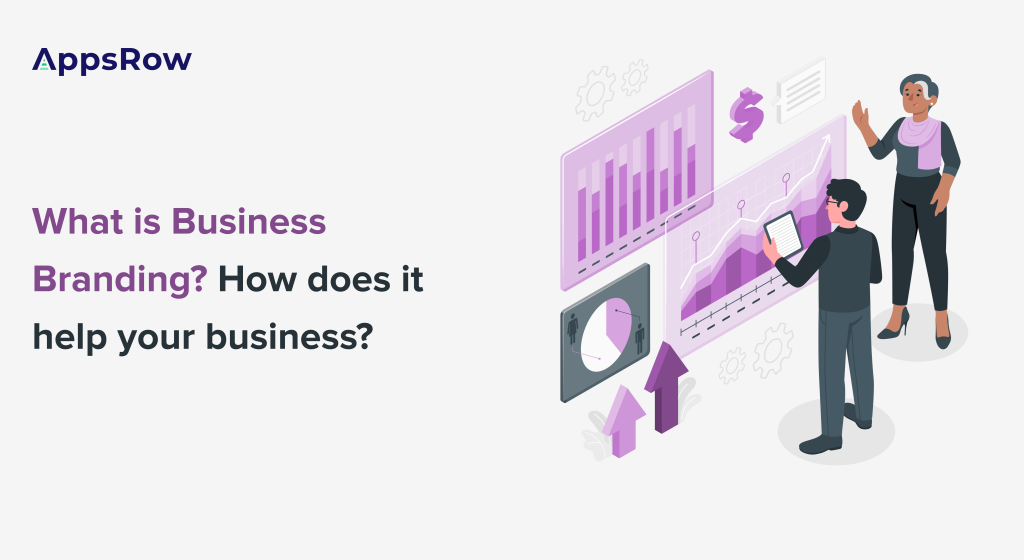
What Is Business Branding?

Throwing assumptions about such a significant part of a business wouldn’t justify its necessity. So let’s sail across the clouds of myths regarding branding and find out what exactly is branding and how it is essential for every business.

Branding means creating a distinct image of your business on multiple market parameters and communicating it to the customers. The various parameters could be excellent customer service, proposing a unique selling pitch, and many others that can enhance your brand awareness.

Making you understand the significance of it, Appsrow defines branding as the commitment you offer to your customers. It can be related to the quality of products you offer or the promises you make to assist the need of your customers.

As we work on the principle of sharing knowledge, Appsrow is revealing the secrets of running remarkable branding campaigns and creating more wealth and value.

Scroll down and learn the magical spells of branding.

Branding is all about differentiating your products or service from others. It is about conveying what benefits your services could bring to the customers.

Everyone knows about it and has been doing it some or the other way. But what pulls them down from achieving success?

Must-Have Techniques In Business Branding

Here it becomes very essential to equip yourself with the strategy-building techniques of branding and steps to follow in order to get a high scope of returns.

Strategic branding includes special attention to the following sections –

Logo Designs

A logo is the first shot that helps to establish connections between your business and your target audience. If you are willing to get more into the thoughts of your customers, you should never miss out on this essential component that drives your branding campaign in the direction of success.

A revolutionary logo helps you generate a vision in the minds of your customers about your company which then slips deep inside their minds and leaves an unforgettable image of your business.

Always hire skilled and experienced graphic designers or Appsrow to accolade your business with perfect branding campaigns.

Brand Identity Design

When you have already decided on other essential components of your business, you must also not waste the opportunity of leading your customers to a narrowed space to know how they perceive your business.

This is possible only when you have an appealing brand identity design which you can always get from Appsrow.

A nicely typographic, colored brand name is a little yet influencing element of branding in terms of brand identity design and thus adds a lot of power to your branding campaigns.

UI UX Design

Are you a bit surprised to see UI UX design in the list of strategy-building tools for better branding?

Well, you should not be because a good UI UX design enhances customer acquisition, which is one among so many things that require a high degree of planning.

Building trust with your customers is the key to acquisition and offering a good and valuable user experience makes it easier for you to add and retain customers.

Raise your customer acquisition chart by posing a good build, premium UI UX design to your customers and for that, Appsrow is the only name you can trust.

Profile Optimization

Adding more cream to your branding techniques, profile optimization is the tool that has a definite impact on your branding campaigns and adds more fuel to your engine of brand recognition.

Optimizing your profile on the digital channels hits the meter of interaction between you and your customers directly and levels up your brand awareness programs while at the same time reflects the potential of your business.

Finding the top branding experts could be hard but not when you have Appsrow for all such needs.

Benefits of Business Branding

After knowing the strategic route for running successful branding campaigns, it’s time to know what exciting results you can always get after following the most optimized branding techniques.

Your Brand Becomes Less Ordinary

The market is already flooded with businesses that are struggling to get a boost. A nicely structured branding campaign that covers all the major elements of branding is bound to make your business more uncommon and you hold the badge of uniqueness.

Builds Credibility

Perfect Branding creates a trustworthy image of your business in the market and people start to rely on the services you offer.

Gets You The Worth

When you succeed in establishing your business as a brand, you reach the position where you can finally make a good worth out of your business. Branding makes the customers realize the uniqueness of your product and you charge accordingly.

Maintains Consistency

Branding becomes very essential for a business to run its products and services with a defined consistency. A perfectly designed style guide from Appsrow avoids any unusual disruption in running your business.

Boosts Confidence

Good branding always convey your brand message to the audience and they begin to trust your brand after seeing your level of confidence in raiding the market with powerful branding campaigns.

Attracts More Clients

If your branding is representing your business in the most impressive way, more people are likely to interact with you as people like to connect with brands that in a way sharing the same values.

Brings In More Loyal Customers

People are always interested in relating themselves to the values you offer. Branding helps in establishing the right connection and people start to develop an emotional attachment with your brand.

Conclusion

It is pretty clear that branding is directly proportionate to returns. Good branding brings huge returns to your business and helps you enhance your business manifold in almost every way.

Branding is a challenge that has to be accepted by every entrepreneur and Appsrow holds the solution for all your branding requirements.

Create a brand out of business with Appsrow. Contact us now for premium, multi-dimensional branding services.

Frequently asked questions

How does business branding contribute to website performance?

Business branding contributes to website performance by establishing the visual and verbal consistency that builds recognition and trust across every touchpoint, which directly reduces bounce rates as visitors feel immediately oriented by a coherent brand experience rather than confused by inconsistent design signals. Strong branding also makes it easier to write clear, targeted copy that resonates with the specific audience the business is trying to reach. Appsrow integrates brand strategy into every Webflow project, ensuring the website design system faithfully expresses the brand in a way that supports both visual impact and business conversion goals.

What are the essential components of effective business branding?

The essential components of effective business branding include a distinctive logo that works across all sizes and contexts, a defined color palette that signals brand personality, a typography system that communicates voice and professionalism, a consistent photography or illustration style, and a brand voice guide that ensures all written communications reinforce the same positioning. Webflow makes it easy to implement all of these components consistently across every page of a website. Appsrow delivers complete brand identity systems alongside Webflow builds so every client launches with a fully consistent brand expression from day one.

How do I maintain consistent branding across my entire Webflow website?

Consistent branding across a Webflow website is maintained by building a comprehensive design system with Webflow's global styles, color variables, and component library that enforce brand standards automatically across every new page and CMS item added after launch. Without this system, brands inevitably drift as different team members make ad-hoc additions that don't match the original design intent. Appsrow builds brand-enforcing design systems into every Webflow project so clients can grow their site content without ever breaking the visual consistency that makes their brand recognizable.

Table of content

Transform your website with expert Webflow development

Let’s discuss how our team can bring your digital vision to life.

Man in red hoodie working on a website design displayed on a large curved monitor at a wooden desk with plants and a coffee mug nearby.

Talk to Our Webflow Experts

Transform your website with expert Webflow development

From brand identity to Webflow development and marketing, we handle it all. Trusted by 50+ global startups and teams.

Previous
Previous

More Blogs

Next
No next post

Recent Insights

The internet has changed the way businesses communicate with customers, sell products, and build lasting brand identities. Behind every successful online business is a well-designed, high-performing website. But for most business owners, building that website has historically meant one of two frustrating paths: hiring a team of developers and spending tens of thousands of dollars on custom code, or settling for a generic, limiting template inside a basic website builder that never quite looks the way you envisioned it.

That gap between creative ambition and technical capability has been one of the most persistent problems in digital business. Until recently, truly professional websites required professional developers. Beautiful, custom designs required serious budgets. Fast, SEO-optimized pages required a skilled engineering team. For small to medium-sized businesses, these realities often meant their websites fell short of what they actually needed to compete.

Webflow emerged as a direct answer to that problem. Founded in 2013 and growing rapidly through the 2020s, Webflow has redefined what a website builder can be. It is not a drag-and-drop page builder full of limitations. It is not a basic template system with cookie-cutter results. Webflow is a professional-grade web design and development platform that gives designers and business owners unprecedented control over how their websites look, feel, and function, without requiring them to write a single line of code.

In 2026, Webflow has firmly established itself as one of the most important platforms in the web design industry. Agencies, freelancers, enterprise teams, and solo entrepreneurs are all turning to Webflow as their preferred tool for building everything from simple landing pages to complex, content-rich business websites and e-commerce stores. If you are a business owner trying to understand what Webflow is, whether it is right for your business, and how it compares to the other options available to you, this guide was written specifically for you.

We will walk you through exactly what Webflow is, how it works, what makes it different from other platforms, what kinds of businesses it is best suited for, and what the practical process of building and managing a Webflow website actually looks like. By the end of this guide, you will have a clear, honest understanding of whether Webflow belongs in your business strategy.

What Webflow Actually Is

At its core, Webflow is a visual web development platform. It allows users to design websites using a visual interface while simultaneously generating clean, production-ready HTML, CSS, and JavaScript code in the background. Think of it as a bridge between design software and a coding environment. You work visually, the way a designer would, but the output is real, professional code that meets modern web standards.

This is fundamentally different from traditional website builders like Wix or Squarespace, which generate bloated or proprietary code and give you only as much design flexibility as they decide to allow. It is also different from coding everything from scratch, which requires technical knowledge most business owners do not have and significant time investment. Webflow sits in a unique position: it gives you design freedom that approaches what is possible with custom code, while keeping the process accessible enough that non-developers can learn and use it effectively.

Webflow is also a hosting platform. When you build a site in Webflow, you can host it directly through Webflow's infrastructure, which runs on Amazon Web Services and Fastly's global content delivery network. This means your website gets enterprise-grade hosting, fast load speeds, automatic SSL certificates, and global performance optimization built into the platform itself. You do not need to find a separate hosting provider, configure servers, or deal with complex technical setup.

Additionally, Webflow includes a built-in Content Management System, known as the Webflow CMS. This lets you structure and manage dynamic content, such as blog posts, team member profiles, product listings, case studies, or any other type of repeatable content your business needs to publish. You can design how that content looks once and then let editors add or update content through a simple, non-technical interface without ever touching the design.

How Webflow Differs from Other Website Platforms

The website platform market in 2026 is crowded. WordPress, Shopify, Squarespace, Wix, Framer, and dozens of other tools all compete for business owners' attention. Understanding where Webflow fits requires understanding what each category of tool is actually optimized for.

WordPress is still the world's most widely used content management system, powering an enormous percentage of the internet. However, WordPress is a framework, not a finished product. To use it well, you typically need plugins for almost everything, a theme to control your design, a developer to customize that theme, and ongoing maintenance to keep plugins updated and security vulnerabilities patched. WordPress is powerful and flexible, but it comes with real complexity and technical overhead.

Shopify is the clear leader for e-commerce, particularly for businesses whose primary need is selling products online at scale. If your business is primarily a store, Shopify is often the right answer. But Shopify is not optimized for content-heavy business websites, service businesses, or companies that need highly customized marketing pages alongside their commerce functionality.

Squarespace and Wix are beginner-friendly platforms that make it easy to get a simple site online quickly. However, both platforms impose significant design constraints. You are largely working within their systems, their templates, their layouts. When you want to do something outside those boundaries, you often find yourself unable to, or forced into workarounds that produce unsatisfying results.

Webflow occupies a different category entirely. It is built for people who want genuine design control and professional-quality output without relying entirely on developers. The learning curve is steeper than Squarespace or Wix, but the ceiling of what you can achieve is dramatically higher. Businesses that outgrow their basic website builders consistently find Webflow to be the natural next step.

The Business Case for Webflow in 2026

Why are so many businesses choosing Webflow in 2026 specifically? The answer comes down to several converging trends that have made Webflow's particular set of strengths especially valuable.

First, performance has become more critical than ever. Google's Core Web Vitals have been a ranking factor for several years now, meaning the speed and user experience of your website directly affects how well it performs in search results. Webflow's clean code output and optimized hosting infrastructure make it easier to achieve excellent performance scores compared to WordPress sites loaded with plugins or Wix sites running on shared infrastructure.

Second, the cost of developer time has continued to rise. Skilled web developers are expensive, and the traditional model of paying developers for every small change to a website is increasingly unsustainable for growing businesses. Webflow reduces dependency on developers by empowering marketing teams, content creators, and business owners to make updates, launch new pages, and manage content without technical help.

Third, design quality has become a competitive differentiator. In a digital landscape where customers make instant judgments about brand credibility based on website appearance, looking generic or outdated carries a real business cost. Webflow's design flexibility makes it possible to create truly distinctive, brand-aligned websites that stand out from the crowd of template-based competitors.

Fourth, the no-code and low-code movement has matured significantly. In the early days, no-code tools were seen as a compromise, a way to get something online quickly when you could not afford proper development. Today, that perception has changed. No-code and visual development tools like Webflow are recognized as legitimate production tools used by serious companies and sophisticated teams. Many businesses now build their primary websites on Webflow not because they cannot afford developers, but because Webflow genuinely produces better outcomes for their specific needs.

Key Features Every Business Owner Should Understand

Understanding what Webflow can actually do for your business requires familiarity with its core features. Here are the capabilities that matter most for business owners evaluating the platform.

Visual Design Without Code Limitations

Webflow's designer gives you control over every visual aspect of your website. Layout, typography, colors, spacing, animations, hover effects, responsive behavior across devices, and much more. Unlike template-based builders, there is no set of permitted customizations. If you can design it, you can build it in Webflow. This level of control means your website can look exactly the way your brand requires it to look.

The Webflow CMS

The CMS is one of Webflow's most powerful features for content-driven businesses. You define content types, called Collections, that match the structure of your business content. For example, a consulting firm might have Collections for services, team members, case studies, and blog posts. You design the template for how each Collection item looks, and then editors can add or update content through a simple editor interface. The design stays consistent automatically across every piece of content you publish.

SEO Controls

Webflow gives you granular control over all the technical SEO elements that matter for search visibility. Meta titles and descriptions, Open Graph tags for social sharing, canonical URLs, structured data, XML sitemaps, and 301 redirects are all manageable directly within the platform. Clean semantic HTML output also means search engines can crawl and understand your content effectively without you needing to install separate SEO plugins.

Animations and Interactions

Webflow Interactions is a system for building scroll-based animations, micro-interactions, hover effects, and complex animated sequences entirely through a visual interface, no JavaScript required. For businesses in creative, technology, or high-end consumer categories where visual storytelling matters, Webflow's animation capabilities create the kind of polished, engaging experiences that used to require a specialist JavaScript developer.

Webflow Ecommerce

Webflow includes built-in e-commerce functionality that allows businesses to sell physical and digital products directly through their Webflow site. While it does not yet match Shopify's depth in terms of inventory management, shipping integrations, and third-party apps, Webflow Ecommerce is an excellent option for businesses that want the design flexibility of Webflow combined with straightforward selling capability. The checkout experience can be fully customized to match your brand, something Shopify's standard plans do not easily allow.

Memberships and Gated Content

Webflow Memberships allows businesses to create gated content areas accessible only to registered members. This opens up business models built around subscription content, online courses, member communities, and premium resources. For professional services firms, coaches, consultants, and content businesses, this is an increasingly valuable capability.

Who Should Use Webflow

Webflow is not the right tool for every business in every situation. Being honest about who benefits most from Webflow helps you make a more informed decision.

Webflow is an excellent fit for businesses where visual presentation and brand identity are central competitive advantages. Design agencies, creative studios, architecture firms, luxury brands, technology companies, and professional services businesses that compete on expertise and credibility all benefit significantly from the design quality Webflow makes achievable.

It is also well-suited for businesses that produce a significant volume of content and need a CMS that makes publishing easy without sacrificing design consistency. Marketing teams at SaaS companies, media brands, consulting firms, and e-learning companies frequently choose Webflow for exactly this reason.

Startups and growing companies that expect their website needs to evolve rapidly over time also find Webflow to be a strong fit. The ability to launch new pages, run experiments, update content, and iterate on design without constantly engaging developers keeps pace with the speed that growing businesses require.

On the other hand, very large enterprise businesses with complex, highly custom backend requirements, businesses that sell thousands of SKUs with complex inventory management needs, and individuals who need the simplest possible solution with minimal learning curve may find that other platforms serve them better. Webflow has a real learning curve. It rewards investment in understanding how it works, which means it is not the best fit for businesses that need something up and running in an afternoon with no time to learn.

Working with a Webflow Development Agency

Many business owners choose to engage a professional webflow development agency to build their Webflow site rather than learning the platform themselves. This is a completely legitimate and often very smart approach. A skilled agency brings deep expertise in both Webflow's technical capabilities and the strategic and creative decisions that make a website effective as a business tool.

An experienced Webflow agency will typically handle the full project from strategy and information architecture through visual design, Webflow development, CMS configuration, integrations with third-party tools, and launch. After launch, they can provide ongoing support and help you continue evolving the site as your business needs change.

One of the significant advantages of Webflow for business owners who work with agencies is what happens after the project is complete. Unlike custom-coded websites where any change requires going back to the developer, or WordPress sites where a non-technical team member risks breaking something with every update, Webflow sites can be handed off to your internal team for day-to-day content management. Your marketing team can update copy, publish blog posts, add new team members, and make many kinds of changes without needing to re-engage your agency for every small update.

When selecting a Webflow partner, look for an agency with a strong portfolio of Webflow projects, demonstrable expertise in both design and technical Webflow development, and a process that includes strategic thinking about your business goals alongside the execution of the build. Webflow has an official partner program with certified agencies and freelancers you can browse through their marketplace.

Webflow Pricing: What It Actually Costs

Understanding Webflow's pricing structure is important for business planning. Webflow uses a tiered pricing model with separate plans for building and hosting sites, and different options depending on your use case.

The Starter plan is free and allows you to build in Webflow's designer and export code, but not host a custom domain through Webflow. For businesses that want to host with a custom domain, site plans start at the Basic tier, which covers simple websites without CMS functionality. The CMS plan is typically the right starting point for business websites with blogs, case studies, or other dynamic content. Business plans accommodate higher traffic volumes and more CMS items.

For e-commerce, Webflow has separate Ecommerce plans with transaction fees that decrease as you move to higher tiers. Enterprise pricing is available for large organizations with more complex requirements.

In terms of overall cost of ownership compared to alternatives, Webflow tends to be highly competitive. When you factor in the costs of WordPress hosting, plugins, theme licensing, and developer time for maintenance and updates, many businesses find that Webflow is comparable in price while delivering better performance, better design flexibility, and lower ongoing maintenance burden.

Integrations and the Webflow Ecosystem

No website exists in isolation. Your business website connects to marketing tools, CRM platforms, analytics systems, email marketing software, customer support tools, and payment processors. Understanding how Webflow integrates with the rest of your technology stack is an important consideration.

Webflow supports native integrations with several popular tools, and connects to thousands more through Zapier, Make (formerly Integromat), and other automation platforms. Common integrations that business owners rely on include HubSpot for CRM and marketing automation, Mailchimp or ConvertKit for email marketing, Google Analytics and Mixpanel for analytics, Intercom or Zendesk for customer support, and Stripe for payment processing.

Webflow also exposes an API that allows developers to build custom integrations and automate workflows between Webflow and other systems. For businesses with specific technical requirements, this API access provides significant flexibility. A webflow development agency with technical depth can use the API to create sophisticated custom functionality that goes well beyond what the visual designer handles out of the box.

The Webflow Apps marketplace, which has expanded substantially in recent years, also provides pre-built integrations and add-on functionality that can extend your site without custom development. From localization tools to advanced form handling to user-generated content features, the ecosystem around Webflow has grown considerably.

Common Misconceptions About Webflow

As Webflow's popularity has grown, so has the number of misconceptions about what it is and what it can do. Clearing up these misconceptions helps business owners approach the platform with accurate expectations.

One common misconception is that Webflow is just another Wix or Squarespace. This significantly underestimates Webflow. While all three are visual website builders, Webflow produces genuinely professional output that stands up to custom-coded sites in terms of design quality, performance, and flexibility. Designers and developers who use Webflow take it seriously as a professional tool.

Another misconception is that you are locked into Webflow forever. In fact, Webflow allows you to export your site's HTML, CSS, and JavaScript code and host it elsewhere if you ever choose to leave the platform. Your content and your design are not trapped. This is a meaningful advantage compared to some other platforms that make it very difficult to migrate away.

Some business owners assume that because Webflow requires no coding, it cannot support any custom functionality. This is also incorrect. Webflow allows you to embed custom code at the site level, page level, or within individual elements. This means developers can add custom JavaScript, integrate third-party scripts, build custom form handling, and create complex functionality that extends well beyond what the visual interface handles natively.

Finally, some believe Webflow is only suitable for small business websites. In reality, Webflow powers websites for companies of all sizes, from solo entrepreneurs to publicly traded corporations. Fintech companies, SaaS businesses, global agencies, and major media brands all use Webflow for production websites that serve millions of visitors.

Getting Started with Webflow: A Practical Overview

If you have decided Webflow might be the right platform for your business, understanding what the journey to a live Webflow website looks like helps you plan accordingly.

If you are learning Webflow yourself, start with Webflow University. The official learning resource from Webflow is genuinely excellent and covers everything from foundational web design concepts to advanced CMS and e-commerce configuration. Most people with no prior web design experience can build a functional, reasonably designed Webflow site after investing a few weeks of learning through Webflow University's courses.

If you are working with an agency or freelancer, the typical project begins with a discovery process where your goals, audience, content strategy, and technical requirements are defined. From there, a site architecture and wireframe structure is developed, followed by visual design concepts. Once design is approved, the site is built in Webflow, the CMS is configured, integrations are connected, and the team runs thorough quality assurance before launch.

Timeline for a professionally built Webflow site typically ranges from four weeks for simpler projects to several months for more complex builds involving extensive CMS architecture, custom animations, e-commerce, or membership functionality. Budgets for professionally built Webflow sites vary widely based on scope, but most solid business websites fall in a range that compares favorably to equivalent custom-developed sites.

After launch, plan for an ongoing relationship with either your internal team or your external partners to continue evolving the site. The best Webflow websites are not static. They grow, change, and improve continuously as you learn more about what your visitors need and how your business goals evolve.

Conclusion

Webflow represents one of the most significant shifts in how professional websites are built. It has democratized access to genuine design quality and technical performance without requiring businesses to choose between investing in expensive custom development or accepting the constraints of basic template-driven tools. In 2026, it stands as a mature, capable, and widely trusted platform that delivers real business value across a broad range of industries and use cases.

For business owners evaluating Webflow, the key question is not whether Webflow is a good platform. The evidence on that is clear. The real question is whether Webflow is the right platform for your specific situation. If your business values design quality, if you publish content regularly, if you want to reduce long-term dependency on developers for routine website tasks, if performance and SEO matter to your growth strategy, and if you are willing to invest in learning a platform or partnering with experienced professionals to build it right, then Webflow deserves serious consideration.

The businesses that get the most out of Webflow are those that approach it strategically rather than reactively. They define clear goals for what their website needs to accomplish, they invest in building it properly from the start, they structure their CMS thoughtfully so that content management is genuinely easy for their teams, and they treat their website as a living asset that evolves alongside the business rather than a static project that gets rebuilt every few years.

Whether you learn Webflow yourself, engage a webflow development agency to build it for you, or some combination of both, the platform gives you tools that were simply unavailable to most businesses a decade ago. The ability to produce custom-quality web design at a fraction of the traditional cost, with clean code, excellent performance, and a content management experience your team can actually use without technical help, is a genuine competitive advantage.

Your website is often the first impression your business makes on potential customers. It is the hub of your digital presence, the destination for your marketing efforts, the platform for your content, and the foundation of your online credibility. In a world where digital experiences matter more than ever, having a website that genuinely reflects the quality of your business is not a luxury. It is a necessity. Webflow, used well, gives you the tools to build exactly that.

The next step is yours. Whether that means exploring Webflow University, browsing the Webflow showcase to see what is possible, or reaching out to a team of professionals to discuss what a Webflow website could look like for your business, the opportunity to build something truly exceptional for your online presence is well within reach.

In the modern startup ecosystem, speed is not just an advantage but a survival requirement. New companies operate in highly competitive markets where timing, clarity of communication, and rapid execution determine whether an idea gains traction or fades into obscurity. A startup’s website sits at the center of this race. It serves as the primary platform for communicating value, attracting customers, capturing leads, educating users, building credibility, and supporting marketing campaigns. Unlike established enterprises that can afford lengthy development cycles, startups need a website that can be designed, built, launched, and refined quickly without sacrificing quality.

Traditional web development methods often create friction for early-stage companies. They involve multiple tools, separate teams, long approval chains, complex hosting setups, and continuous technical maintenance. These factors slow down progress and consume resources that startups simply cannot spare. Webflow addresses these challenges by providing an integrated visual development platform where design, development, hosting, and content management exist in one environment. This allows teams to launch faster, operate more efficiently, and adapt to changing market conditions without rebuilding from scratch. The following detailed guide explains how Webflow empowers startups to build smarter websites, accelerate growth, and maintain flexibility as they scale.

The Strategic Importance of a Startup Website

Before exploring technical advantages, it is important to understand why a website is such a critical asset for startups.

First Point of Contact With the Market

For most potential customers, partners, or job candidates, the website is the first interaction with the company. Within seconds, visitors form judgments about professionalism, reliability, and competence. A modern, well-structured site signals legitimacy, while a poorly designed one can create doubt even if the product itself is strong.

Central Hub for Marketing Activities

All digital marketing channels ultimately drive traffic back to the website. Paid advertisements, social media campaigns, email marketing, and search engine optimization efforts rely on landing pages to convert interest into action. Without a high-performing website, marketing investments produce limited results.

Investor and Partner Evaluation Tool

Investors frequently research startups online before meetings. A clear website that communicates vision, traction, and differentiation can strengthen confidence. It demonstrates that the founders understand positioning and are capable of execution.

Platform for Storytelling and Education

Startups often introduce new concepts that require explanation. The website provides space to educate visitors about the problem, solution, technology, and benefits. It allows the company to shape its narrative rather than relying on external interpretations.

Because the website plays such a multifaceted role, launching it quickly and maintaining flexibility is essential.

Why Traditional Website Development Slows Startups Down

Traditional web development follows a linear process that is often incompatible with startup speed.

Separation of Design and Development

Designers typically create visual mockups using graphic tools. Developers then translate those designs into code. Any discrepancy between the design and the implementation requires revisions, which creates additional cycles. This separation introduces delays and increases the risk of miscommunication.

Heavy Reliance on Technical Resources

Even minor updates such as changing text, adding a new section, or adjusting layout elements often require developer intervention. For startups whose developers are focused on building the core product, website updates become low priority and progress stalls.

Complex Hosting and Maintenance Requirements

Traditional sites require server configuration, security management, backups, and performance optimization. These tasks demand technical expertise and ongoing attention.

Financial Pressure

Hiring multiple specialists or agencies increases costs. For early-stage companies with limited funding, these expenses can consume valuable runway.

Webflow addresses these limitations by combining multiple functions into a single platform.

Visual Development That Eliminates Bottlenecks

One of Webflow’s defining strengths is its visual development approach.

Designing the Real Website Instead of Static Mockups

In Webflow, designers work directly on the live structure of the site. Elements placed on the canvas become part of the actual webpage, not just a visual representation. This removes the need for a separate coding phase to recreate designs.

Automatic Code Generation

Behind the scenes, Webflow produces clean, standards-compliant HTML, CSS, and JavaScript. Startups benefit from professional code quality without writing it manually.

Immediate Preview of Changes

Teams can see how updates affect layout and responsiveness instantly. This real-time feedback accelerates decision-making and reduces uncertainty.

Reduced Risk of Errors

Because design and development occur simultaneously, there is less chance of discrepancies between intention and outcome. What is designed is exactly what gets deployed.

This visual workflow dramatically shortens development timelines.

Faster Go-to-Market for Early Validation

Startups must validate ideas quickly to avoid investing in the wrong direction.

Rapid Launch of Minimum Viable Websites

Webflow allows teams to build a polished website within days. This enables founders to present their concept publicly, collect feedback, and measure interest before committing significant resources.

Continuous Iteration Based on Real Data

Once traffic begins arriving, startups can analyze user behavior and refine messaging accordingly. Changes can be implemented immediately, allowing the site to evolve alongside the business.

Quick Creation of Campaign Landing Pages

Marketing initiatives often require dedicated pages tailored to specific audiences. Webflow makes it easy to duplicate existing pages, adjust content, and launch new variations rapidly.

This ability to test and adapt supports smarter strategic decisions.

Integrated Hosting That Removes Infrastructure Complexity

Managing hosting environments can distract startups from their core mission.

Reliable Performance Infrastructure

Webflow hosting includes global content delivery networks that distribute content efficiently across regions. This ensures fast load times for users worldwide.

Automatic Security Features

SSL certificates, backups, and updates are handled automatically. Startups do not need to worry about configuring encryption or monitoring vulnerabilities.

Scalability During Traffic Spikes

If a marketing campaign goes viral or media coverage drives sudden traffic, the hosting environment can handle increased demand without manual intervention.

By removing infrastructure concerns, Webflow allows teams to focus on growth.

Content Management for Marketing Teams

Content is essential for attracting organic traffic and nurturing leads.

Structured Content Collections

Webflow’s CMS enables startups to define content types such as blog articles, case studies, team profiles, and testimonials. Each entry automatically generates a consistent page layout.

Independence From Developers

Marketing teams can publish new content or update existing pages without technical assistance. This accelerates publishing cycles and encourages experimentation.

Consistent Branding Across Content

Templates ensure that every piece of content adheres to the same visual standards, maintaining a professional appearance as the site grows.

This autonomy empowers non-technical team members to contribute directly to growth.

Complete Design Freedom for Unique Branding

Standing out visually is crucial in competitive markets.

Custom Layout Control

Webflow offers precise control over spacing, typography, colors, and structure. Startups can create distinctive designs rather than relying on generic templates.

Interactive Elements Without Coding

Animations, transitions, and micro-interactions can be implemented visually. These features enhance engagement and create memorable experiences.

Strong Brand Identity

A well-designed site communicates professionalism and builds trust with visitors, partners, and investors.

Unlike restrictive builders, Webflow supports truly custom digital identities.

Mobile Responsiveness From the Ground Up

Mobile devices account for a significant share of web traffic.

Device-Specific Optimization

Designers can adjust layouts separately for desktop, tablet, and mobile views, ensuring usability across screen sizes.

Efficient Media Handling

Images are automatically optimized for different devices, improving performance and reducing loading times.

Enhanced User Experience

Readable text, intuitive navigation, and responsive layouts keep visitors engaged regardless of device.

A mobile-friendly site ensures broader reach and higher satisfaction.

Built-In SEO Foundations

Search engines remain a primary source of traffic for many startups.

Webflow supports SEO through customizable metadata, clean semantic markup, automatic sitemap generation, and fast performance. These features help search engines understand and rank the site effectively without requiring extensive technical configuration.

Lower Long-Term Operational Costs

Managing expenses is critical for startups operating on limited funding.

Reduced Need for External Tools

Because Webflow integrates multiple functions, there is less reliance on plugins or third-party services that may incur additional costs.

Minimal Maintenance Requirements

Automatic updates and security features reduce the need for dedicated technical maintenance.

Predictable Pricing Structure

Hosting and platform services are bundled, making budgeting easier and more transparent.

Lower operational overhead allows startups to allocate resources to core activities.

Integration With Business Systems

Websites must connect with broader operational tools.

Webflow supports embedding analytics scripts, connecting forms to CRM systems, integrating email marketing platforms, and linking automation workflows. This transforms the website into an active component of the company’s growth infrastructure rather than a standalone asset.

When Professional Expertise Becomes Valuable

Although Webflow is user-friendly, complex projects may benefit from specialized knowledge. Working with a webflow development agency can help startups implement advanced features, optimize performance, and design conversion-focused experiences. Comprehensive webflow website development services can also ensure scalability and alignment with long-term business goals.

Scalability as the Startup Grows

A platform must support expansion without requiring migration.

Webflow accommodates larger content libraries, more complex navigation systems, and additional functionality as needs evolve. This continuity prevents disruption and preserves accumulated search authority.

Conclusion

Startups operate under intense pressure to move quickly while maintaining professionalism and credibility. Traditional website development methods often introduce delays, increase costs, and create dependencies that conflict with these priorities. Webflow transforms the process by combining design, development, hosting, and content management into a unified platform. This integration enables teams to launch high-quality websites rapidly, iterate based on real feedback, and maintain performance without complex technical management.

More importantly, Webflow empowers founders and marketing teams to take control of their digital presence. By reducing bottlenecks and supporting continuous experimentation, it aligns perfectly with the agile mindset that drives successful startups. From early validation to large-scale growth, the platform provides the flexibility, scalability, and efficiency required to compete in fast-moving markets. For startups seeking to launch faster and operate smarter, adopting an integrated visual development approach can become a decisive advantage that accelerates progress and supports long-term success.

Search engine optimization is no longer a single discipline. What once revolved around rankings, backlinks, and keywords has now expanded into a much broader system of visibility, authority, and interpretation. For years, traditional SEO helped businesses grow predictably by aligning content with how search engines indexed and ranked information. Appearing on the first page was the goal, and traffic was the reward.

As we move through 2026, that model has fundamentally changed. Search engines are no longer passive platforms displaying results. They are intelligent decision systems that analyze intent, summarize information, and present answers instantly. Users increasingly rely on AI driven search experiences that eliminate the need to click through multiple pages. This shift has elevated Answer Engine Optimization from an emerging concept into a critical strategy. Understanding the difference between AEO and traditional SEO is now essential for any business that wants to remain visible, trusted, and competitive.

The Shift From Search Engines to Answer Engines

The way people search today reflects how technology has reshaped expectations. Users want clarity, not choices. They ask complete questions, expect context aware responses, and trust systems that provide immediate understanding. Whether through AI summaries, voice assistants, or conversational interfaces, modern search experiences aim to reduce friction.

This transformation has changed the definition of success. Visibility is no longer measured only by rankings. It is measured by whether a brand’s information is selected, summarized, and presented as an answer. Traditional SEO alone was not designed for this reality. AEO exists specifically to meet it.

What Traditional SEO Was Designed to Do

Traditional SEO was built for an earlier version of search. Its goal was to help web pages rank higher by aligning with known ranking signals.

The Structural Foundation of Traditional SEO

Traditional SEO focuses on relevance, authority, and accessibility. Keyword research identifies what users search for. Content is optimized around those terms. Metadata, internal linking, and headers guide search engines through a page. Technical optimization ensures fast loading, mobile compatibility, and proper indexing. Backlinks reinforce trust and credibility.

This system worked because search engines primarily acted as indexes. They matched queries to pages and ranked them based on quality signals.

Why Traditional SEO Still Has Value

Despite the rise of AI driven search, traditional SEO remains important. It provides the technical and structural foundation that allows content to be discovered. Long form resources, educational content, and transactional pages still rely on SEO to surface in search results. Without strong SEO fundamentals, even well written content struggles to gain visibility.

Where Traditional SEO Falls Short in 2026

The limitation of traditional SEO lies in its original assumptions. It assumes users will browse results, compare links, and click through to websites. In reality, many users now receive answers directly within search interfaces. AI generated summaries often satisfy intent instantly. As a result, ranking does not always translate into influence or engagement.

What Is Answer Engine Optimization

Answer Engine Optimization is the practice of creating and structuring content so that AI systems can easily interpret, extract, and present it as a direct answer to user queries. AEO is not focused on ranking pages. It is focused on resolving intent.

Modern search platforms evaluate content differently. They look for clarity, accuracy, and contextual relevance. AEO ensures that information is structured in a way that machines can confidently reference.

How Answer Engines Evaluate Content

To understand AEO, it helps to understand how answer engines think.

- They analyze questions rather than keywords
- They assess credibility across an entire topic
- They prioritize consistency and factual accuracy
- They extract meaning from structure and language
- They reward content that reduces ambiguity

AEO aligns content with these evaluation patterns, making it more likely to be selected as a trusted source.

Why AEO Has Become Critical in 2026

AI driven search experiences are now embedded across platforms. Users encounter answers through search engines, browsers, mobile devices, and voice assistants. In many cases, decisions are influenced before a website visit ever occurs.

This means brands must earn visibility earlier in the journey. AEO determines whether a brand is included in AI generated explanations, comparisons, and recommendations. Being present in answers builds authority even without direct traffic.

AEO vs Traditional SEO: A Conceptual Comparison

Intent Versus Keywords

Traditional SEO begins with keyword demand. AEO begins with user intent. Instead of asking what terms people search for, AEO asks what problem they are trying to solve and what outcome they expect.

Content Depth Versus Content Clarity

SEO content often prioritizes coverage and length. AEO content prioritizes understanding. Clear definitions, logical flow, and contextual explanations matter more than keyword repetition.

Traffic Versus Influence

Traditional SEO measures success through clicks. AEO measures success through presence and trust. Influence now happens before engagement, shaping perceptions early.

How AEO and SEO Function Together

AEO does not replace SEO. It extends it. SEO ensures that content can be discovered and indexed. AEO ensures that content can be understood and referenced.

When combined, they form a complete visibility strategy. SEO builds the foundation. AEO builds interpretation and trust.

Content Strategy Changes Required for AEO

Writing for Comprehension

Content must now be written with clarity as the primary goal. Complex ideas should be explained simply. Assumptions should be minimized. Language should reflect how people naturally ask questions.

AI systems favor content that explains concepts step by step and avoids unnecessary abstraction.

Structuring Content for Interpretation

Effective AEO content follows a logical structure. Questions are addressed directly. Answers appear early in each section. Supporting context follows naturally. This structure benefits both readers and machines.

The Role of Structured Data in Modern Search

Structured data helps search engines understand relationships within content. Schema markup provides context around articles, organizations, and frequently asked questions. While structured data alone does not guarantee visibility, it improves interpretability when paired with high quality content.

AEO in the Context of B2B Marketing

B2B buyers conduct extensive research before engaging with vendors. Much of this research now occurs through AI mediated discovery rather than traditional browsing.

Answer based visibility influences which brands are perceived as credible, knowledgeable, and trustworthy. This is where alignment with a strategic B2b branding agency becomes essential, ensuring consistent authority, messaging, and positioning across AI driven environments.

Measuring Success in an AEO Driven Landscape

Traditional SEO metrics still matter, but they are no longer sufficient on their own.

Modern visibility measurement includes:

- Presence in AI generated answers
- Brand mentions within summaries
- Voice search references
- Assisted conversions influenced by early exposure

Success is increasingly measured by influence rather than immediate traffic.

Industries That Benefit Most From AEO

AEO is particularly effective for businesses offering complex or expertise driven solutions. Technology companies, SaaS platforms, professional services, healthcare providers, and fintech brands benefit from being recognized as authoritative sources.

Organizations investing in advanced AEO services gain a competitive advantage by shaping how AI systems understand and present their expertise.

Common Misconceptions About AEO

Many businesses misunderstand AEO and approach it incorrectly.

- Some treat it as a technical shortcut
- Others focus only on snippets
- Some ignore accuracy and freshness
- Others separate branding from authority

AEO is not a tactic. It is a long term strategy rooted in trust.

The Long Term Future of Search

Search engines are evolving into decision engines. AI systems will increasingly compare options, evaluate credibility, and recommend solutions without requiring users to visit multiple sites.

Brands that succeed in this environment will focus on education, expertise, and consistency. They will optimize content ecosystems rather than isolated pages.

Conclusion

The difference between AEO and traditional SEO reflects a broader transformation in how digital visibility works. Traditional SEO remains essential for discoverability and technical accessibility. AEO defines how brands are interpreted, trusted, and recommended by AI driven systems. In 2026, success is no longer about ranking alone. It is about being answer ready.

Businesses that integrate strong SEO foundations with AEO focused strategies gain lasting relevance, authority, and influence. As search continues to evolve, those who adapt now will shape how they are perceived in the future.

Appsrow transformed our website with a fresh layout that adheres to our new design guidelines while integrating CMS-driven updates. Their responsiveness and rapid implementation of changes ensured a visually appealing, fully responsive platform delivered right on schedule.

Carsten Schwant

Founder

Appsrow Solutions revolutionized our digital presence by designing and building our website from the ground up to perfectly capture our legal advisory expertise. Their agile approach, meticulous attention to detail, and on-time delivery resulted in a dynamic, user-friendly platform that exceeded our expectations.

Adam Leipzig

Owner

Appsrow team turned our agency homepage into a visually stunning and highly efficient platform. Their expert design, fast execution, and clear communication not only boosted user engagement and conversion rates but also elevated our brand’s online style to a level our team truly loves.

Josef Kujawski

Owner

Leading Webflow development company for high-growth brands.

From brand identity to Webflow development and marketing, we handle it all. Trusted by 300+ global startups and teams.