


September 9, 2026
12 mins read
How I Built an MCP-Powered Webflow Workflow and Won the MCP 2.0 Challenge

Explore appsrow with AI
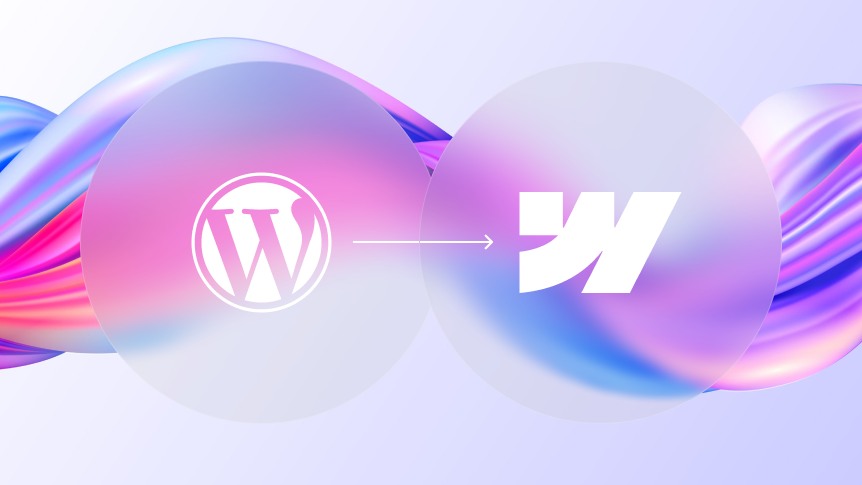
If you are running a WordPress site that feels slow, hard to update, or stuck in a template, switching to Webflow can be a game‑changer. Webflow gives you full design control, faster page loads, and a cleaner, more maintainable site, all without writing code. A well‑planned WordPress to Webflow migration lets you keep your SEO, traffic, and content while upgrading to a modern, flexible platform that is easier to manage long‑term.
This guide walks you through the entire process from start to finish, even if you have never used Webflow before. You will learn how to plan the move, export your WordPress content, build your new Webflow site, import posts and pages, set up redirects, and launch safely. Whether you are doing it yourself or working with WordPress to Webflow migration services or a Webflow development company, this step‑by‑step approach will help you avoid common mistakes and keep your site’s performance and rankings strong.
WordPress sites often slow down over time because of heavy themes, too many plugins, and inefficient database queries. Each plugin adds extra code, scripts, and sometimes even external requests, which can make pages feel sluggish, especially on mobile.
Webflow sites are built with clean, modern HTML, CSS, and JavaScript, so they load much faster out of the box. Faster sites rank better in Google, reduce bounce rates, and improve conversions. For businesses, this means more leads and sales. For creators, it means a better reading experience and higher engagement.
With WordPress, your design is usually limited by your theme and page builder. You can customize colors and fonts, but complex layouts, animations, and interactions often require custom code or expensive plugins.
Webflow gives pixel‑perfect control over every element, spacing, typography, hover effects, and interactions. You can create unique, brand‑aligned layouts that stand out, without being locked into a template. This is especially valuable for agencies, freelancers, and brands that want a custom look without relying on a developer for every small change.
WordPress requires regular updates for the core, themes, and plugins. If you forget an update or install a poorly coded plugin, your site can break or become vulnerable to security issues. Managing multiple client sites on WordPress can quickly become a maintenance nightmare.
Webflow handles hosting, security, and updates automatically. You do not need to worry about patching vulnerabilities or managing server configurations. For agencies and freelancers, this means fewer support tickets and more time to focus on strategy and content.
WordPress can be SEO‑friendly with the right plugins, like Yoast or Rank Math, but those plugins add complexity and can conflict with each other. Webflow has built‑in SEO tools that make it easier to manage titles, meta descriptions, Open Graph tags, and structured data without extra plugins.
Combined with faster load times and clean code, a well‑migrated Webflow site often performs better in search results than a bloated WordPress site. This makes Webflow a smart choice for businesses that rely on organic traffic.
Before exporting anything, take a full inventory of what is on your WordPress site. This helps you decide what to migrate, what to redesign, and what to leave behind.
Create a simple spreadsheet with:
This audit becomes your migration blueprint. It also helps you map old URLs to new ones later, which is critical for SEO.
Decide how your new Webflow site will be organized:
Sketch a simple sitemap:
text
Home
├── About
├── Services
├── Blog
│   ├── Category 1
│   └── Category 2
└── Contact
Note which WordPress pages map to which Webflow pages. This makes it easier to set up redirects and avoid broken links later.
There are three main ways to migrate:
For beginners, a mix of manual recreation for static pages and CSV import for blog posts usually works best.
Never start a migration without a full backup. If something goes wrong, you can restore your site and try again.
If you are on shared hosting, your provider may also offer one‑click backups. Use that as an extra safety net.
Go to webflow.com and sign up for a free account. You will need:
After signing up, verify your email and log in to the Webflow dashboard.
For a migration, starting with a blank site or a simple template is usually best, so you can match your WordPress design closely.
Webflow offers different hosting plans:
For a live business site, choose at least the CMS plan so you can host your blog and other dynamic content.
WordPress has a built‑in export tool:
This creates an XML file containing your content, including titles, content, featured images, categories, and tags.
If you use custom post types, like portfolios, case studies, or products, you may need a plugin like WP All Export to export them as CSV. This gives you more control over the data structure and makes it easier to import into Webflow CMS collections later.
Webflow has a 10 MB limit per file, so keep images under that size for best performance.
Start by rebuilding your main pages in Webflow:
Use Webflow’s drag‑and‑drop editor to:
For beginners, it helps to have your WordPress site open in another tab and copy the layout block by block.
Webflow CMS works with collections, which are like post types in WordPress. For a blog, you will create a collection called Blog Posts.
Repeat this for other content types, such as Case Studies, Team Members, and Services.
Make sure the layout matches your WordPress blog as closely as possible for a smooth transition.
If you are using CSV import:
If the import fails or looks messy, fix the CSV and try again. It is normal to need a few attempts to get it right.
Some content, like complex layouts, tables, or custom shortcodes, may not import cleanly. For these:
This is more time‑consuming but ensures your content looks exactly as intended.
Webflow automatically optimizes images, but it is still a good idea to compress them before uploading to keep load times low.
After importing content:
For large sites, you can use spreadsheet formulas to map old URLs to new ones and then update them in bulk.
For each page and collection item:
Webflow’s built‑in SEO settings make this much easier than managing multiple WordPress SEO plugins.
To preserve SEO and avoid 404 errors:
Redirect all blog posts, pages, and any other indexed URLs. This keeps your rankings and traffic stable after the migration.
Before going live, thoroughly test your new site:
This step can take a few hours to propagate, so plan the launch accordingly.
After going live:
If your site is large, complex, or mission‑critical, doing the migration yourself can be risky. WordPress to Webflow migration services and Webflow development companies offer:
Hiring a Webflow development company is especially helpful if you:
Look for agencies with proven Webflow experience, client case studies, and clear migration processes before hiring.
Migrating from WordPress to Webflow is more than just moving content. It is an opportunity to build a faster, more flexible, and visually stronger website. A successful WordPress to Webflow migration keeps your SEO intact, preserves your traffic, and gives you a site that is easier to update and maintain over time.
By following this step‑by‑step guide, planning your site structure, backing up WordPress, exporting content, building in Webflow, importing CMS data, and setting up redirects, even beginners can complete the move with confidence. For complex sites or when SEO is critical, working with WordPress to Webflow migration services or a Webflow development company can reduce risk and ensure a smooth transition.
If you are ready to leave behind slow themes, plugin conflicts, and maintenance headaches, Webflow is a powerful upgrade. Start small, such as a staging site or a single page, test thoroughly, and launch when everything works. Your future self, and your visitors, will thank you
If your website isn't easy to understand, you're giving away opportunities
before the conversation even starts.
Get a free review of how your website appears to AI-powered search and discovery tools.
GOT QUESTIONS ?
How does migrating from WordPress to Webflow work step by step?
Migration involves exporting existing content, rebuilding the site design natively in Webflow, mapping all old URLs to new ones with 301 redirects, and importing CMS content into Webflow's collection structure. The process preserves SEO rankings while eliminating WordPress maintenance overhead permanently. Appsrow's migration service handles complete WordPress to Webflow migrations with zero ranking loss.
What are the biggest risks of migrating from WordPress to Webflow?
The biggest risks are losing SEO rankings from missed redirects, broken content formatting, and underestimating the time needed to rebuild complex custom post types in Webflow's CMS. Careful URL mapping and pre-launch testing eliminate most of these risks. Appsrow's WordPress to Webflow migration page covers the proven process that avoids them.
What is the step-by-step WordPress to Webflow migration checklist?
The WordPress to Webflow migration process begins with a comprehensive content and URL audit, followed by designing the new site in Webflow with a matching or improved information architecture, migrating content through CSV imports or manual entry depending on volume, setting up all 301 redirects from old URLs to new ones, and verifying the migration through Google Search Console before going live. Appsrow follows a structured ten-step WordPress to Webflow migration checklist on every project to ensure nothing is missed and SEO rankings are fully preserved.
How is content migrated from WordPress to Webflow during a site transfer?
Content migration involves exporting posts and pages from WordPress, reformatting content to match Webflow's CMS field structure, uploading images to Webflow's asset library, and importing through the API or CSV tools. The right level of automation depends on content volume and structural complexity. Appsrow's development service handles this complete transfer with formatting preserved throughout.
What happens to WordPress plugins during a Webflow migration?
Plugins don't transfer directly each one's functionality needs replicating through Webflow's native features, third-party tools, or custom JavaScript. Common plugins like Yoast, WooCommerce, and contact forms have Webflow-native or integration-based equivalents. Appsrow's integrations service maps each plugin to its correct Webflow replacement before development begins.
How do you migrate from WordPress to Webflow without any downtime?
Zero-downtime migration means building and testing the full site on a staging domain before any DNS changes, then doing a rapid cutover during low-traffic hours once every redirect is in place. Total live downtime typically runs minutes, not hours. Learn more about how Appsrow structures this process on our about page.
How do WordPress custom post types transfer to Webflow CMS?
Custom post types and taxonomies need rebuilding as Webflow collections with equivalent fields, reference relationships, and template designs complexity scales with how many custom fields and relational structures the original WordPress setup had. This guide is written by Parth Parmar, Appsrow's Webflow Expert and CTO, based on 300+ delivered migrations.
What does a WordPress to Webflow migration cost?
Cost depends on site complexity, content volume, custom integrations, and whether a redesign is bundled in. Simple sites under 20 pages typically run $2,000–$5,000, while complex sites with extensive content and custom features range $5,000–$15,000. Appsrow provides detailed cost estimates after a brief discovery call assessing your current site.

Parth Parmar is a Webflow Expert and Co-Founder & CTO at Appsrow Solutions. He has delivered 300+ Webflow projects for 25+ global B2B brands, helping SaaS companies, AI startups, and tech businesses build conversion-focused websites with scalable CMS, AEO-ready architecture, and measurable growth.
CURATED READING