

Webflow
April 16, 2026


.webp)
Transform your website with expert Webflow development
From brand identity to Webflow development and marketing, we handle it all. Trusted by 50+ global startups and teams.
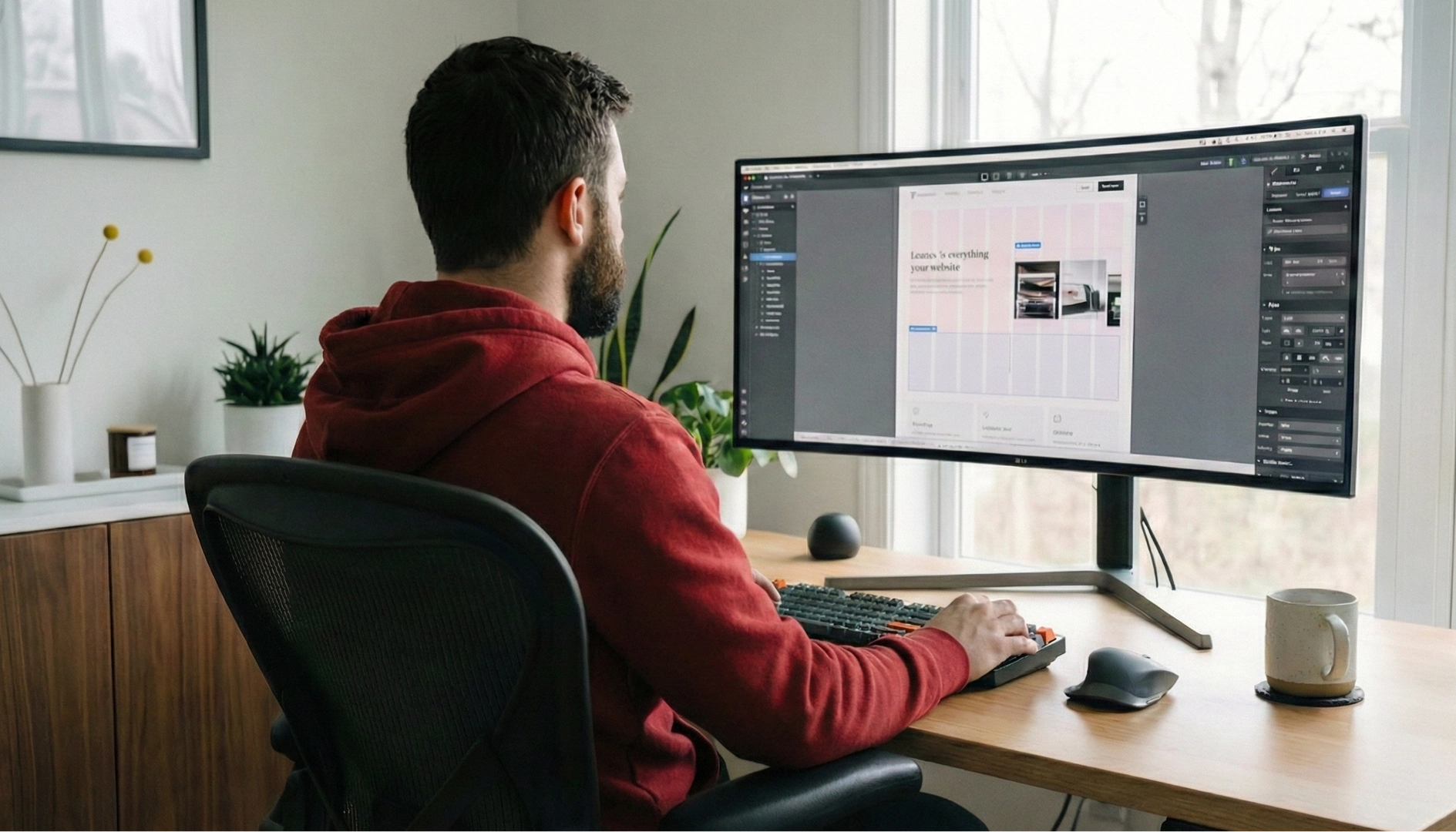
The no code revolution has completely transformed how businesses and individuals approach website creation. What once required a full team of developers and weeks of engineering work can now be accomplished by a single person with the right platform and a clear vision. As the market continues to mature, two platforms have emerged as dominant forces in the conversation: Webflow and Lovable. Each takes a fundamentally different approach to solving the same problem, yet both promise to help users build beautiful, functional websites without writing a single line of traditional code. Whether you are a startup founder trying to validate an idea quickly, a designer looking to bring creative concepts to life, or a growing business seeking a scalable digital presence, the platform you choose will have a lasting impact on your workflow, your product, and your ability to grow. Understanding the real differences between these two tools goes far beyond comparing feature checklists; it requires a deep look at philosophy, capability, and long-term potential.
This comprehensive guide breaks down every major dimension of both platforms so you can make a truly informed decision. We will explore design flexibility, technical depth, AI capabilities, pricing, scalability, e-commerce support, SEO performance, and ideal use cases for each tool. Whether you are evaluating these platforms for the first time or reconsidering your current setup, this article will give you the clarity you need. And for businesses that want the maximum power of professional-grade web design combined with expert guidance, understanding what a Webflow development agency can offer adds another critical layer to this decision.
Before comparing specific features, it is essential to understand the foundational purpose of each platform, because that underlying philosophy shapes every other decision that the tool makes on your behalf.
Webflow is a professional-grade visual web development platform that allows designers and developers to build production-ready websites through a drag-and-drop canvas that maps directly to real HTML, CSS, and JavaScript. Founded in 2013, Webflow has grown into one of the most sophisticated tools in the no code space. It is not a template-first builder where you simply swap out text and images. Instead, it is a full visual development environment where you control every box model, flexbox layout, grid system, interaction, and animation with precision. The platform generates clean, semantic code that closely mirrors what a hand-coded site would produce. Webflow also includes a powerful CMS for content-driven websites, robust hosting infrastructure, and an extensive ecosystem of integrations. It is the platform of choice for professional designers, creative agencies, and marketing teams who want pixel-perfect control without sacrificing performance.
Lovable is an AI-powered application builder that takes a fundamentally different approach. Rather than asking you to manipulate a visual canvas, Lovable allows you to describe what you want in plain English and then uses artificial intelligence to generate the underlying code, layout, and functionality. It is designed to help non-technical users ship web applications and landing pages extremely fast, often in a matter of minutes. Lovable is particularly powerful for building React-based single-page applications, internal tools, and MVP products. It connects with Supabase for backend functionality, enabling authentication, databases, and real-time data without any manual setup. The platform is positioned as a conversational development tool that lowers the barrier to entry almost entirely, making it accessible to entrepreneurs, product managers, and anyone who has an idea but lacks formal design or development training.
Design freedom is one of the most important factors for any business that takes its brand seriously. A website is often the first impression a potential customer has of your company, and the ability to differentiate your visual identity from every competitor can directly influence conversion rates, trust, and revenue.
Webflow delivers an unmatched level of design precision in the no code space. Every element on the canvas can be sized, positioned, styled, and animated with granular control. You can build complex responsive layouts using CSS Grid and Flexbox, create custom scroll-triggered animations, design hover states, define component libraries, and maintain a global style guide that propagates changes across the entire site. The platform supports custom fonts, variable fonts, SVGs, and advanced typography settings. Designers who are familiar with tools like Figma or Adobe XD will find that Webflow translates their creative vision into the browser with very little compromise.
Lovable, by contrast, generates interfaces based on your text prompts and the decisions made by its AI model. While the results can be surprisingly attractive and functional, you are ultimately working with AI-generated design choices rather than making them yourself. You can iterate on those choices through follow-up prompts, but achieving the level of precision and brand specificity that Webflow provides is significantly harder. Lovable is better suited for functional applications where the primary goal is utility, not visual storytelling. If your brand relies on distinctive aesthetics, rich motion design, or highly customized user experiences, Webflow is the clear winner in this category.
Artificial intelligence has entered every corner of the software industry, and both Webflow and Lovable are incorporating AI in meaningful ways, though their approaches reflect the different philosophies at the core of each product.
Lovable is fundamentally built around AI. The entire development experience is conversational. You tell the system what you want, it writes the code, renders the result, and lets you continue refining through dialogue. This makes Lovable extraordinarily fast for rapid prototyping and MVP development. It can wire up authentication flows, create data tables, connect forms to databases, and generate entire page layouts in a single conversation turn. For users with no technical background, this represents a genuinely transformative capability that removes barriers that previously required months of learning or significant budget for developers.
Webflow has introduced its own AI features, including AI-powered copy generation and layout suggestions, and continues to expand these capabilities. However, Webflow's AI tools are assistive rather than generative at the core. They help you work faster within the visual editor rather than replacing the editor itself. This is intentional; Webflow is built for professional outcomes, and its AI tools are designed to enhance the workflow of someone who already knows what they are building, not to generate the entire product from a description. For users who want AI to drive the majority of the development process, Lovable has a meaningful advantage. For users who want precise control with AI as a co-pilot, Webflow is the more appropriate choice.
For businesses that publish content regularly, whether blog posts, case studies, product updates, or portfolio entries, the CMS capabilities of a platform can make or break the entire workflow.
Webflow's CMS is one of the most powerful content management systems available outside of traditional developer-built solutions. You can define completely custom content structures with any combination of text fields, images, rich text, references, and multi-references. Once a structure is defined, you design CMS-powered templates visually, meaning you connect design elements directly to content fields and the layout automatically populates for every entry. This makes it possible to build sophisticated content hubs, news platforms, resource libraries, and portfolio sites that are easy for non-technical content editors to manage while still delivering exceptional design quality. The CMS also supports nested collections, conditional visibility based on content fields, and API access for headless implementations.
Lovable does not have a dedicated CMS in the traditional sense. Since it generates React applications, you can connect to external data sources through Supabase or build custom data structures within the application itself, but this requires a more technical approach. For content-heavy websites that need structured publishing workflows, Webflow is the far superior option. Lovable is better suited to applications where the content is dynamic and user-generated rather than editorially managed.
For businesses selling products or services online, e-commerce functionality is a critical consideration. Both platforms offer paths to online selling, but they differ significantly in maturity and depth.
Webflow has a native e-commerce solution that allows you to build fully designed online stores with complete visual control over every page of the shopping experience: product pages, collection pages, cart, checkout, and order confirmation screens. You can customize every element of the buying journey to match your brand, set up product variants, manage inventory, configure shipping rules, and integrate payment processors. For businesses where the shopping experience is part of the brand differentiation, this level of control is invaluable. Many e-commerce businesses work with a Webflow development agency to set up sophisticated stores that would be impossible to achieve with more constrained platforms.
Lovable can build e-commerce interfaces through AI generation and Supabase integration, but it lacks the native, polished e-commerce infrastructure that Webflow provides out of the box. Building a complete online store in Lovable is possible but requires significantly more prompt iteration and technical understanding to achieve results that are production-ready. For most e-commerce use cases, Webflow is the more reliable and capable choice.
Search engine optimization is not just a marketing consideration; it is a technical discipline that depends heavily on the quality of the code and infrastructure underlying your website. This is an area where the two platforms show a very clear divide.
Webflow is one of the best no code platforms for SEO. It generates clean, semantic HTML that search engines can crawl and index effectively. Every page allows you to set custom meta titles, meta descriptions, Open Graph images, canonical URLs, and structured data. The platform produces fast-loading pages by default, with global CDN delivery, automatic image optimization, and efficient asset loading. You can manage redirects, set up sitemaps, and control indexing rules with precision. Webflow's hosting infrastructure is powered by Fastly and Amazon CloudFront, ensuring excellent Core Web Vitals scores which are a direct Google ranking factor.
Lovable generates React applications that are client-side rendered by default, which can present challenges for SEO. Search engine crawlers handle JavaScript-heavy pages less reliably than server-rendered HTML, and without additional configuration, Lovable-generated sites may struggle to achieve the same indexing performance as Webflow sites. For applications where SEO is not a primary growth channel, this is a minor concern. However, for any business relying on organic search traffic to generate leads or sales, Webflow's technical SEO foundation is a significant and potentially decisive advantage.
Pricing is always a practical consideration, but it needs to be evaluated in the context of what you are actually getting for your investment and how that value scales as your business grows.
Webflow offers a tiered pricing structure that includes free plans for learning and experimentation, site plans for hosting published websites, and workspace plans for team collaboration. Paid site plans start at a competitive rate and scale to enterprise-level pricing with features like custom logic, additional CMS items, higher bandwidth, and priority support. For e-commerce, additional transaction and plan fees apply. While Webflow is not the cheapest option on the market, the value it delivers in terms of design capability, hosting quality, CMS power, and scalability makes it excellent value for professional use. Working with a Webflow development agency further extends the value, as experienced teams can build complex, scalable solutions that would take much longer to achieve independently.
Lovable offers a free tier with a limited number of monthly messages or AI generation requests, with paid plans unlocking higher usage limits and additional features. The pricing is accessible and reflects the product's positioning as a tool for individuals and early-stage teams moving quickly. For users who are primarily prototyping or building internal tools, Lovable's pricing represents good value. However, for teams scaling into production with complex requirements, the cost-to-capability comparison shifts in Webflow's favor.
The accessibility of a platform directly affects how quickly a team can become productive and how dependent they will be on outside help to maintain and grow their digital presence.
Webflow has a well-documented learning curve. Because it exposes real web development concepts through its visual interface, users need to understand at least basic layout principles, responsive design, and how CSS properties interact. For complete beginners, this can be intimidating at first. However, Webflow University, the platform's free educational resource library, is widely regarded as one of the best learning resources in the no code space. With a few weeks of dedicated learning, most design-savvy users can become highly productive. The investment in learning pays off enormously, as mastery of Webflow unlocks capabilities far beyond what any simpler builder can provide.
Lovable has the lowest possible learning curve of any tool discussed in this comparison. If you can type a sentence, you can start building in Lovable. The conversational interface removes virtually every technical barrier, making it genuinely accessible to anyone regardless of their background. This is Lovable's strongest competitive advantage for first-time builders. The tradeoff is that when things go wrong, or when you need to make very specific adjustments that the AI does not interpret correctly, you may find yourself iterating through many prompts or needing to understand the generated code to fix issues manually.
As a business grows, the platform it relies on needs to grow with it. Choosing a tool that cannot handle increased traffic, complexity, or team size can create costly and time-consuming migration projects down the line.
Webflow is purpose-built for scalability. Its hosting infrastructure handles enterprise-level traffic without requiring users to manage servers or configure CDN settings manually. The platform supports team workspaces with role-based access controls, making it appropriate for large organizations with multiple contributors. Webflow's Localization feature enables multi-language sites from within the same project, and its headless CMS capabilities allow it to serve content to any front-end application. Many globally recognized brands use Webflow for their marketing sites, demonstrating its ability to operate at scale. Webflow development is an established professional discipline with a thriving ecosystem of partners, plugins, and integrations that support complex requirements.
Lovable is primarily optimized for speed and early-stage development rather than enterprise scale. It is excellent for getting from zero to one quickly, but organizations with complex permissions, large teams, strict compliance requirements, or deeply customized workflows may find that Lovable's current feature set does not yet support their needs. The platform is evolving rapidly, and this gap may narrow over time, but for businesses that need proven scalability today, Webflow holds a significant advantage.
Choose Webflow if you need any of the following:
Choose Lovable if you need any of the following:
Webflow and Lovable are both remarkable tools that represent the best of what the modern no code movement has to offer, yet they are built for different people with different goals. Lovable's AI-driven, conversational approach is genuinely revolutionary for speed and accessibility, making it one of the most exciting tools for entrepreneurs and early-stage builders who need to move fast and validate ideas without technical overhead. It removes every barrier and puts the power to create in the hands of anyone willing to describe their vision clearly. But accessibility comes with tradeoffs in precision, SEO performance, content management depth, and long-term scalability that matter enormously for businesses that are building for sustained growth.
Webflow, meanwhile, stands as one of the most powerful and complete platforms ever built for professional web design and development without writing traditional code. Its combination of visual precision, clean code output, robust CMS, enterprise-grade hosting, and a thriving ecosystem of Webflow development professionals makes it the platform of choice for businesses that are serious about their digital presence over the long term. The learning curve is steeper and the investment deeper, but the capabilities it unlocks and the results it produces are in a different class entirely. For teams that want to maximize their impact online, investing in Webflow development and working with the right expertise is one of the highest-return decisions a growing business can make. The choice ultimately depends on where you are today and where you plan to be tomorrow.
Yes, Appsrow offers ongoing Webflow support, updates, and optimization services to keep your website fast, secure, and aligned with your evolving business needs.
Yes, Appsrow can migrate websites from platforms like WordPress, Wix, or custom code to Webflow. We ensure content accuracy, improved performance, responsive layouts, and SEO friendly structure during migration.
Appsrow provides end to end Webflow solutions, including UI UX design, custom development, CMS setup, and animations. Whether you have a Figma design or need a complete website from scratch, we handle the entire process.
Appsrow specializes in building custom Webflow websites tailored to business goals. We focus on clean design, scalable CMS structure, performance optimization, and long term usability rather than one size fits all templates.
Yes. Agencies like AppsRow provide ongoing maintenance, content updates, bug fixes, speed optimization, SEO monitoring, and new feature development to keep your website performing at its best.
AppsRow offers 100% custom design, fast development, optimized CMS structure, lightning-fast performance, and seamless integrations. With expert Webflow developers and long-term support, AppsRow helps businesses grow online.
The cost depends on the project. Simple landing pages start at $300, business websites range from $500–$2,000, and advanced CMS or eCommerce sites range from $2,000–$6,000+. AppsRow provides flexible pricing based on your needs.
They provide custom UI/UX design, clean Webflow development, advanced animations, CMS structuring, SEO optimization, Zapier/Make integrations, and maintenance services—ensuring a fully scalable and high-performing website.
Certified partners bring years of experience, follow best practices, deliver pixel-perfect builds, and ensure your website performs at enterprise level. They also reduce development time and improve your website’s SEO and performance score.
Webflow Development Partners are highly experienced agencies that specialize in building fast, responsive, and SEO-optimized Webflow websites. They handle design, development, CMS setup, integrations, automations, and long-term support.
AppsRow delivers high-performance Webflow websites with modern UI, fast loading speed, perfect responsiveness, SEO optimization, and full CMS setup. With professional developers and seamless support, AppsRow helps businesses grow quickly and efficiently.
Yes. Agencies offer monthly maintenance plans that include backups, updates, bug fixes, content changes, SEO monitoring, and performance optimization.
Yes. Agencies can migrate your content, pages, blog posts, and CMS structure from WordPress to Webflow seamlessly - without losing SEO rankings.
Yes. Webflow is excellent for SEO because it outputs clean code, fast loading speeds, automatic SSL, built-in schema tools, alt tags, and editable meta fields. A Webflow Development Company ensures your website is fully optimized for Google.
A professional Webflow Development Company offers a full team (designers, developers, SEO experts, QA testers), faster delivery, better project management, and long-term support. This ensures a more reliable and scalable website compared to hiring a single freelancer.
A Webflow Development Company specializes in designing, developing, and optimizing websites using Webflow. They handle everything—from custom design, responsive development, animations, CMS setup, SEO, to integrations like HubSpot, Make, Zapier, and API connections.
.png)
April 16, 2026
.png)
April 16, 2026


