%201.webp)


.png)
October 12, 2026
12 mins read
Webflow Global Tag Styles in Libraries: Benefits and Guide (2026)

Explore appsrow with AI
Search has quietly split into two different games. One game is still about ranking. The other game is about eligibility. If your page cannot be fetched fast enough by an AI system, it does not matter how good your writing is or how many backlinks you have earned. You simply never make it into the pool of pages that ChatGPT, Perplexity, Google AI Overviews, or any other generative engine considers when building an answer.
This is the part of AI search that most marketing teams still miss. They optimize for keywords, structure, and topical depth, which are all still important, but they forget that none of it matters if the page never loads fast enough for an AI crawler to grab it. Before you can be relevant, you have to be reachable. Before you can be reachable, you have to be fast.
This article breaks down what is actually happening under the hood when AI systems decide whether to cite your content, what the latest data shows about the relationship between speed and citations, and what you can do about it. Along the way, if you want to see exactly where your own site stands, you can run a free AEO audit and get a clear picture of your current standing before making any changes.
Traditional search engines built their reputation on completeness. Googlebot could afford to crawl slowly, index broadly, and store everything in a massive database for later retrieval. If your page took four seconds to load, Googlebot would still eventually get around to indexing it, even if that slowness hurt your rankings.
Generative engines do not work that way. ChatGPT, Perplexity, and Google's AI Overviews increasingly operate through retrieval augmented generation, commonly called RAG. When someone asks a question, the system does not pull from a static index the way older search engines did. Instead, it runs a live retrieval process: it breaks the question into smaller sub queries, fetches candidate pages in real time, extracts the relevant passages, and synthesizes an answer from whatever it managed to retrieve in time.
That single word, time, is the whole story. These systems operate under strict latency budgets. They are often evaluating dozens of potential sources in parallel while a user is sitting there waiting for an answer. There is no patience left over for a page that takes six seconds to respond. The AI system will simply move to the next candidate and leave your page out of the answer entirely.
This is why eligibility has become the new prerequisite layer sitting above ranking. You cannot rank in an AI answer if you were never eligible for inclusion in the first place. And eligibility is decided almost entirely by infrastructure: how fast your server responds, how reliably your page loads, and whether the AI agent's request even completes before it gives up and moves on.
If you want a fast way to check where your own eligibility stands right now, check your AI search eligibility and see whether your pages are structurally set up to survive the fetch stage before you invest more time writing content that may never get retrieved.
There is a status code most SEO professionals have never heard of, and it may be the single biggest hidden reason content disappears from AI answers. It is called the 499 response code. It was introduced by NGINX, and it does not appear anywhere in the official HTTP specification, which stops at status code 426. That is part of why it has flown under the radar for so long. It never made it into the standard status code breakdowns that most SEO education recycles year after year.
A 499 does not mean your server crashed. It does not mean your page returned an error. It means the client, in this case an AI crawler or retrieval agent, gave up and disconnected before your server finished responding. Your server may have completed the response a few hundred milliseconds later, but from the AI system's point of view, the content never existed. The request was abandoned, and your page was excluded from consideration before it even had a chance to be evaluated for relevance.
Research from iPullRank, drawing on data shared by Profound based on a sample of roughly 700,000 pages analyzed over several days in April 2026, found a striking pattern. Pages with high failure or timeout rates for AI crawlers, specifically those failing more than 75 percent of the time, received dramatically fewer citation events from OpenAI systems, on the order of 18 times fewer than pages that responded reliably. In many cases, those unreliable pages received no citations at all.
That distinction matters enormously. This is not a case of a slow page ranking slightly lower in an AI answer. It is a case of the page being completely excluded from consideration. It never reaches the passage extraction stage. It never gets synthesized into the response. It simply does not exist as far as the AI system is concerned.
The reason this has gone unnoticed for so long is structural. Most SEO log file tools do not explicitly surface 499 errors, and the failure often gets grouped in with generic 5XX server errors instead. There is no equivalent of Google Search Console built specifically for tracking how ChatGPT or Perplexity crawlers experience your site. Because the code lives outside the formal HTTP spec, most educational content about status codes simply leaves it out. The result is a serious gap: your infrastructure is quietly logging a critical failure mode that is directly suppressing your AI visibility, and almost nobody on the marketing side is looking at it.
If you have never checked your logs for this specific issue, it is worth starting there. You can also scan your page for AI readiness to get a clearer picture of whether your current setup is likely to be triggering these silent exclusions.
Time to first byte, often abbreviated TTFB, measures how long it takes for a server to send back the very first byte of a response after a request is made. In the world of human visitors, TTFB has always mattered for perceived speed, but it was rarely treated as a make or break metric. In the world of AI retrieval, it has become exactly that.
When an AI system runs what is called query fan-out, it splits a single user question into multiple background searches that all need to be resolved within a tight window. If your server is slow to respond with that first byte, the AI system may never even get to see the rest of your page. The connection either times out or gets deprioritized in favor of faster competing sources. Your content, however well written it may be, effectively becomes invisible.
Think about what this means practically. Two competing pages might have nearly identical content quality and topical relevance. One loads in under a second. The other takes four seconds to send back that first byte. In a traditional search engine context, both pages would likely get indexed and ranked based on relevance signals. In an AI retrieval context, only the first page has a real chance of being fetched, parsed, and cited. The slower page is functionally disqualified before content quality even enters the equation.
This is why marketers who are serious about AI visibility need to treat TTFB as a top level priority metric, not a secondary technical detail buried in a developer's backlog. It is worth running a check specifically on this metric using a tool built for the purpose. You can check your TTFB and AI crawlability in a few minutes and see exactly where the bottlenecks are on your own pages.
For years, Core Web Vitals were treated primarily as a ranking factor for traditional search, something that mattered but was rarely the deciding factor in visibility. That has changed. In the current AI search environment, passing Core Web Vitals thresholds functions less like a bonus and more like an entry fee.
Largest Contentful Paint, which measures how quickly the main content of a page becomes visible, needs to stay under 2.5 seconds. Pages that render slowly signal poor performance not just to human visitors but to the automated systems evaluating whether your content is worth fetching and parsing.
Interaction to Next Paint, which measures responsiveness, needs to stay under 200 milliseconds. Heavy, laggy JavaScript tells retrieval systems that a page's experience is unreliable, and unreliable pages get deprioritized in a retrieval queue where speed is everything.
Cumulative Layout Shift, which measures visual stability, needs to stay under 0.1. Pages where content shifts around as it loads create parsing problems for automated systems trying to extract clean, structured information. A shifting layout can confuse an extraction pipeline in ways that a static, stable page never will.
None of these thresholds are new numbers. What has changed is the consequence of missing them. In the old model, failing Core Web Vitals might cost you a few ranking positions. In the new model, failing them can mean your page never gets pulled into an AI generated answer at all. The bar has effectively moved from "nice to have" to "minimum viable."
This is exactly the kind of technical gap that is easy to miss without dedicated tooling. Rather than guessing, you can audit your Core Web Vitals for AI search and get a straightforward breakdown of where your site currently stands against these thresholds.
Traditional search engine crawlers were built with completeness as the priority. Googlebot could revisit a page multiple times, wait patiently for slow servers, and eventually get around to indexing content that took its time to load. That patience is largely gone in the world of AI agents.
When an AI system is assembling a real time answer to a user's question, it is frequently evaluating a large number of potential source pages simultaneously, all within a tight latency window dictated by the expectation of a near instant response. It simply does not have the luxury of waiting around for a slow page to finish loading. If your page does not respond quickly enough, the system moves on to the next viable candidate and your content is left out of the final answer.
This creates a fundamentally different incentive structure than what SEO professionals are used to. Speed is no longer just a performance optimization that shaves a few points off a page experience score. It has become a hard participation requirement. Either your page is fast enough to be part of the candidate pool the AI system is drawing from, or it simply is not part of the conversation.
This distinction is worth sitting with for a moment because it changes how technical priorities should be ranked internally. A team that spends months perfecting keyword research and content structure while ignoring backend response times may be optimizing for a version of search that no longer determines whether their content gets used. Before investing further in content strategy, it is worth taking the time to test your site against AI crawlers to confirm your foundation can actually support that content once it is published.
Beyond the specific 499 and TTFB findings, the wider body of research circulating in 2026 tells a consistent story across multiple independent sources. Reports focused on LLM retrieval patterns and AI citation behavior describe a retrieval environment where speed and reliability function as filtering mechanisms long before relevance or content quality get evaluated. Marketing and SEO focused analyses comparing traditional optimization to newer LLM optimization approaches point to first contentful paint and related loading metrics as increasingly correlated with whether a page shows up in AI generated citations at all.
Other industry commentary frames the relationship between website speed and AI search visibility in similarly direct terms, arguing that slow loading pages are treated by AI crawlers as unreliable sources regardless of how strong the underlying content might be. Guidance aimed at optimizing for AI crawlers alongside Core Web Vitals and generative engine optimization principles consistently returns to the same conclusion: technical performance sits upstream of content performance in this new retrieval paradigm.
It is worth noting that a meaningful share of this content comes from marketing and SaaS focused blogs rather than independent academic research. That does not make the underlying pattern untrue, but it does mean the strongest and most rigorously sourced data point currently available is the Profound dataset analysis referenced earlier, built from a large real world sample rather than anecdotal observation. When you are building a case internally for prioritizing technical performance work, that is the data point worth leading with, since it reflects an actual measured relationship between page reliability and real citation behavior rather than a general industry claim.
If your goal is to move from general awareness of this trend to a specific, actionable understanding of your own site's position, it helps to get a full AEO report rather than relying on assumptions about how your particular pages are performing.
To understand why speed has become so decisive, it helps to walk through what actually happens between the moment a user asks an AI system a question and the moment they receive an answer.
First, the system interprets the query and often expands it into multiple related sub queries, a process sometimes called query fan-out. This lets the system gather a broader set of potentially relevant information rather than relying on a single narrow search.
Second, the system retrieves a set of candidate documents for each of those sub queries. This retrieval step is where speed starts to matter enormously, because the system is issuing real time fetch requests to actual web servers rather than pulling from a long established static index the way older search engines did.
Third, each candidate page needs to actually load and respond within an acceptable time window. This is the fetch stage, and it is where 499 errors, slow TTFB, and failed Core Web Vitals checks quietly eliminate pages from consideration. A page that cannot complete this stage never advances to the next one, regardless of how well it might have performed on relevance.
Fourth, for pages that do successfully respond, the system extracts specific passages that are most relevant to the query. This extraction step depends heavily on clean, well structured content. Pages bloated with excessive JavaScript, deeply nested markup, or inconsistent heading structures make this extraction harder, even if they did manage to load in time.
Fifth, the system synthesizes an answer using the extracted passages, and this is the stage where citations are decided. Only pages that survived every previous stage have any chance of appearing here.
Every one of these stages operates under a shared latency budget. A slow page does not just risk being deprioritized at one stage. It risks being eliminated entirely at the earliest possible point, the fetch stage, before content quality has any opportunity to factor in. This is precisely why technical performance has become the foundation that everything else in AI search visibility rests on. You can run a technical AEO scan to see how your pages currently perform across these stages of the retrieval pipeline.
Understanding the problem is only useful if it leads to action. Here is a breakdown of the levers that actually move the needle on AI eligibility, starting with the highest impact changes.
Everything starts at the origin server. If your backend is slow, every layer built on top of it inherits that slowness, and eventually something in the chain times out. Start by instrumenting your request time across database queries, application logic, third party API calls, and rendering steps. In most cases, a small number of expensive operations account for the majority of the delay. Those are the bottlenecks worth fixing first.
Common fixes include adding proper indexing to database queries, eliminating repeated query patterns that fire once per item in a loop, precomputing data that does not need to be generated fresh on every single request, and reducing dependence on synchronous calls to third party services that can introduce unpredictable delays. If your application assembles a large, complex payload before sending anything back to the client, consider whether all of that work truly needs to happen before the first byte goes out. For AI agents specifically, getting that first byte out quickly matters more than finishing the entire page, because it keeps the connection alive long enough for the rest of the content to follow.
Edge caching may be the single highest leverage fix available, because it removes origin server latency from the equation almost entirely. When an AI crawler requests a page and a cached version can be served directly from an edge network, the crawler is no longer waiting on your database, your application code, or your rendering pipeline. The response is simply there, ready to go.
For AI search specifically, it makes sense to treat known AI bot traffic differently from regular human traffic. These bots often do not need the freshest possible version of a page. They need a fast, reliable, retrievable version. That means editorial content, guides, FAQ pages, and other relatively static resources can be served from a cache with a much longer time to live than you would use for a logged in user session or a page showing live inventory or pricing.
A practical setup usually involves identifying the AI bot user agents actually showing up in your logs, creating cache rules that specifically target those user agents, making sure those matching requests are eligible for full page caching rather than just static asset caching, and setting a longer cache duration appropriate to how often the underlying content actually changes. Stable, evergreen resources can often be cached for thirty days or longer, while frequently updated pages might need a shorter window measured in hours or a single day.
It is worth excluding sensitive or highly dynamic areas from this caching strategy, including cart and checkout flows, account pages, and anything containing user specific information. After implementing changes like this, it helps to benchmark your site against AI search standards and confirm the caching setup is actually reducing timeout rates the way you expect.
Timeouts are one of the most common and least visible causes of failed requests. Every layer in your infrastructure stack has its own timeout threshold: the client making the request, the content delivery network sitting in front of your site, your load balancer, and your origin server itself. When these thresholds are not aligned with each other, you end up with situations where one layer gives up while another layer is technically still working on the request.
For example, if your origin server takes six seconds to generate a page but your content delivery network is configured to wait only five seconds, the CDN will cut the connection early, and that gets logged as a failed request even though your server might have finished a moment later. If the AI agent itself is only willing to wait three seconds regardless of what your CDN is configured to do, then even a perfectly tuned CDN will not save you, because the client disconnects first.
The practical approach here is to design around the most impatient layer in the entire chain, which is almost always the AI client itself. You typically cannot control that client's patience directly, but you can infer its behavior by analyzing when timeouts and disconnections happen and how long your successful requests typically take. Once you understand that window, the goal becomes making sure your responses consistently land within it, either by increasing certain timeout thresholds where appropriate or, more often, by reducing your actual response times so you are not relying on generous timeouts to begin with.
AI agents do not experience your website the way a human visitor does. They do not benefit from animations, personalization widgets, client side hydration processes, or interactive modules layered on top of your core content. What they need is the actual information, delivered quickly and in a format that is easy to parse programmatically.
This is part of why serving simplified, cleaner markup specifically to automated clients has become a legitimate technical strategy rather than something to view with suspicion. Stripping a page down to its semantic core, meaning headings, paragraphs, lists, tables, and links without the surrounding layout complexity, reduces the size of the response and makes it dramatically easier and faster for an automated system to parse. That directly reduces the chance that an AI agent gives up on the request before your content fully arrives.
Some content delivery platforms have already begun building this capability directly into their infrastructure, offering real time conversion of standard web pages into cleaner formats specifically when an AI system requests it through content negotiation. This reframes simplified content delivery as a core piece of technical infrastructure for AI visibility rather than a minor developer convenience. It is not the same thing as showing search engines different information than human users see. The underlying content stays materially identical. The only thing changing is the presentation overhead being stripped away so the core substance can be retrieved and processed more efficiently.
In practical terms, this can include serving fully rendered HTML instead of content that only appears after client side JavaScript execution, reducing unnecessary JavaScript dependencies for automated requests, simplifying heading structures, trimming boilerplate navigation elements, and generally reducing payload size wherever possible. If you want to see how your current page structure compares against these principles, you can see how AI bots view your site and identify specific structural issues that might be adding unnecessary overhead.
Fixing these issues once is not enough. Infrastructure changes over time, new features get added, third party scripts accumulate, and performance regressions creep back in without anyone noticing until visibility quietly drops. Treat AI eligibility monitoring the same way you would treat traditional rank tracking: as an ongoing habit rather than a one time project.
Set a recurring schedule, whether weekly or monthly depending on how frequently your site changes, to review your server logs specifically for elevated timeout rates and failed request patterns tied to known AI bot user agents. Compare your Core Web Vitals scores over time rather than checking them once and assuming they will stay stable. Watch for any correlation between infrastructure changes, such as adding a new plugin or third party script, and shifts in how often your content shows up in AI generated answers.
This kind of ongoing tracking is exactly where a dedicated tool becomes far more efficient than manually checking log files and running individual Core Web Vitals reports every time. You can get your AEO readiness score on a recurring basis and catch regressions before they compound into a significant visibility loss.
Bringing everything together, here is a condensed checklist worth working through methodically rather than trying to fix everything at once.
Start by measuring your current Time to First Byte across your most important pages, since this single metric has an outsized impact on whether AI crawlers even stay connected long enough to receive your content. Pages with a slow TTFB should be prioritized first, ahead of content or design changes.
Next, check your server logs specifically for 499 errors and elevated timeout rates tied to known AI bot user agents. If your current logging setup does not clearly surface this information, that is worth fixing before anything else, because you cannot address a problem you cannot see.
Then verify your Core Web Vitals scores against the current thresholds for Largest Contentful Paint, Interaction to Next Paint, and Cumulative Layout Shift. Treat any page failing these thresholds as a priority fix rather than a background task, since these have effectively become gatekeeping requirements rather than optional best practices.
Evaluate whether edge caching is properly configured for your most important editorial and resource pages, and whether AI bot traffic is being treated appropriately within that caching strategy. If AI crawlers are hitting your origin server on every single request instead of receiving cached responses, that is a significant and relatively easy fix.
Review your timeout configurations across every layer of your stack, from your CDN through your load balancer to your origin server, and make sure they are aligned rather than working against each other.
Consider whether serving simplified, cleaner content specifically to automated clients makes sense for your site, particularly for content heavy pages weighed down by unnecessary JavaScript or bloated markup from page builders and heavy themes.
Finally, build a recurring habit of checking your AI visibility metrics rather than treating this as a single project with a defined end point. The retrieval landscape continues to shift, and staying eligible requires ongoing attention rather than a one time fix.
If working through this checklist manually feels overwhelming, you can start your free AEO analysis and get a prioritized breakdown of exactly which of these areas need attention on your specific site, rather than guessing where to focus your limited time.
There is a temptation to treat this entire topic as a niche technical concern that can be handed off to a development team and forgotten about. That would be a mistake. The relationship between page speed and AI citation eligibility touches nearly every part of a modern marketing strategy, from content investment decisions to budget allocation to how success gets measured internally.
Consider what it means if a significant share of your content marketing budget is being spent producing genuinely useful, well researched articles that never actually get retrieved by AI systems because of a backend performance issue nobody flagged. That is not a content problem. It is an infrastructure problem wearing a content costume. No amount of additional writing, editing, or keyword optimization will fix a page that gets excluded at the fetch stage before an AI system ever has the chance to evaluate what that page actually says.
This also changes how technical and marketing teams need to collaborate. Historically, page speed conversations tended to live almost entirely within engineering or development teams, treated as a background performance concern rather than a direct driver of marketing outcomes. In the current environment, page speed has become a marketing metric in its own right, directly tied to whether your content strategy produces any visible return at all in AI generated answers.
Marketing leaders who want to stay ahead of this shift need to start asking different questions in their regular reporting cycles. Instead of only asking how many new articles were published or how keyword rankings moved, it is worth also asking what percentage of key pages are passing Core Web Vitals thresholds, what the current TTFB looks like across the most important content, and whether server logs show any concerning patterns in how AI crawlers are being handled.
Getting ahead of this now, before it becomes common knowledge across the industry, represents a genuine competitive advantage. Most competitors are still optimizing purely for traditional ranking factors and have not yet made the connection between backend infrastructure and AI citation eligibility. Being early to recognize and fix these issues means being early to show up reliably in the AI generated answers that an increasing share of searchers are relying on.
The core idea running through everything covered here is simple, even if the technical details underneath it are not. AI search has introduced a new prerequisite layer sitting above traditional ranking factors, and that layer is eligibility. If your content cannot be fetched fast enough and reliably enough by an AI system, none of your other optimization work matters, because the content never gets far enough into the retrieval pipeline to be evaluated on its merits.
The 499 response code, slow Time to First Byte, failed Core Web Vitals thresholds, and misaligned timeout configurations across your infrastructure stack are the specific technical failure points quietly determining whether your best content ever reaches an AI generated answer. These are largely invisible to standard SEO tooling, which is exactly why so many marketing teams remain unaware of how much visibility they may already be losing.
The good news is that these are fixable problems with well understood solutions: improving backend performance at the source, implementing intelligent edge caching, aligning timeout configurations across your stack, and serving cleaner, simplified content specifically to automated clients. None of these require reinventing your content strategy. They require treating technical infrastructure as a first class citizen in your AI visibility strategy rather than an afterthought.
Before making any further investment in content production, it is worth confirming your technical foundation can actually support that content being retrieved and cited. You can analyze your site with this free tool and get a clear, prioritized view of exactly where your site currently stands, so you know precisely what to fix first and can start closing the gap between the content you are producing and the visibility that content is actually capable of earning in AI search.
If your website isn't easy to understand, you're giving away opportunities
before the conversation even starts.
Get a free review of how your website appears to AI-powered search and discovery tools.
GOT QUESTIONS ?
How do I know if my site is actually losing citations because of speed issues rather than content quality?
The most reliable way to separate these two variables is to look at your infrastructure data directly rather than guessing based on content performance alone. If you have never checked this before, it is worth taking a few minutes to try the AEO analyzer and see whether your pages are failing on technical grounds before you assume the issue is related to writing or topical coverage.
Is this only a problem for large, complex websites, or does it affect smaller sites too?
Fix the technical foundation first. Content quality only matters once a page survives the fetch stage of retrieval, so investing further in content while ignoring infrastructure issues is unlikely to move the needle. You can check your citation eligibility score as a starting point to understand where your priorities should sit.
How often should I be checking this going forward?
Treat it as an ongoing habit rather than a single audit. A monthly check is reasonable for most sites, though anything undergoing frequent development changes should be checked more often. You can get a prioritized AEO fix list each time you run a check so the work stays organized and actionable rather than becoming an overwhelming backlog.
Does this apply equally to ChatGPT, Perplexity, and Google AI Overviews?
The underlying mechanism, meaning real time retrieval under a tight latency budget, applies across all of these systems, even though the specific implementation details differ between them. It is worth checking your standing across the board rather than optimizing for just one system. You can see your AI Overview readiness score and test how fast AI bots can read your site to get a fuller picture that covers multiple retrieval systems rather than a single one, and from there you can decide which platform deserves the most immediate attention based on where your audience is actually asking questions.
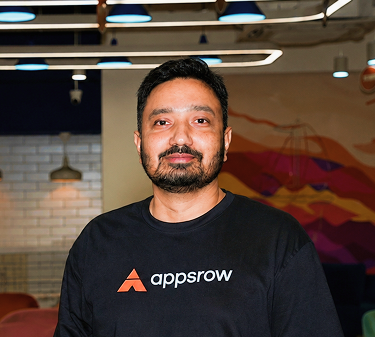
Parth Parmar is a Webflow Expert and Co-Founder & CTO at Appsrow Solutions. He has delivered 300+ Webflow projects for 25+ global B2B brands, helping SaaS companies, AI startups, and tech businesses build conversion-focused websites with scalable CMS, AEO-ready architecture, and measurable growth.
CURATED READING
.png)
.png)