.png)


.png)
October 16, 2026
12 mins read
Webflow MCP Update: AI Analytics, AEO & Gemini Integration

Explore appsrow with AI
AI has made it easier than ever to generate website layouts, write code, and publish landing pages. However, building a website is only one part of managing a successful digital experience. Marketing teams still need to launch campaigns, optimize conversions, maintain brand consistency, improve AI search visibility, and coordinate changes across multiple systems.
This is the problem Webflow aims to address with Source by Webflow, a new platform designed to bring marketing teams, developers, designers, and AI agents into a shared operating environment. Announced at Webflow Conf 2026, Source connects an existing codebase and marketing technology stack so teams can build, launch, and optimize digital experiences without necessarily migrating their entire infrastructure to a new platform.
The platform is currently available in a limited research preview, with select agencies and customers being enrolled through a phased process.
For businesses already using Webflow, Next.js, Astro, or other web technologies, Source introduces an important idea: AI-powered website operations should extend beyond generating code. They should help teams manage the complete website lifecycle, from initial development to continuous optimization.
In this article, we explore how Source by Webflow works, its technical approach, the role of AI agents, its potential impact on existing technology stacks, and what agencies should consider as agentic website development evolves.
Source by Webflow is an agentic platform that connects website code, content management systems, hosting infrastructure, and marketing tools in a shared environment. It is designed to help marketing teams and AI agents collaborate on digital experiences while maintaining visual control, brand consistency, and operational governance.
Traditional website development often separates responsibilities across different tools. Developers work in code editors and repositories, designers manage design systems, marketers update content in a CMS, and growth teams analyze performance through analytics and experimentation platforms.
These tools may work well individually, but coordinating changes across them can create delays. A marketer who wants to launch a new campaign might need a designer to prepare assets, a developer to implement the page, and another team member to configure tracking and publish the final experience.
Source aims to reduce these handoffs by creating a shared environment where agents and people can work with the same underlying website code and connected systems.
Its approach combines three important concepts:
This makes Source different from a conventional AI website builder. The emphasis is on ongoing website operations and collaboration, not just generating a website from a prompt.
AI coding tools have reduced the time required to create websites and frontend applications. Developers can generate components, build page layouts, and implement functionality with assistance from AI models.
However, faster code generation does not automatically produce a reliable marketing operation.
A website still needs consistent design standards, content governance, reliable deployments, analytics, experimentation, and clear ownership. Without these elements, AI-generated changes can introduce inconsistencies, duplicate functionality, or break existing workflows.
Marketing teams also face a different challenge. They need to make frequent changes based on campaign performance, customer feedback, competitor activity, and search visibility. When every update requires a developer, even small improvements can become part of a lengthy development queue.
Source addresses this gap by bringing development and marketing operations into a shared environment. Rather than treating AI as a separate coding assistant, the platform is designed to support agents that can work alongside the people responsible for website outcomes.
For companies investing in Webflow development services, this shift reinforces the importance of building websites that are scalable, maintainable, and ready for continuous optimization.
The future of website development is not simply about producing more pages in less time. It is about making changes faster while retaining control over quality, performance, and business objectives.
One of Source's central ideas is that code should remain the foundation of the digital experiences it manages. According to Webflow's announcement, Source gives its agents direct access to the code that ships, allowing them to work on larger and more complex changes without being constrained by an abstraction layer.
This is significant for organizations whose websites depend on custom functionality, reusable components, API integrations, and established development workflows.
Visual website builders typically simplify development through components, design controls, and structured editing interfaces. These abstractions make common tasks easier, but highly customized requirements may still need direct code access.
For example, a marketing team might need a new campaign page that uses an existing design system, retrieves information from a product API, and sends conversion events to an analytics platform.
An AI agent working only with a limited page-generation interface may struggle to coordinate all these requirements. A system that can work with the actual codebase and connected tools has more context for implementing complex changes.
Potential applications include updating reusable frontend components, adjusting page templates, implementing campaign variations, and coordinating changes across connected systems.
However, direct code access does not mean every generated change is automatically correct. AI-generated code still needs testing, review, and appropriate deployment controls.
A particularly important aspect of Source is its stated ability to connect with existing codebases rather than requiring businesses to rebuild everything in Webflow.
This is relevant to companies using frameworks such as Next.js and Astro, alongside their preferred CMS, hosting environment, and marketing tools.
Instead of treating the website platform as the only place where work can happen, Source aims to provide a common operating environment across the existing stack.
Businesses evaluating this approach should still assess how their repositories, build systems, deployment pipelines, dependencies, and permissions will work with the platform. The exact integrations and supported workflows depend on Source's implementation and availability.
Source introduces Views, a way to create dedicated workspaces around the tasks and outcomes that different team members own.
A developer, designer, content marketer, and growth specialist do not need the same interface or operational permissions. Giving everyone access to the same collection of tools can create unnecessary complexity and increase the risk of mistakes.
Views aim to make the environment more relevant to each role.
A marketing manager might need access to campaign performance, landing-page drafts, and approval workflows. A designer may need brand assets, reusable components, and visual editing controls. A developer may need code access, integration settings, and deployment-related operations.
Instead of forcing all these users into one general-purpose interface, Source can provide workspaces tailored to their responsibilities.
Webflow also describes governance capabilities that include brand systems, role-based access, approval paths, and audit trails. These controls are important when AI agents and multiple team members work on the same digital experience.
For example, a growth marketer could request a new landing-page variation, an AI agent could prepare the draft, and the appropriate reviewer could approve the change before it is published.
This structure helps separate the creation of a proposed change from the authorization to release it.
An AI agent that can modify production code or publish content needs clearly defined boundaries. Without appropriate controls, an incorrect instruction or unexpected model output could affect live pages, tracking, or business-critical functionality.
A well-designed governance model should define which resources an agent can access, which changes it can prepare, and which actions require human approval.
For enterprise teams, these requirements should be considered part of the technical architecture rather than added after automation has already been implemented.
Organizations building larger websites can explore Appsrow's Webflow Enterprise services for related considerations around access control, CMS governance, localization, integrations, and scalable website management.
Traditional automation usually follows predefined rules. For example, a form submission might trigger a CRM update, or a new CMS item might initiate a notification.
Agentic workflows introduce a more flexible approach. An AI agent can evaluate information, identify a task, use connected tools, and prepare or execute a sequence of actions within its permitted scope.
Source is designed around this model, with agents that can continuously monitor relevant information, surface opportunities, and prepare work for review.
Consider a website with several campaign landing pages. One page starts generating fewer conversions than usual, while another continues to perform well.
A traditional workflow might send an alert when conversion rates fall below a predefined threshold. An agentic workflow could go further by gathering relevant page information, identifying potential causes to investigate, preparing alternative headlines, and suggesting an experiment.
The proposed changes would still need to be evaluated against the available evidence. A decline in conversion rate might result from traffic quality, campaign changes, seasonality, technical issues, or other factors.
The value of the agent is its ability to help connect information and prepare the next step, not to assume that every observed change has a single obvious explanation.
A campaign optimization workflow could involve several stages.
Step 1: Monitor performance. The workflow reviews available analytics and identifies a page that may need attention.
Step 2: Gather context. The agent retrieves relevant page content, campaign information, and approved brand guidelines.
Step 3: Prepare recommendations. It proposes changes to the headline, content structure, or call to action based on the available evidence.
Step 4: Create a draft or variation. The agent prepares the proposed changes within its permitted environment.
Step 5: Request review. A marketer or designated reviewer evaluates the draft before it is released.
Step 6: Measure the outcome. The team tracks the relevant performance indicators to understand whether the change improved results.
This type of workflow can reduce repetitive coordination while preserving human responsibility for significant decisions.
Businesses interested in implementing similar workflows can explore Appsrow's agentic Webflow development services, which focus on connecting AI capabilities with Webflow content, SEO, and website operations.
One of Source's most relevant features for established businesses is its composable approach to the technology stack.
Many organizations have already invested in their website infrastructure. They may use Next.js for the frontend, a headless CMS for content, a cloud hosting provider for deployment, and multiple tools for analytics, customer management, and marketing automation.
Replacing this infrastructure solely to adopt a new AI platform may be expensive and unnecessary.
Source is designed to connect the codebase, CMS, hosting, and marketing tools that a business already uses, including websites built in Webflow.
Consider a SaaS company with a Next.js marketing website, a headless CMS, HubSpot for customer management, and an analytics platform for measuring acquisition.
The marketing team wants to launch a campaign without waiting for separate changes across several tools. In a connected workflow, an agent could help prepare page content, work with supported codebase operations, and coordinate tasks involving the existing marketing stack.
The precise operations available would depend on the integrations and permissions configured for that environment. Source should not be assumed to provide universal compatibility with every framework, CMS, hosting provider, or third-party service.
Connecting multiple systems introduces technical responsibilities. Teams need to consider authentication, API permissions, data consistency, error handling, deployment safety, and how changes move between development and production environments.
For example, a CMS update might succeed while a downstream integration fails. A deployment could complete successfully even though an analytics event has been configured incorrectly.
These scenarios require validation and monitoring rather than relying only on an AI agent's summary.
Appsrow's Webflow integration services help businesses connect websites with CRMs, analytics, marketing automation, and other operational systems. A strong integration architecture is essential whether the workflow is operated by a human, a conventional automation, or an AI agent.
One of the important implications of Source is its potential relevance to teams that do not want to migrate their entire website to Webflow.
Webflow remains an important visual development and content management platform, but Source is positioned as an environment that can work with existing codebases and marketing infrastructure.
This creates a broader conversation about how development tools will support different types of teams.
Webflow provides visual design capabilities, structured CMS functionality, and tools for publishing and managing marketing websites.
For organizations that want marketers to manage content and design changes with less developer involvement, these capabilities can be valuable. Teams can establish reusable components, define content structures, and maintain consistent page templates.
Frameworks such as Next.js and Astro are used by teams that need code-level control over rendering, application architecture, routing, integrations, and deployment.
A company may already have a frontend architecture that meets its technical requirements and has no reason to replace it.
Source's stated ability to connect to existing codebases could be relevant to these organizations, but the practical fit will depend on supported integrations, workflow requirements, and the maturity of the preview.
Businesses should not choose a platform solely because it supports AI features. The decision should consider the team's development skills, content requirements, security needs, hosting environment, integration complexity, and long-term maintenance costs.
For teams that need a visual marketing website with structured content and a manageable publishing workflow, Appsrow's Webflow development services provide a relevant starting point.
For companies with an existing website that needs to move to a more manageable platform, Appsrow's Webflow migration services cover migration planning, content structure, redirects, and SEO preservation.
The goal should be to select an architecture that supports the business, then introduce AI capabilities where they solve real operational problems.
Search behavior is changing as users increasingly rely on AI-generated answers to discover products, compare providers, and research services.
For businesses, visibility is no longer limited to traditional search result rankings. They also need to understand how AI systems access their content, interpret their expertise, and represent their brand in answers.
Source is designed to support ongoing website optimization, including work related to AI discovery. Its broader vision includes agents that can identify opportunities and prepare improvements for review.
A typical AEO workflow might begin by identifying a topic where competitors appear in AI-generated answers but a business does not.
The team could then review the relevant website content, identify missing information, prepare a more comprehensive explanation, and improve the supporting internal links or structured data.
With suitable integrations and permissions, an agentic environment could help coordinate more of this process, from identifying a problem to preparing a content change.
However, publishing additional content does not guarantee AI citations. The quality, relevance, accessibility, accuracy, and authority of the information all matter, and answer engine behavior can change over time.
AI agents need access to well-organized information to produce reliable results. Clear page hierarchies, descriptive headings, meaningful internal links, accurate metadata, and structured CMS fields help maintain a website that is easier to understand and manage.
Technical accessibility also matters. Important content should be available to the intended crawlers, and the website should not rely exclusively on interactions that prevent relevant information from being accessed.
Businesses can use Appsrow's Webflow SEO and AEO services to address these foundations through technical optimization, content improvements, internal linking, and structured data.
For a more focused discussion of AI-driven discovery, see Appsrow's guide to Webflow AEO agents.
The important distinction is that Source provides an environment for coordinating work. AEO performance still depends on the quality of the underlying strategy, implementation, and content.
The emergence of agentic development creates new opportunities and challenges for agencies.
In the traditional model, an agency might deliver a website, complete the initial handover, and provide ongoing support when the client requests changes. Many improvements depend on a sequence of design, development, review, and publishing tasks.
AI-assisted workflows can reduce the time required for some of these activities. However, they also increase the importance of technical architecture, workflow design, security, and quality assurance.
Agencies may be able to offer more continuous services by building workflows that help clients manage campaigns, update content, review SEO issues, and monitor performance.
Instead of manually performing every repetitive task, the agency can establish reusable workflows and supervise the outcomes.
This creates opportunities to deliver value beyond the initial website build. Agencies can help clients design their agentic workflows, establish approval processes, configure integrations, and measure the impact of automation.
An agency that repeatedly solves the same problem across multiple clients can potentially turn its process into a reusable workflow.
For example, a standard SEO quality-control process might check title tags, metadata, heading structure, internal links, and required CMS fields before a new page is published.
A campaign workflow might prepare landing-page drafts using approved brand guidelines and a standard review sequence.
Reusable systems can make delivery more consistent, but they should still be adapted to each client's requirements. A workflow that works for a small marketing site may not be appropriate for an enterprise environment with complex approval rules.
When AI can generate code more quickly, the ability to evaluate and maintain that code becomes increasingly important.
Agencies still need to understand application architecture, accessibility, performance, integrations, data quality, and deployment risks. They also need to know when automation is appropriate and when a task requires direct human intervention.
Source could help agencies expand their services, but the competitive advantage will come from combining automation with reliable engineering and a clear understanding of client objectives.
AI-generated content and code can introduce inconsistency when agents operate without adequate context. A new page might use the wrong typography, a campaign headline might not match the brand voice, or a change might bypass the usual review process.
Source addresses this challenge through its emphasis on brand systems, role-based access, approval paths, and audit trails.
A brand system includes more than colors and fonts. It can also define reusable components, content patterns, tone of voice, and rules for how the business presents its products or services.
When these standards are available to the relevant workflows, teams can reduce the risk of agents generating inconsistent experiences.
Designers can establish the visual foundations, while marketers and agents work within those boundaries to prepare new pages and campaigns.
Appsrow's Webflow design services are relevant to this foundation, particularly when organizations need reusable design systems and consistent experiences across multiple pages.
Not every action needs the same level of review.
A draft content suggestion may require only a quick editorial check. A change to production code, customer data handling, or a conversion-critical form may require technical review and explicit authorization.
Businesses should define these differences before allowing agents to perform consequential operations.
Audit trails help teams understand what changed, who or what initiated the change, and whether the relevant approval was obtained.
These records become especially important when multiple agents and team members work on the same website.
The precise logging and governance capabilities available will depend on the platform's implementation and configuration. Organizations should validate their requirements during the research preview rather than assume every enterprise control is already available in the required form.
Businesses do not need to wait for a new platform to begin preparing for AI-assisted website operations. Several technical foundations can make existing websites easier to manage through connected workflows.
Reusable components, consistent naming conventions, and clear separation of responsibilities make a website easier to maintain. They also reduce ambiguity when developers or AI agents need to understand where a change belongs.
Teams should remove unnecessary duplication, document important dependencies, and ensure that critical functionality has appropriate tests.
A well-structured CMS makes it easier to identify content types, required fields, relationships, and publishing rules.
Businesses should define consistent content models for blog posts, service pages, case studies, and other recurring content. This helps prevent incomplete or inconsistent records when content operations become more automated.
Create an inventory of the systems connected to the website, including analytics, CRM platforms, forms, hosting, and marketing automation tools.
For each integration, document the data it handles, the permissions it requires, and the consequences of a failure.
This provides a clearer foundation for deciding which workflows can be automated safely.
A reliable workflow should distinguish between drafting a change, reviewing it, testing it, and publishing it.
Where possible, use staging environments, automated checks, and explicit approvals for changes that affect production functionality.
For ongoing support, Appsrow's Webflow maintenance services cover website updates, troubleshooting, integrations, performance, and continuous improvements.
Avoid introducing AI automation simply because it is available. Start with a repetitive task that has a clear cost or operational problem.
Examples include preparing SEO audit reports, drafting campaign pages, checking CMS content for missing fields, or identifying pages that need conversion improvements.
Measure the time saved, the quality of the output, and the amount of human correction required. Expand the workflow only when the results justify the additional complexity.
Traditional AI website builders generally focus on generating layouts, page content, or code from user instructions. They can help teams move from an idea to an initial website more quickly.
Source takes a broader approach by focusing on collaboration between marketing teams and AI agents across the website lifecycle.
This comparison describes the products' general positioning, not a claim that every traditional builder lacks these features or that every Source capability is already available to every user.
The practical difference is the scope of the workflow. Source aims to support teams beyond initial page creation, bringing development, marketing operations, and AI-assisted optimization into a common environment.
If your website isn't easy to understand, you're giving away opportunities
before the conversation even starts.
Get a free review of how your website appears to AI-powered search and discovery tools.
Source by Webflow is currently in a limited research preview. Webflow has stated that it will enroll selected agency partners and customers through a phased approach.
This means businesses should distinguish between the platform's announced direction and the features they can use today.
Before planning a production implementation, organizations should verify:
These checks help teams evaluate the platform based on their actual requirements instead of assuming that every announced capability is immediately available.
Businesses interested in participating can review the official Source by Webflow page for current information about the research preview.
Source by Webflow represents a broader vision for AI-assisted website development. Rather than focusing only on generating pages or writing code, the platform aims to connect existing codebases, CMS platforms, hosting, and marketing tools in a shared environment where people and AI agents can work together.
Its key ideas include direct code access, role-specific Views, visual control, agentic workflows, and governance mechanisms designed to support teams operating at scale.
For agencies and businesses, the opportunity is to reduce repetitive work, shorten the path from insight to implementation, and make continuous website optimization easier to manage. However, these benefits depend on the quality of the underlying architecture, the reliability of integrations, and the safeguards used to control AI-generated changes.
Source is still in a limited research preview, so organizations should validate its capabilities and availability before making significant platform decisions.
For businesses building on Webflow or managing more complex technology stacks, the most useful next step is to prepare the website for reliable automation. Clean code, structured content, documented integrations, appropriate permissions, and clear approval processes will remain essential as agentic tools become more capable.
Appsrow helps businesses build, integrate, and optimize Webflow websites with a focus on scalable development, SEO, AEO, and AI-powered workflows. As platforms like Source evolve, combining strong technical foundations with practical automation will help teams move beyond faster website creation toward more consistent digital growth.
Source by Webflow is a platform designed to help marketing teams, developers, designers, and AI agents build and optimize digital experiences together. It connects existing codebases and marketing technology stacks within a shared operating environment and is currently in a limited research preview.
Source includes agentic and visual development capabilities, but its scope extends beyond initial website generation. It is designed to support ongoing website operations, team collaboration, campaign execution, and continuous optimization.
Webflow describes Source as a platform that connects with existing codebases and technology stacks, including websites already built in Webflow. Its positioning is designed to support existing infrastructure, although the precise compatibility and integration requirements should be verified for each project.
Source is designed to let agents work with connected codebases and marketing systems, identify opportunities, prepare changes, and support ongoing website optimization. The available actions depend on platform capabilities, configured permissions, and the workflows established by the team.
Views are customizable workspaces designed around the responsibilities and outcomes of different team members. They can provide marketers, designers, and developers with relevant tools and interfaces while supporting role-based access and workflow governance.
Source is designed to support continuous website optimization, including workflows related to AI discovery. Agents could help teams identify content and optimization opportunities, but actual SEO rankings and AI citations depend on the quality and implementation of the work.
No. Source is currently in a limited research preview, with selected agency partners and customers being enrolled through a phased process. Businesses should check Webflow's official website for the latest availability information.
Appsrow provides Webflow development, integrations, SEO and AEO, and agentic Webflow development services. These services can help businesses establish scalable website architecture, connect their marketing systems, and introduce AI-assisted workflows with appropriate testing and oversight.
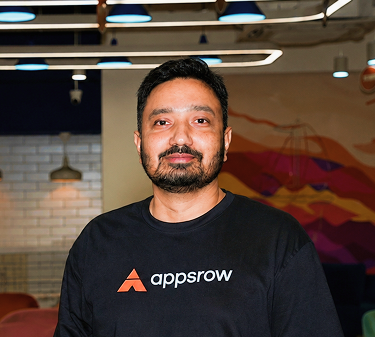
Parth Parmar is a Webflow Expert and Co-Founder & CTO at Appsrow Solutions. He has delivered 300+ Webflow projects for 25+ global B2B brands, helping SaaS companies, AI startups, and tech businesses build conversion-focused websites with scalable CMS, AEO-ready architecture, and measurable growth.
CURATED READING
.png)
.png)