


October 27, 2026
12 mins read
Webflow Agent Presence: How AI Agents Collaborate on the Canvas

Explore appsrow with AI
Artificial intelligence is changing how websites are designed, developed, managed, and optimized. Tasks that once required developers, designers, SEO specialists, and marketing teams to work through multiple tools can increasingly be supported by AI-powered workflows. However, generating a website is only one part of the challenge. Businesses must also maintain their websites, launch campaigns, improve conversions, manage content, and respond to changing customer behavior.
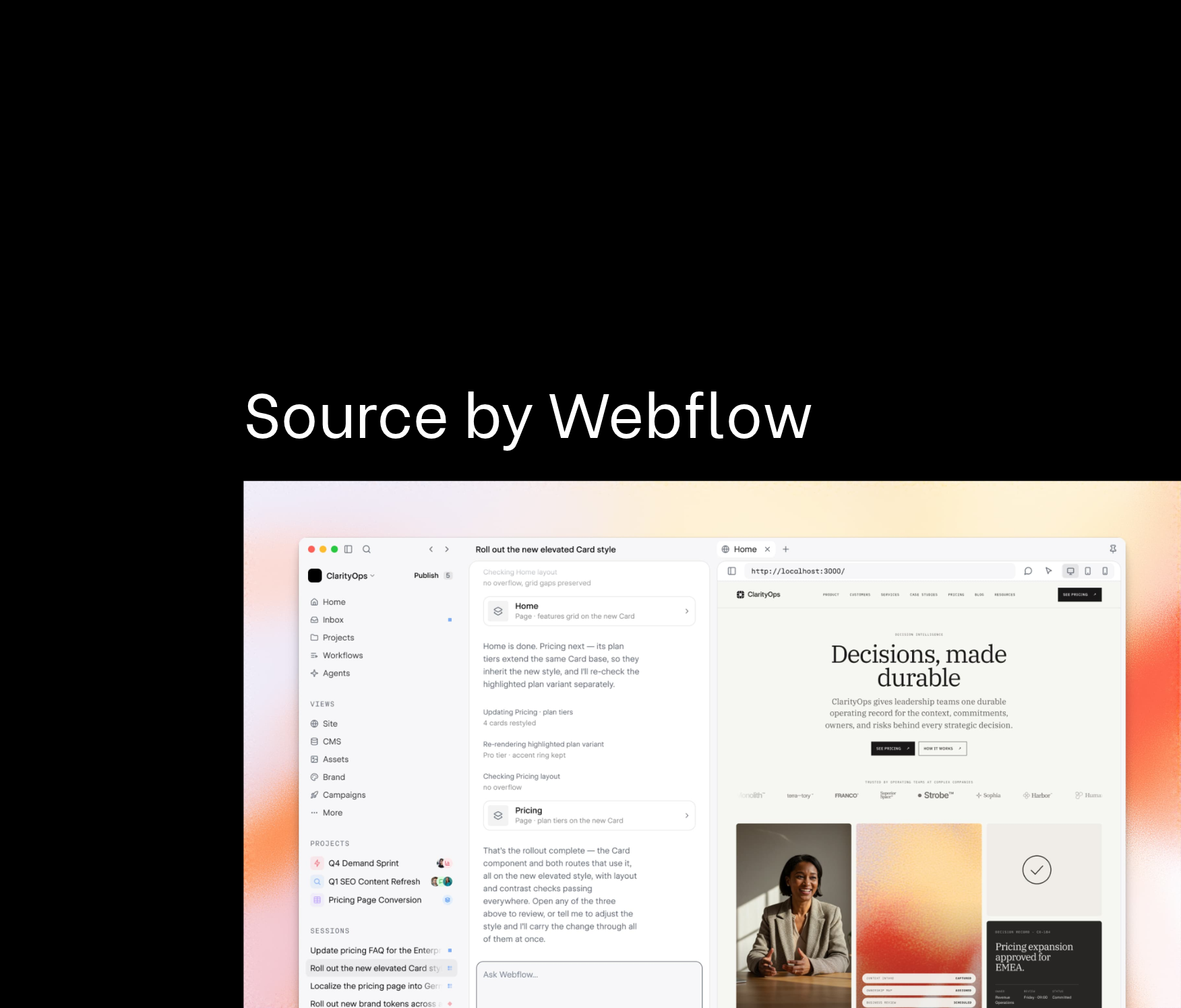
This is the problem Webflow aims to address with Source by Webflow, a new platform introduced at Webflow Conf 2026. Source brings marketing teams, designers, developers, and AI agents into a shared operating environment where they can work together on digital experiences.
Unlike conventional AI website builders that focus primarily on generating pages, Source is designed to support the entire website lifecycle. It connects existing codebases, content management systems, hosting environments, and marketing technology, while combining AI-assisted development with visual editing and governance.
For businesses investing in modern website infrastructure, this development raises an important question: what happens when AI agents become active participants in website management rather than tools that simply respond to prompts?
In this guide, we explore Source by Webflow, its major capabilities, how it differs from traditional AI website builders, and what it means for marketers, developers, and businesses planning their next stage of digital growth.
Source by Webflow is an AI-native platform designed to help marketing teams and AI agents build, launch, optimize, and scale digital experiences together.
Announced on September 2, 2026, Source combines code-based development, visual editing, customizable workspaces, and AI agent workflows in one environment. It is designed to connect with an organization's existing website infrastructure instead of requiring every business to rebuild its website on a new platform.
According to Webflow's official announcement, Source aims to address the gap between quickly generating a website and continuously improving it after launch.
Traditional website workflows often involve separate tools for development, content management, analytics, experimentation, and campaign execution. Teams must move information between these systems, coordinate approvals, and rely on developers for changes that could otherwise be handled by marketing specialists.
Source introduces a different approach. AI agents can help identify opportunities, prepare changes, and carry out assigned tasks, while people retain control over strategy, creative decisions, approvals, and business priorities.
The platform is currently in a limited research preview, with access being introduced to selected agency partners and customers through a phased process.
For years, website development followed a relatively predictable process. A business defined its requirements, designers created layouts, developers implemented them, and marketers took responsibility for content and campaigns after launch.
Although this approach remains useful, it can become inefficient when a website needs frequent changes.
A marketing team might identify a landing page that is underperforming, but improving it could require several steps. Someone must review the data, propose a new design, prepare the content, implement the changes, check the tracking, obtain approval, and publish the update.
When each task depends on a different person or system, even relatively small improvements can take days.
AI tools have made individual tasks faster, but they have not automatically solved the coordination problem. An AI coding assistant might generate a page quickly, yet the marketing team may still need to understand the code, coordinate deployment, verify the result, and manage the next iteration.
Source addresses this broader operational challenge by bringing AI agents, human contributors, and website infrastructure into a shared environment.
The objective is not simply to produce websites faster. It is to help businesses continuously improve their digital experiences after launch.
One of Source's central ideas is combining agentic development with visual control.
AI agents can help with complex or repetitive tasks, including creating page structures, exploring design variations, and implementing changes across a website. When a task requires visual judgment, designers and marketers can work directly on the visual canvas.
For example, imagine a SaaS company preparing a new product launch. Its marketing team needs a landing page, a revised hero section, supporting content, and several campaign variations.
An AI agent could prepare an initial implementation based on the company's requirements and existing design system. A designer could then refine the typography, spacing, imagery, and visual hierarchy without abandoning the underlying implementation.
This approach helps reduce the gap between generating a design and producing a usable website experience.
It also reflects an important principle: AI should accelerate implementation without removing the need for creative judgment.
For businesses that need a strong visual foundation before introducing automation, professional Webflow design and development can help establish the design system, components, responsive layouts, and content architecture that future workflows depend on.
Source places code at the foundation of its development model. This matters because AI agents can be more capable when they can work directly with the actual code behind a digital experience rather than operating only through a limited abstraction layer.
With direct access to the relevant codebase, agents can potentially work across connected implementation details and handle more complex changes.
For example, a business might want to update a reusable component across several pages, adjust a layout pattern, or implement a change that affects multiple parts of its website.
In a conventional workflow, such changes may require a developer to inspect the code, modify the relevant files, test the result, and coordinate deployment. An agent-enabled workflow can help prepare and execute parts of this process within the permissions and review requirements established by the team.
However, direct code access does not eliminate the need for testing. Complex changes still require validation, particularly when they affect navigation, tracking, accessibility, integrations, or conversion-critical functionality.
The important difference is that AI agents are intended to work closer to the implementation that actually runs, rather than producing isolated suggestions that someone must manually translate into code.
Different team members have different responsibilities, and they do not all need the same interface.
Source introduces Views, which are customizable workspaces designed around specific roles, tasks, and outcomes.
A marketing manager may need campaign information, landing-page drafts, and approval controls. A designer may need access to visual editing, brand assets, and reusable components. A developer may need code access, configuration options, and technical controls.
Views are intended to provide these different experiences within a shared operating environment.
This can reduce unnecessary complexity and make it easier for more team members to participate in website management without requiring everyone to understand every technical detail.
For agencies, customizable workspaces also create opportunities to standardize processes across clients. An agency could develop a repeatable workflow for reviewing content, preparing landing pages, or checking brand consistency, then adapt that workflow to individual client requirements.
The potential benefit extends beyond convenience. When responsibilities and permissions are clearly defined, teams can collaborate more efficiently while reducing the risk of accidental changes.
Many AI tools depend on users to initiate every task. Someone must identify a problem, formulate a prompt, and request a solution.
Source introduces a more proactive model in which customizable agents can monitor assigned areas, identify opportunities, and prepare recommendations for review.
Consider a website with several product pages and a growing content library. An agent might be configured to identify pages with declining conversion performance, review content for brand consistency, or flag opportunities to improve AI search visibility.
Instead of waiting for a marketer to investigate each issue manually, the agent could surface a recommendation and prepare the proposed work.
Potential workflows include:
The exact capabilities depend on the configured agents, connected systems, permissions, and available data. Recommendations should be evaluated against actual performance information rather than accepted automatically.
The broader shift is from AI as a reactive assistant to AI as a continuing participant in website operations.
Giving AI agents more responsibility introduces an equally important requirement: control.
A system that can modify website code, prepare content, or interact with connected marketing tools needs clear rules about what it can access and which actions it can perform.
Source includes governance concepts such as role-based access, brand systems, approval paths, and audit trails.
These controls are particularly important for businesses with multiple contributors, complex approval processes, or high-traffic websites.
For example, a content agent might be permitted to draft a new article and recommend internal links, but publishing could require approval from an editor. A development agent might prepare a component update, while deployment requires technical review.
This separation between preparing a change and authorizing its release helps teams adopt automation without surrendering oversight.
Organizations should still define their own testing procedures, access policies, rollback processes, and monitoring requirements. Built-in governance supports responsible workflows, but it does not replace sound operational practices.
One of Source's most significant ideas is its focus on working with existing technology stacks.
Businesses often have substantial investments in their codebases, CMS platforms, hosting environments, analytics tools, and marketing systems. Replacing everything simply to adopt an AI platform may be impractical.
Source is designed to connect with existing infrastructure, including codebases, content management systems, hosting, marketing technology, and websites already built with Webflow.
This approach can be relevant to organizations using frameworks such as Next.js and Astro alongside their preferred CMS and deployment infrastructure.
However, compatibility should not be interpreted as a guarantee that every system or workflow will work automatically. Businesses must assess the specific integrations, permissions, deployment processes, and technical requirements that apply to their stack.
For companies looking to connect their websites with CRM platforms, analytics systems, marketing automation, and other business tools, Webflow integration services can help establish a more connected digital workflow.
The long-term opportunity is to make AI-assisted operations available across existing infrastructure rather than limiting them to websites built with one particular technology.
Traditional AI website builders generally focus on helping users generate a website or page from a prompt. This is useful for prototypes, initial layouts, and simple digital experiences.
Source is designed around a broader objective: helping teams operate and continuously improve digital experiences through a combination of code access, visual editing, customizable workspaces, and AI agents.
The distinction is not that traditional builders are ineffective. It is that generating a website and operating a website are different problems.
Source is not simply another prompt-based site generator. Its intended role is to connect development, marketing, and continuous optimization in one operating environment.
Because the platform is still in a limited research preview, businesses should validate its available features and compatibility before making technology decisions.
Marketing teams frequently need new landing pages for product launches, paid campaigns, seasonal promotions, and industry events.
A conventional process may involve writing a brief, waiting for design, requesting development, checking tracking, and coordinating approvals.
An agent-enabled workflow could help prepare page structures, draft copy, create variations, and organize the required changes for review.
This could shorten the time between campaign planning and launch, particularly when teams already have reusable components and clear brand guidelines.
Faster execution does not automatically produce better results. Campaign success still depends on audience targeting, messaging, creative quality, and a reliable measurement strategy.
Conversion rate optimization often suffers because teams cannot test ideas as frequently as they would like.
Source's approach to agents and visual development could make it easier to identify underperforming pages, prepare alternative experiences, and coordinate changes for testing.
For example, an agent might flag a product page with a weak conversion rate and suggest testing a clearer headline or a more prominent call to action. A marketer could review the proposal, prepare a variant, and run an experiment through an appropriate testing system.
Performance should then be measured against a defined hypothesis and meaningful metrics. Automated suggestions are starting points for experimentation, not proof that a proposed change will improve conversions.
Publishing content at scale involves more than writing articles. Teams must maintain editorial standards, update existing pages, organize internal links, review metadata, and ensure content remains accurate.
Custom agents could help identify outdated pages, prepare content revisions, and flag inconsistencies across a website.
For businesses with large CMS collections, these workflows could reduce repetitive editorial work and help maintain consistency.
Human review remains important for factual accuracy, expertise, originality, and brand positioning.
Answer engine optimization, or AEO, focuses on helping a brand's content become easier for AI-powered search and answer systems to discover, understand, and potentially cite.
Source's broader vision includes workflows that identify AI discovery opportunities and prepare improvements for review.
An example workflow could involve finding an important customer question that is not answered clearly on a website, identifying a relevant page, preparing a more useful explanation, and checking whether the supporting content and internal links are appropriate.
For more information, read Appsrow's guide to Webflow AEO agents and AI search visibility.
It is important to distinguish between improving the quality and accessibility of content and guaranteeing AI citations. No platform can guarantee that an AI answer engine will mention a particular brand. Visibility depends on relevance, content quality, source authority, accessibility, and the behavior of the individual answer engine.
Source could also change how website agencies deliver services.
Historically, agencies have often been engaged for a defined project: design a website, develop it, migrate content, or implement integrations. After launch, clients may return for additional changes, maintenance, and optimization.
An agent-enabled environment could support a more continuous service model in which agencies help clients improve their websites on an ongoing basis.
Instead of focusing exclusively on launching a website, agencies could help establish workflows for monitoring, reviewing, and improving it.
Services might include content quality checks, landing-page experimentation, design system maintenance, AEO improvements, and campaign support.
The agency's value would come not only from completing tasks but also from identifying the right opportunities and ensuring the resulting work meets business objectives.
Custom workspaces and repeatable agent configurations could help agencies standardize common processes across projects.
For example, an agency might develop a structured process for checking new landing pages against brand guidelines, reviewing content metadata, or preparing pages for campaign launches.
A reusable workflow could reduce repetitive setup and help teams deliver more consistent outcomes.
However, reusable processes still need client-specific configuration, appropriate permissions, and ongoing review.
As clients explore AI adoption, agencies have an opportunity to advise on more than website design and development.
They may help businesses identify suitable automation opportunities, connect their existing technology, establish approval policies, and determine which workflows should remain under human control.
Source could support this shift by providing an environment in which website-related AI workflows can be configured and managed.
For agencies, the opportunity is to combine technical implementation with strategic guidance rather than treating AI as a replacement for their existing expertise.
Businesses do not need to wait for widespread Source availability to prepare for more effective AI-assisted website operations.
A practical starting point is to improve the foundations that AI agents and human teams will depend on.
Document the structure of your website, including page templates, reusable components, CMS collections, integrations, and deployment processes.
A clear architecture makes it easier to understand where changes should occur and how those changes might affect other parts of the website.
Define your brand voice, terminology, design standards, content requirements, and approval processes.
AI-generated work is more useful when the system has clear information about what the business considers acceptable.
List tasks that consume time but follow predictable rules. Examples include checking metadata, reviewing content formatting, identifying missing alt text, or preparing campaign page variations.
Prioritize workflows where automation could save time without introducing unacceptable risk.
Decide which tasks can be automated, which changes require review, and which actions should remain restricted to authorized people.
For example, an agent might be allowed to prepare a content update but not publish it without approval.
Website optimization should be based on meaningful evidence. Identify the metrics that matter to your business, such as qualified leads, conversion rates, organic traffic, engagement, or revenue.
An agent can help analyze available information, but the team must ensure that the data is reliable and the recommendations support business priorities.
Review the systems you already use and identify which connections would be necessary for your intended workflows.
Confirm compatibility, access requirements, security considerations, and deployment implications before adopting a new platform.
For teams that need help establishing the technical foundations, Appsrow's Webflow development services can support website architecture, scalable CMS implementation, and integration planning.
The introduction of Source does not mean that existing Webflow websites must immediately move to a new platform.
Webflow has stated that it will continue investing in its existing platform while developing Source and expanding its agentic capabilities. The company also intends to provide a supported migration path when Source is ready for broader adoption, for customers who choose to move.
This is important for businesses that have already invested in their websites.
A migration decision should consider the business case, feature availability, compatibility, implementation effort, operational risk, and long-term maintenance requirements.
For some organizations, continuing with their current Webflow setup while adopting available AI features may be the most sensible option. Others may eventually benefit from a different operating model.
Businesses evaluating a platform change should also consider SEO continuity, CMS structure, redirects, analytics, and integrations. A migration should solve a genuine business problem rather than simply follow a technology trend.
As described in Webflow's September 2026 announcement, Source is in a limited research preview.
Webflow is enrolling selected agency partners and customers through a phased process. Interested businesses can visit the official Source page to register their interest and explore the research preview application process.
Availability, eligibility, and the features accessible to individual participants may change as the platform develops.
Businesses should verify the latest official information before planning a production deployment or committing to a migration.
If your website isn't easy to understand, you're giving away opportunities
before the conversation even starts.
Get a free review of how your website appears to AI-powered search and discovery tools.
Source by Webflow is an AI-native platform designed to help marketing teams, designers, developers, and AI agents build, manage, and optimize digital experiences together. It combines agentic development, visual editing, customizable workspaces, and connections to existing website infrastructure.
Webflow is an established website development platform with visual design, CMS, hosting, and other website capabilities. Source introduces a broader operating environment focused on coordinating AI agents and human teams across development, marketing, and ongoing optimization.
No. Source is designed to connect with existing codebases, CMS platforms, hosting environments, marketing technology, and websites built with Webflow. Specific compatibility and supported workflows should be confirmed before adoption.
Source is designed to let teams configure agent autonomy according to their requirements. Organizations can establish permissions and approval processes that determine which actions agents may perform and which changes require human review. Production workflows should also include suitable testing and rollback procedures.
Source aims to help marketing teams prepare and implement website changes more efficiently, coordinate campaign work, maintain brand consistency, identify optimization opportunities, and support ongoing content and AI search improvements.
Source is intended to help agents take on more implementation work, but businesses will still need people who understand architecture, accessibility, security, integrations, quality assurance, and business requirements. Developers may spend more time designing systems, reviewing complex changes, and managing technical risk.
Agencies may be able to use Source to standardize workflows, offer continuous optimization services, support clients' AI adoption, and work across a wider range of existing technology stacks. The actual opportunities will depend on platform capabilities, access, and client requirements.
Not yet. According to Webflow's announcement, Source is currently in a limited research preview with phased enrollment for selected customers and agency partners. Visit the official Source page for the latest access information.
Source by Webflow represents a broader shift in how businesses may approach website development and marketing operations.
The next stage of AI adoption is not simply about generating pages, writing content, or automating individual tasks. It is about connecting the systems, people, and workflows responsible for delivering and improving digital experiences over time.
Source aims to bring those activities into a shared environment where AI agents can help prepare changes, identify opportunities, and support implementation while teams retain control over strategy, creative quality, and approvals.
For businesses, the most useful preparation is to establish a strong website architecture, document brand guidelines, improve data quality, and define where automation can create measurable value.
For agencies, the opportunity is to move beyond one-time website delivery and help clients build digital experiences that can be continuously measured, improved, and maintained.
At Appsrow, we see this development as part of the evolution toward more connected, AI-assisted website operations. The long-term advantage will not come from adopting AI alone. It will come from combining the right technology with thoughtful implementation, clear governance, and a focus on business outcomes.
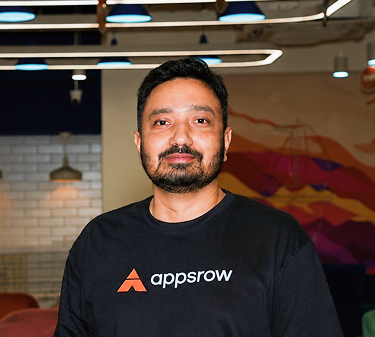
Parth Parmar is a Webflow Expert and Co-Founder & CTO at Appsrow Solutions. He has delivered 300+ Webflow projects for 25+ global B2B brands, helping SaaS companies, AI startups, and tech businesses build conversion-focused websites with scalable CMS, AEO-ready architecture, and measurable growth.
CURATED READING