

November 16, 2026
12 mins read
B2B Website Lead Generation: Building High-Converting Webflow Websites for Sales Teams

Explore appsrow with AI
Your website may be attracting thousands of visitors every month, but how many of them actually become qualified leads? For many businesses, the biggest challenge is not generating website traffic. It is converting existing traffic into meaningful business opportunities. Visitors arrive through Google search, paid advertising, social media, referrals, and other marketing channels, explore a few pages, and leave without requesting a consultation, completing a contact form, or showing interest in the company's services.
This is where Webflow conversion rate optimization becomes important. Instead of continuously investing in additional traffic acquisition, businesses can improve the experience of their existing visitors and create clearer pathways toward conversion. A strategically optimized Webflow website communicates value, addresses customer concerns, removes unnecessary friction, and encourages visitors to take the next step.
For B2B companies, SaaS businesses, technology startups, and service providers, conversion optimization can have a direct impact on lead generation and sales opportunities. A well-designed website should do more than communicate what a company offers. It should help potential customers understand why the offering matters, evaluate whether the company is suitable for their requirements, and confidently initiate a conversation.
In this guide, we explore how Webflow conversion rate optimization works, which website elements influence conversions, how to identify conversion barriers, and how a professional website conversion optimization agency can help turn more visitors into qualified leads.
Webflow conversion rate optimization is the process of improving a Webflow website's design, content, navigation, functionality, and user experience to increase the percentage of visitors who complete a desired action.
A conversion does not always mean completing a purchase. Depending on your business model, it could include requesting a quotation, booking a discovery call, submitting an enquiry form, registering for a product demonstration, downloading a resource, or starting a free trial.
The objective is to make these actions easier and more relevant to the people visiting your website.
For example, consider a Webflow development company receiving 5,000 monthly visitors. If 25 visitors submit an enquiry form, its visitor-to-enquiry conversion rate is 0.5%. By improving its service pages, strengthening calls to action, simplifying forms, and addressing common customer questions, the company may increase the number of enquiries without necessarily increasing its traffic.
Conversion rate is calculated using the following formula:
Conversion Rate = (Number of Conversions / Total Visitors) × 100
If 100 visitors complete a desired action out of 5,000 visitors, the conversion rate is 2%.
However, increasing the conversion rate should not be the only objective. Businesses should also evaluate lead quality, sales opportunities, customer acquisition costs, and revenue generated. A website that generates 100 irrelevant enquiries may deliver less business value than one that generates 30 highly qualified prospects.
A successful CRO strategy therefore focuses on both conversion volume and conversion quality.
Webflow provides businesses with flexibility to create visually engaging, responsive, and scalable websites. However, having a modern website does not automatically mean that visitors will convert.
A website can have attractive animations, impressive typography, detailed service pages, and technically sound development while still struggling to generate enquiries.
The problem often comes down to the relationship between what visitors expect and what the website actually communicates.
Businesses often invest heavily in SEO, paid advertising, and content marketing to attract visitors. However, if the landing experience does not match the visitor's expectations, much of that investment can be wasted.
For example, someone searching for a Webflow development agency expects to understand the agency's capabilities, experience, project process, and pricing considerations. If the landing page only contains generic marketing statements, visitors may leave without exploring further.
CRO helps businesses identify these gaps and improve the experience after visitors arrive.
Potential customers rarely make important purchasing decisions based on website appearance alone. They want evidence that a company understands their problems and can deliver the expected results.
Relevant case studies, customer testimonials, project examples, industry experience, and clearly explained processes can help establish credibility.
These trust signals become particularly important for B2B businesses where purchasing decisions involve multiple stakeholders and longer evaluation cycles.
Visitors may struggle with complicated navigation, unclear messaging, slow-loading pages, confusing forms, or poorly structured content.
Even relatively small usability problems can interrupt the journey between discovering a service and requesting more information.
A conversion-focused website identifies these friction points and removes unnecessary obstacles.
A first-time visitor researching a problem may not be ready to book a consultation. Another visitor comparing agencies may be looking for case studies, technical expertise, and a clear explanation of services.
A successful CRO strategy recognizes these differences and provides relevant next steps throughout the website.
Improving conversions requires a structured approach. Changing button colours or adding more contact forms without understanding visitor behaviour rarely creates sustainable results.
The following strategies focus on the website elements that influence how potential customers discover, evaluate, and engage with a business.
Your headline is one of the first elements visitors notice when landing on a website. It should immediately communicate what your business offers, who it serves, and why the visitor should continue exploring.
Generic headlines such as "Welcome to Our Website" or "Innovative Solutions for Your Business" do not communicate enough information to help potential customers understand your value.
A more effective headline explains a specific outcome.
For example:
Generic headline: We Build Amazing Websites.
Conversion-focused headline: High-Performance Webflow Websites Built to Generate More Qualified Leads.
The second headline communicates the service, platform, and business objective.
When improving headlines, consider the following principles:
Your homepage should communicate the broader value proposition, while individual service pages should address specific customer requirements.
A visitor searching for Webflow development should not have to navigate multiple sections to understand whether your company provides that service.
The hero section is one of the most important areas of a business website because it introduces the brand, communicates its positioning, and provides the first opportunity to encourage engagement.
A visually impressive hero section is not necessarily an effective one. The most important consideration is whether it helps visitors understand what to do next.
A conversion-focused hero section should include:
For example, a B2B SaaS website might use "Simplify Your Business Operations With Intelligent Software" as its primary headline, followed by a short explanation and a "Book a Demo" button.
Avoid filling the hero section with multiple competing buttons. Too many choices can make it difficult for visitors to identify the most relevant next step.
Your visual design should support the conversion objective instead of distracting visitors from it.
If your existing website requires structural improvements, a specialist in Webflow design services can help create user-focused layouts that combine visual consistency, responsive behaviour, and conversion-oriented page structures.
Website navigation plays an important role in helping visitors discover relevant information.
When navigation is confusing, visitors may struggle to find service details, pricing information, case studies, or contact options.
For businesses with multiple services, a poorly organized navigation structure can create unnecessary friction.
Start by reviewing your existing navigation and identifying the pages visitors need most frequently.
For a B2B website, a practical navigation structure might include:
The exact structure should reflect your business model and customer journey.
Consider these improvements:
Use descriptive navigation labels: Replace unclear labels with familiar terms that communicate what visitors will find.
Prioritize important pages: Keep high-intent service pages accessible without requiring visitors to explore several menus.
Avoid excessive dropdown options: Organize related services logically and prevent navigation from becoming overwhelming.
Make contact options accessible: Visitors should be able to find the next step without searching through the entire website.
Optimize mobile navigation: Ensure menus are easy to open, read, and navigate on smaller screens.
A useful navigation structure should help visitors move naturally from discovering your business to evaluating its services and initiating an enquiry.
A call to action (CTA) tells visitors what they can do next.
Common examples include:
However, adding more CTA buttons does not automatically improve conversions. Their relevance, placement, wording, and surrounding context matter.
For example, a visitor reading a detailed Webflow development service page may respond better to "Discuss Your Project" than a generic "Submit" button.
Consider the following CTA optimization practices:
Use action-oriented language: Explain what happens after someone clicks.
Place CTAs near relevant information: A visitor reading about a specific service should have an opportunity to enquire without returning to the top of the page.
Maintain visual consistency: Primary CTAs should be visually recognizable across the website.
Reduce competing actions: Avoid presenting several equally prominent buttons in the same section.
Test different messages: Compare action-oriented wording against benefit-oriented wording to identify what works for your audience.
Your primary CTA should reflect the visitor's stage in the buying journey. A first-time visitor may prefer to explore a case study, while someone evaluating agencies may be ready to book a consultation.
Contact forms are often the final step between a potential customer and a business enquiry. Unfortunately, complicated forms can discourage visitors from completing the process.
A form asking for fifteen different details may create unnecessary resistance, especially when visitors are only trying to request an initial consultation.
Review every field and determine whether the information is genuinely required at that stage.
For a standard B2B enquiry, a form might request:
You can collect additional information during a discovery call or follow-up conversation.
Other form optimization improvements include:
Use clear field labels: Visitors should understand what information is expected.
Provide helpful validation: Explain errors immediately instead of making users complete the form again.
Avoid unnecessary mandatory fields: Only require information that is essential for processing the enquiry.
Show clear submission feedback: Confirm that the form has been submitted successfully.
Optimize for mobile: Make fields, dropdowns, and submission buttons easy to use on smaller screens.
Set realistic expectations: Explain when and how the business will respond.
For high-intent enquiries, a short explanation of what happens after submission can increase confidence and reduce uncertainty.
Trust is a major factor in B2B purchasing decisions.
A potential customer may like your website design and understand your service offering but still hesitate to contact you because they do not have enough evidence of your capabilities.
Case studies can help address this problem by demonstrating how your company approaches real business challenges.
An effective case study should explain:
For example, Appsrow highlights its Sellers Umbrella project with a conversion-focused Webflow experience and a reported 130% increase in service enquiries. This provides a more meaningful indication of project impact than simply displaying a website screenshot.
Other trust-building elements include customer testimonials, industry recognition, partner certifications, client logos, and relevant project experience.
However, avoid using unsupported statistics or generic testimonials. Every trust signal should be genuine and relevant to the service being promoted.
Website performance directly influences the browsing experience.
Visitors expect pages to load quickly and interactions to respond smoothly. Delays, layout shifts, and unresponsive elements can interrupt the journey and make a website feel unreliable.
Although Webflow provides a strong website-building environment, individual implementations can still introduce performance problems through oversized images, unnecessary scripts, excessive animations, and poorly optimized third-party integrations.
Important areas to review include:
Image optimization: Use appropriately sized images and modern image formats where supported.
Animation management: Avoid loading unnecessary animations and scripts that do not improve the user experience.
Third-party scripts: Review analytics tools, chat widgets, tracking scripts, and external integrations.
Font optimization: Limit unnecessary font families and weights.
Responsive performance: Test page behaviour across mobile devices, tablets, and desktop screens.
Core Web Vitals: Monitor Largest Contentful Paint (LCP), Interaction to Next Paint (INP), and Cumulative Layout Shift (CLS).
Performance improvements should be measured using real testing tools rather than relying only on visual impressions.
A faster website can create a smoother experience, but speed improvements should be considered alongside messaging, usability, and visitor intent.
Sending every marketing visitor to your homepage is not always the best approach.
Visitors arriving through paid advertising, email campaigns, or specific organic search queries often have a particular requirement.
A dedicated landing page can address that requirement more directly.
For example, a Webflow agency running a campaign for SaaS companies could create a landing page focused on SaaS website design and development.
The page might include:
Avoid adding unnecessary navigation options or unrelated content that distracts visitors from the intended conversion.
The page should also maintain consistency with the advertisement or search result that brought the visitor there.
If someone clicks an advertisement promoting Webflow migration, the landing page should clearly explain migration services rather than introducing unrelated offerings.
Not every visitor arrives at your website with the same expectations.
Some are discovering your company for the first time. Others are comparing service providers, evaluating solutions, or preparing to make a purchasing decision.
Your content should support these different stages.
For example:
Awareness stage: Explain common business problems and provide educational resources.
Consideration stage: Present service comparisons, implementation approaches, project examples, and technical capabilities.
Decision stage: Highlight relevant case studies, consultation options, engagement processes, and clear next steps.
For a Webflow development agency, someone searching for information about website migration may need technical guidance and migration examples. Someone searching for Webflow development services may be closer to selecting an agency.
Matching page content to visitor intent helps create a more relevant experience.
You can also use campaign-specific landing pages, industry-focused messaging, and relevant content recommendations to improve engagement.
CRO should be an ongoing process rather than a collection of one-time design changes.
A/B testing allows businesses to compare different versions of a website element and understand which variation performs better for a defined audience and conversion goal.
You might test:
For example, you could compare "Book a Free Consultation" with "Discuss Your Website Project" to understand which message encourages more qualified enquiries.
A reliable testing process should include a clear hypothesis, a defined success metric, sufficient traffic, and a consistent measurement period.
Avoid making conclusions from a handful of visitors. Small samples can produce misleading results.
When traffic is limited, qualitative research, user feedback, and usability testing can provide useful insights before running larger experiments.
Before making changes, you need to understand what is preventing visitors from converting.
Making random design changes without understanding the underlying problem can waste time and resources.
A structured website audit helps identify opportunities based on actual user behaviour.
Start by reviewing your website analytics to understand how visitors interact with different pages.
Google Analytics 4 can help identify:
Pay particular attention to pages receiving significant traffic but generating very few enquiries.
These pages may represent valuable optimization opportunities.
For example, a service page attracting 2,000 visitors each month but generating only a small number of enquiries may require improvements to its messaging, proof points, CTA placement, or overall user experience.
Heatmaps provide a visual representation of how visitors interact with a webpage.
Depending on the tool, you can analyze:
Click maps: Identify which elements receive the most interaction.
Scroll maps: Understand how far visitors scroll through a page.
Movement maps: Observe patterns in cursor movement where supported.
Session recordings: Review anonymized browsing sessions to identify usability problems.
These insights can reveal whether visitors are ignoring important buttons, missing key information, or leaving before reaching the main conversion section.
Remember that heatmaps show behavioural patterns, not necessarily the reasons behind every action. Combine them with analytics and user feedback for a more accurate understanding.
Compare the performance of your most important landing pages.
Look at visitor volume, conversion events, lead quality, engagement, and the source of traffic.
A landing page receiving traffic from highly relevant search terms may require a different optimization strategy from one attracting broad informational traffic.
Segmenting performance data helps avoid treating all visitors as if they have identical expectations.
Mobile experience should be an essential part of any CRO audit.
Check whether:
A website that looks impressive on desktop can still create serious usability problems on mobile devices.
If your website isn't easy to understand, you're giving away opportunities
before the conversation even starts.
Get a free review of how your website appears to AI-powered search and discovery tools.
Professional Webflow CRO services combine website strategy, user experience, analytics, technical implementation, and experimentation.
Instead of focusing exclusively on visual improvements, a conversion optimization specialist evaluates the complete journey from the first website visit to the final enquiry.
A professional engagement can include the following activities.
The process begins with an assessment of the existing website.
The audit may include landing page analysis, navigation reviews, CTA placement, form usability, content structure, mobile experience, and technical performance.
The objective is to identify the most important barriers affecting conversion performance.
Based on the findings, the team recommends improvements to page layouts, content hierarchy, navigation, visual consistency, and interaction patterns.
The focus is on making the website easier to understand and navigate while keeping the brand experience consistent.
Reliable measurement is essential for understanding whether changes are improving performance.
Conversion tracking should cover meaningful actions such as contact form submissions, consultation bookings, demo requests, and other important business events.
Tracking should also distinguish between completed actions and interactions that do not represent genuine leads.
High-priority landing pages are reviewed and improved to align messaging with audience intent.
This can include headline improvements, CTA changes, trust signals, content restructuring, and simplified enquiry processes.
Where sufficient traffic and suitable testing infrastructure are available, alternative page elements can be tested.
Results inform further improvements, helping businesses move away from assumptions and toward evidence-based decisions.
For businesses that need broader website improvements alongside CRO, Webflow development services can help address underlying implementation, CMS, responsive design, and performance requirements.
Businesses can make basic website changes internally, but developing a structured CRO program requires a combination of analytical, design, marketing, and technical expertise.
A website conversion optimization agency brings these capabilities together.
Professional CRO begins with understanding the existing website and its visitors.
Rather than recommending changes based on personal preferences, specialists use analytics, behavioural observations, and customer feedback to identify opportunities.
B2B websites, SaaS platforms, technology companies, and service businesses have different conversion requirements.
A SaaS business may prioritize demo requests and trial registrations, while a professional services company may focus on consultation bookings and project enquiries.
An experienced agency can adapt its approach to the business model.
Conversion improvements sometimes require more than changing text or button placement.
They may involve rebuilding page sections, improving responsive layouts, adjusting Webflow interactions, modifying CMS templates, or resolving technical issues.
Having design and Webflow implementation expertise under one team can make execution more efficient.
Visitor behaviour and customer expectations change over time.
A structured CRO program monitors important performance indicators and identifies new opportunities for improvement.
This allows businesses to continue optimizing their websites instead of treating conversion optimization as a one-time activity.
Choosing the right Webflow partner is important when your website is expected to contribute directly to business growth.
Appsrow combines Webflow design, development, SEO, and conversion-focused website improvements to help B2B companies, SaaS businesses, and growing brands build websites that support measurable business objectives.
As a Webflow Premium Partner, Appsrow has delivered more than 300 projects since 2018, working with businesses that need scalable website experiences and reliable technical execution.
Its approach to CRO focuses on understanding how visitors interact with a website and identifying opportunities to improve the customer journey.
Every website section should have a purpose.
Appsrow considers visitor intent, business objectives, page hierarchy, and conversion opportunities when recommending website improvements.
This helps businesses create more focused experiences instead of adding design elements without a clear objective.
Conversion decisions should be supported by evidence.
Appsrow's CRO approach combines analytics, behavioural insights, and testing to identify areas that need improvement.
The objective is to prioritize changes that can contribute to meaningful business outcomes.
A conversion strategy is only valuable when it can be implemented effectively.
Appsrow brings design and Webflow development capabilities together, making it possible to improve page structures, responsive layouts, interactions, and technical performance.
Lead generation does not end when a visitor submits a form.
Businesses often need website forms to connect with their CRM, analytics platforms, marketing automation systems, and internal workflows.
Appsrow's Webflow integrations services can help connect website experiences with the tools businesses use to manage enquiries and marketing operations.
Search visibility and conversion optimization should support each other.
SEO attracts visitors who are actively researching relevant services, while CRO helps create a better experience once they arrive.
Appsrow also provides Webflow SEO services to help businesses improve organic visibility, website structure, technical SEO, and search performance.
Combining these capabilities can create a stronger foundation for sustainable website growth.
A successful CRO program needs clear performance indicators.
Measuring only the number of visitors or total form submissions can provide an incomplete picture of website performance.
Consider the following metrics when evaluating your website.
MetricWhat It MeasuresConversion ratePercentage of visitors completing a desired actionQualified lead ratePercentage of enquiries matching your target customer profileForm completion ratePercentage of visitors completing a form after starting itLanding page engagementHow visitors interact with important landing pagesCTA click-through ratePercentage of visitors clicking a particular CTABounce and engagement signalsIndicators of how visitors interact with landing pagesCost per leadMarketing expenditure required to generate a leadLead-to-customer ratePercentage of leads becoming paying customers
For B2B businesses, qualified lead rate and lead-to-customer rate deserve particular attention.
A higher conversion rate is not necessarily better if the additional enquiries are irrelevant or unlikely to become customers.
Consider a hypothetical B2B company with the following monthly website performance:
Performance metricBefore CROAfter CROMonthly visitors5,0005,000Conversion rate1%2%Total enquiries50100Qualified lead percentage40%50%Qualified leads2050
In this illustrative scenario, the business generates 30 additional qualified leads without increasing website traffic.
This demonstrates why improving the quality of the website experience can be an important part of a broader lead generation strategy.
The numbers are hypothetical and should not be interpreted as guaranteed CRO outcomes.
Even well-designed websites can struggle to convert when optimization decisions are based on incorrect assumptions.
Here are some common mistakes to avoid.
An attractive website can create a positive first impression, but design alone does not guarantee enquiries.
Every major design decision should support usability, clarity, trust, and the intended customer journey.
Multiple competing CTAs can create confusion.
Choose a primary action for each important page and use secondary actions only when they support a different visitor requirement.
Increasing the number of enquiries is not useful if most submissions come from visitors outside your target audience.
Track lead quality alongside conversion volume.
Changing headlines, layouts, or forms without reviewing performance data makes it difficult to understand what actually improves results.
Create a baseline before implementing significant changes.
Mobile visitors should receive the same level of attention as desktop visitors.
Test navigation, forms, buttons, typography, and page performance across different screen sizes.
CRO is an iterative process.
Some usability improvements can be implemented quickly, but meaningful performance conclusions may require sufficient traffic, testing time, and multiple optimization cycles.
The timeline depends on website complexity, traffic volume, existing analytics infrastructure, and the number of improvements required.
A typical CRO engagement can be organized into several stages.
Week 1: Research and website audit
Review analytics, conversion tracking, important landing pages, navigation, forms, and existing user experience issues.
Week 2: Strategy and prioritization
Develop an optimization roadmap based on business objectives, visitor behaviour, and the potential impact of each improvement.
Weeks 3 and 4: Implementation
Improve important page sections, messaging, CTAs, forms, responsive layouts, and other identified friction points.
Weeks 5 to 8: Measurement and refinement
Review performance, evaluate completed changes, and conduct suitable experiments where traffic allows.
Ongoing: Continuous optimization
Continue monitoring results and identifying opportunities across important pages and conversion journeys.
These stages are an illustrative project framework, not a guaranteed delivery timeline. Some websites may need additional technical work or longer testing periods.
Webflow conversion rate optimization is the process of improving a Webflow website's content, design, navigation, forms, performance, and user experience to increase the percentage of visitors completing valuable actions such as submitting enquiries, booking consultations, or requesting product demonstrations.
CRO helps businesses get more value from their existing website traffic. It identifies problems affecting visitor engagement and improves the experience to encourage more relevant actions. This can help reduce wasted marketing spend and improve lead generation efficiency.
Webflow CRO services can include website audits, user experience analysis, landing page optimization, CTA improvements, contact form optimization, analytics configuration, heatmap analysis, A/B testing, responsive design improvements, and ongoing performance monitoring.
Pricing depends on website size, the number of pages being optimized, analytics requirements, testing complexity, and whether the engagement involves a one-time audit or continuous optimization. Businesses should evaluate the scope of work and expected deliverables before selecting a CRO partner.
Yes. CRO focuses on improving the percentage of existing visitors who complete desired actions. When the website attracts relevant traffic, improving messaging, navigation, trust signals, and forms can increase enquiries without requiring additional traffic acquisition.
Common tools include Google Analytics 4 for visitor and event analysis, Google Tag Manager for tracking implementation, Microsoft Clarity for heatmaps and session recordings, and suitable experimentation platforms for A/B testing. The right tools depend on the website's requirements and available traffic.
Your website may benefit from CRO if it receives relevant traffic but generates few enquiries, visitors leave important service pages without taking action, contact forms have high abandonment, or paid campaigns generate clicks without producing qualified leads.
Yes. A Webflow CRO agency can review and optimize an existing website regardless of who originally developed it. The process typically starts with an assessment of the current design, technical implementation, analytics, and user experience.
No. Many conversion problems can be addressed through targeted improvements to existing pages, messaging, navigation, forms, and calls to action. A complete redesign may be appropriate when the website has deeper structural, technical, or branding problems.
Look for an agency with relevant Webflow experience, a structured CRO process, analytics capabilities, design and development expertise, and a clear approach to measuring business outcomes. Review its case studies, understand the proposed scope, and ensure recommendations are connected to your lead generation objectives.
Your website should contribute to business growth, not simply act as an online brochure.
If your Webflow website attracts visitors but struggles to generate meaningful enquiries, it may be time to look beyond traffic acquisition and examine the conversion experience.
From improving landing page messaging and simplifying contact forms to strengthening trust signals and analyzing visitor behaviour, the right optimization strategy can help create a more effective journey for potential customers.
Appsrow helps businesses improve their Webflow websites through conversion-focused design, development, analytics, and optimization strategies.
Whether you need a complete conversion audit, improvements to existing service pages, or an ongoing CRO strategy, the first step is understanding where your website is losing potential opportunities.
Ready to improve your Webflow website's conversion performance?
Contact Appsrow to discuss your website requirements and explore how a structured conversion optimization strategy can help generate more qualified leads.
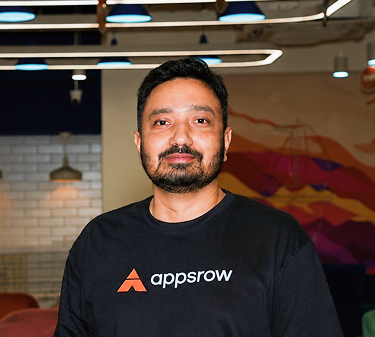
Parth Parmar is a Webflow Expert and Co-Founder & CTO at Appsrow Solutions. He has delivered 300+ Webflow projects for 25+ global B2B brands, helping SaaS companies, AI startups, and tech businesses build conversion-focused websites with scalable CMS, AEO-ready architecture, and measurable growth.
CURATED READING

